Pole Barn Metal

Bell too queried if equipment parked at 420 Wagner Rd. comes out by means of day doing concrete work elsewhere. If you want to change my personal information, make use of the change form. As such, costs in addition to availability are not guaranteed until bought. Register today in addition to be automatically went into into a particular monthly drawing on behalf of an Apple iPod mini – click there. Free source on behalf of precious metals information in addition to financial truth. Users can now view inspection activity on behalf of building, electrical, mechanical, in addition to plumbing permits. Related terms include how to paint an old metal barn roof, instructions for installing metal roofs, roofing metal and non, shingle vs metal roof, and residential metal roof insulation. Craftsman home plans… favorite Greek Revival home designs… barrier-free home plans… Stop by means of our shop there within Illinois in addition to see our dedicated timber framers cutting a particular frame. Click to return to our primary page in addition to start my hunt once again.

Everlast II metal roofing and siding is far superior to anything else. Our lawn in addition to garden selection is second to none within that place. With Big Daddy idea to be “dyin of” a particular terminal disease: “There’s a little things you gotta face, infant. Other phrases include stove pipe metal roofs, corrugated metal siding photos, how to metal roof, metal building pole barn gober, metal deck roofing leaks investigation, efis construction material issues, pole buildings with board and batten, metal roof paint, west michigan metal roofs, metal siding online pricing, metal roofing reviews, spanline metal roofing, alternetive material housing construction, pole building sliding door hardware, new building construction materials technics, application of a metal roof, steel metal roofing basics, how to paint metal roof, prices on pole buildings, metal roofing how to install. He got time to thank the audience on behalf of the eves in addition to state them he has moved from California to Tennessee. Keeping my cars sheltered from damaging rain, snow, in addition to sun has never been so easy in addition to cheap. Thanks on behalf of sharing with every single one of us, via my website. A wood-fueled electricity generating plant may be within my future. Related phrases are flat roofing + metal edges, pole building quotes, step by step metal roofing, pole barn buildings prices, and construction materials testing phoenix. Gay had an epiphany: “I realized I can’t spend your life on a particular street corner.

Experienced timber framers in addition to a particular shop foreman will teach in addition to supervise you. Industrial Maid manufactures a particular broad variety of air filtration equipment used on behalf of the collection of smoke, fumes, dust in addition to mist. You will locate cracks if it is not fiery formed. Our experienced craftsman in addition to certified installers guarantee an installation this will last as long as the stuff itself. We are an abrasive manufacturing company in addition to looking on behalf of dealers in addition to partners within abrasives. Thanks on behalf of my interest within McMinnville Lumber’s Quality Pole Building Kits. Minimal amount of information demanded from designs on behalf of entry to plan screen fields. Caution would be worked out when clearing debris from drains. This happens during the long period from planting to the harvest of mature bushes. No wonder it’s protecting above 3.5 million houses within North America alone. This drill is important with standard as well as custom mixed colours. Make a particular 90 degree. bend within center of level place to form a particular corner. This directory is my source on behalf of house improvement, remodeling, in addition to repair information. All accessories in addition to integrated panels are too pre-engineered on behalf of exact fit.

Australia’s Land and Water Resources

Australia is a very large continent. It has a total surface area of 7.6 million km2 and is surrounded by an ocean territory of 16.1 million km2 including its exclusive economic zone and claimable continental shelf. Australia is a very ‘old’ continent geologically. It is the driest of the world’s inhabited continents, with the lowest percentage of rainfall as run-off, the lowest amount of water in rivers and the smallest area of permanent wetlands. More than half of the Australian continent is made up of a peneplain, an extremely large level area constituting most of Western Australia, Northern Territory and western South Australia. This area is poorly and variably supplied with rainfall and has always been sparsely populated.

The original indigenous inhabitants of Australia lived as ‘hunter-gatherers’ on native plants and animals. Their principal land management tool was the selective use of fire. They were joined from 1788 by the Europeans, settling over time in separate colonies centred on Sydney, Hobart, Perth, Adelaide, Melbourne and Brisbane. These immigrants brought with them their northern hemisphere agricultural practices of cultivating the soil; growing grain, fruit and vegetable crops; and rearing animals. The new arrivals saw the continent as an unallocated resource ripe for development that would be based on previous European experience, albeit at least initially recognising the presence and needs of the indigenous inhabitants.

However, some lessons for improved natural resource management were brought from Europe. Even in the early days of settlement, some important decisions made by surveyors showed an appreciation of natural resource management and the need to avoid private ownership of key natural resources. The littoral environment, some riparian and most estuarine shores and various scenic points, for example, were retained in public ownership.

Australia was soon self-reliant in food production and agricultural exports to Britain and Europe began around 1811. Grain exports using sailing ships were well established by the 1870s. However, interacting factors such as the opportunity to replace native vegetation and animals with introduced crop species and domesticated livestock, and the introduction of exotic plant and animal pests have had a major impact on land use and consequently on the condition of land, water and marine resources. The progressive development of mining, ports and urban areas, particularly following from the gold rush finds of the 1850s, created specific impacts on land resources in localised areas.

Commonwealth, State and Territory governments

The federation of the Australian colonies in 1901 was a defining event in natural resource management. The Commonwealth of Australia Constitution Act 1900 (Imp.) provides for the Commonwealth to have powers for trade and commerce with other countries and among the States [s 51 (i)] and external affairs [s 51 (xxix)], while section 107 inter alia provides for powers previously vested in colonies to continue with the States unless specifically vested in the Parliament of the Commonwealth. Section 107 also precludes the Commonwealth from abridging the right of a State or its residents therein to the reasonable use of the waters of rivers for conservation or irrigation. In essence, this left natural resource management responsibilities—excluding Commonwealth waters—with the States, but as the Commonwealth has since ratified various international treaties relating to environment, conservation and heritage, (thirty-nine by 1996 [State of Environment Advisory Council 1996]), there has been an increasing constitutional basis for Commonwealth involvement in land management issues.

With development, increasing interaction occurred between Commonwealth and State governments on the use of natural resources. The Commonwealth assumed responsibility for the Northern Territory from South Australia on 1 January 1911. In 1915, the Commonwealth, New South Wales, Victoria and South Australia had passed Acts of Parliament ratifying the River Murray Waters Agreement, leading to the establishment of the River Murray Commission in 1917. By 1934, the Federal and State Ministers of Agriculture had established Australian Agricultural Council, with a subordinate Standing Committee on Agriculture made up of the heads of Commonwealth and State agencies responsible for agriculture, together with CSIRO and the Commonwealth Department of Health. Later Ministerial Councils and Standing Committees included those for soil conservation, land information, water resources, conservation, forestry, fisheries and environment protection. The Northern Territory achieved self-government in 1978 and the Australian Capital Territory in 1988, with both becoming full members of the Ministerial Councils. Within the last decade there has been an increasing overlap and integration of Ministerial Council activities including:

initially the formation of the Agricultural and Resource Management Council of Australia and New Zealand and the Australian and New Zealand Environment and Conservation Council;
their subsequent replacement by the Natural Resources Management Ministerial Council and Standing Committee; and
Primary Industries Ministerial Council and the Environment Protection and Heritage Ministerial Council with their respective Standing Committees in 2001.
Figure 1. Relationship of Ministerial Councils and their main subordinate bodies to Council of Australian Governments.

Figure 1. Relationship of Ministerial Councils and their main subordinate bodies to Council of Australian Governments.
Arrangements were set in place to ensure effective cross-linkages between these (Figure 1). These Standing Committee structures and activities reflect a broad recognition of both the importance of partnerships and the effectiveness of undertaking many activities in an Australia-wide context.

Appreciating the limits of natural resources
The limits of the world’s natural resources have been the subject of debate for hundreds of years. The prospect of resources constraints was given prominence by Malthus (1798). In more recent times, the Club of Rome’s report The Limits to Growth (Meadows et al. 1972) predicated its study on a belief that the basic behaviour mode of the world system is exponential growth of population and capital, followed by collapse.

Australia has been mapped into agro-ecological zones (Figure 2), but only 25% of the continent has a growing season of more than five months. The area with a growing season of more than nine months—generally recognised as required for long season annual crops and perennial crops—is a mere 9% of the continent. Only 6% of Australian is considered arable. The more highly productive lands, often described as the ‘intensive land use zone’, are located along the eastern and south-eastern seaboard and in the south-western corner of the continent.

Figure 2. Australia’s agro-ecological zones

Figure 2. Australia’s agro-ecological zones.
Australia has a mosaic of land use that is continuing to evolve (Figure 3).

Land continued to be brought under cultivation for agriculture steadily until the 1960s, often encouraged by government incentives, and, even today, a limited amount of continuing land development is taking place through clearing of native vegetation. Considerable development is also taking place on previously established farming land through changing use patterns and intensification.
The twentieth century also saw a major expansion in land used for extraction of mineral and energy resources.
Conservation reserves have been progressively increased and now take up a little over 5% of land area.
Public lands accessible for harvesting of native timber have declined as increased areas have been reserved for nature conservation. The current 4.8% of land in forestry is increasingly based on private plantation and farm forestry production systems.
Following the passage of the Aboriginal Land Rights (Northern Territory) Act 1976 (Cwlth), significant areas have been set aside for indigenous use. Aspects of land management were further clarified in the Native Title Act 1993 (Cwlth). This Act recognises and protects native title, recognises pre-existing rights and interest of Indigenous peoples to land and waters, and establishes ways in which dealings affecting native title may proceed. The legislation was amended in 1998 to provide for alternative State-based regimes.


Figure 3. Australia’s broad, dominant land use categories.

Figure 3. Australia’s broad, dominant land use categories.

Australia has a developed, multi-faceted economy. Agriculture continues to be an important contributor to national, State/Territory and regional economies. Including pastoralism, it remains Australia’s most extensive form of land use, taking up to 60% of the country’s area. With an annual gross value of production at farm gate averaging $25 billion, and exports of $17.6 billion in the period 1989-1999, agriculture represented about 3% of the average annual gross domestic product ($620 billion in that period). Other sectors of the economy, particularly in regional areas, remain highly dependent on the farm sector. Approximately 60% of manufacturing turnover in the Murray-Darling Basin, for example, is derived from food processing industries.

Agricultural exports represent 20% of Australia’s total exports. By comparison, crude and processed mineral production, derived from quite small areas (including some off-shore), makes up approximately 35% of exports with a value of approximately $35 billion. The annual gross value of tourism—often related to Australia’s land and its diversity of natural resources although little of the expenditure relates to natural resource management—is about $25 billion (with approximately 70% generated by domestic households). Tourism represents around 4.5% of Australia’s gross domestic product with international visitors representing 11.2% of export earnings in 1997/98.

By the 1980s, Australia began to recognise that new land could no longer be ‘developed’ over most of the country. Natural resources were seen to be finite and requiring higher levels of protective management to ensure sustainability.

By the end of the decade, government-sponsored working groups were exploring the principles and impact of ecologically sustainable development.

The Australian Science and Technology Council (1990) had observed that Australia lacked:

a national integrated system for measuring environmental quality;
a national data set of sufficient calibre to assess and manage environmental quality; and
appropriate national baseline data to evaluate the effectiveness of environmental protection and reclamation strategies.
The ‘Year and Decade of Landcare’ was established in 1990. A ground-swell of natural resources awareness developed from it through the creation of informally structured, community-based Landcare groups. Although primarily located in rural and regional Australia, urban awareness also rose. Initially oriented to soil management, the perspective of Landcare groups has progressively broadened to appreciate the interrelationship between natural resources and agricultural practices in the management of an ecosystem. This has been particularly evident in dryland areas with increasing salinity and in irrigation areas with rising water tables. Increased awareness has also been reflected by the growth of volunteerism in complementary community groups such as Greening Australia and Conservation Volunteers Australia.

The final report of the Ecologically Sustainable Development Agricultural Working Group (1991) noted that a major component for achieving ecologically sustainable development in agriculture will be the direct monitoring of agricultural systems and practices to assess their long-term sustainability. Criteria for monitoring included:

the ability to provide an indication of the relative condition of the resource base, biodiversity, contamination and productivity;
links between criteria and the processes that help sustain the resource base and agricultural productivity;
the need for information at several scales ranging from farm to catchment to regional and national; and
use of simple indicators that target long-term trends and are not subject to wide annual fluctuations.
The system had to be capable of being supported in the long term, noting that a system that was labour intensive and costly may prove difficult to maintain.

The subsequent discussion paper for a Draft National Strategy for Ecologically Sustainable Development prepared by the Ecologically Sustainable Development Steering Committee (1992) considered that achievement of effective land-use decision-making processes would require the

… coordinated collection, storage, interpretation and delivery of land and natural resource data and development of methods to enable land-use planners and decision makers to place risk-weighted values on goods and services of a physical, geological, biological and amenity nature, … [incorporating] non-economic and economic considerations into decision-making processes including … the concepts of intra-generational and inter-generational equity.

Natural resources stewardship sprang to international prominence in 1992, when more than 100 heads of state met in Rio de Janeiro, Brazil for the United Nations Conference on Environment and Development (UNCED). From 1992, Australia signed a number of international conventions pertaining to natural resources, including the United Nations framework Convention on Climate Change, the Convention on Biological Diversity, and the United Nations Convention to Combat Desertification in those countries experiencing serious drought and/or desertification, particularly in Africa.

Australia’s State of the Environment Advisory Council (1996) noted that sustainable development was arguably the central issue of our time. The Australian State of Environment Committee (2001) report observed degradation of lands and waters remains of critical concern, especially in the intensive land use zone upon which much of Australia’s agricultural production depends. The then Land and Water Resources R&D Corporation estimate of land and water degradation losses at $1.4 billion per annum was noted by the Australian National Audit Office (1997), which accepted that government was constrained by the poor baseline information on the current condition of the environment, which makes determining needs and national priorities all the more difficult.

Over the 200 years following the first European settlement, land management has changed from one involving use for subsistence, with only fire as a tool to one where large areas were redeveloped with completely different, commercially-based ecosystems—’farming systems’—that changed water, nutrient and botanical balances dramatically. Natural resource management responsibility moved from the community to the individual, but has since progressively involved a return to a sharing of individual and community responsibility.

An increasing community acceptance of the need for integration of natural resource management has been recognised legislatively. Examples include the introduction of environmental impact review processes throughout Australia, the passage of the Commonwealth’s Environmental Protection and Biodiversity Conservation Act 1999 (Cwlth), and the gradual development of integrated natural resource management legislation at State and Territory level.

Natural resource management issues are fundamental to the economic and social viability of our rural and regional industries. A continuing decline in the health of our natural resource base will inevitably affect Australia’s ability to compete as a quality, low-cost producer of agricultural products in the international market place (ARMCANZ 2000).

Gradually, the use of our land and water resources has taken on more diverse community dimensions. People now value natural resources not only for cropping, grazing, forestry, and fish production but also for aesthetic and intrinsic values, biodiversity and diversity required for future generations, and ecosystem services such as sinks for greenhouse gases and water filtration. The natural resource base supports tourism, recreation, and community lifestyles.

Australia’s population in 2001, estimated at about 19.3 million (Australian State of Environment Committee 2001), was ranked as the fiftieth largest country in the world by population. It is also one of the least densely settled with 80% of the population living on just 1% of its land surface along the coastal margins. There has been much debate about the population that can be sustainably supported (Cocks 1996, Flannery 1994). Water availability has increasingly been hypothesised as the ultimate limit to growth in Australia.

The quality of our natural resources is increasingly recognised as affecting all aspects of the economy and community activity. It is from this broader context of the changing characteristics of our land and water resources that the key drivers of natural resource management are now being considered. If we are to succeed in understanding their inter-relationships, and making the necessary managerial trade-offs that have to be faced, information on our natural resources and the extent to which they are undergoing change is essential.

An audit of Australia’s natural resources
In 1997, the Commonwealth Parliament passed the Natural Heritage Trust of Australia Act 1997 (Cwlth).

The preamble to the Act recognised:

… the need for urgent action to redress the current decline and to prevent further decline, in the quality of Australia’s natural environment … to conserve Australia’s environmental infrastructure, to reverse the decline in Australia’s natural environment and to improve the management of Australia’s natural resources … to integrate the objectives of environmental protection, sustainable agriculture and natural resource management consistent with the principles of ecologically sustainable development…

The Commonwealth Government established the National Land and Water Resources Audit (Audit) under the legislation to improve Commonwealth, State and regional decision making on natural resource management as an initiative sponsored through the Natural Heritage Trust. Objectives were developed and endorsed by the Natural Heritage Trust Ministerial Board comprising the Minister for Agriculture, Fisheries and Forestry; and the Minister for Environment and Heritage. The National Land and Water Resources Audit Advisory Council was established. It was responsible for advising the Minister for Agriculture, Fisheries and Forestry; and the Ministerial Board on strategic directions, policy priorities, program review and on establishing processes, implementation and performance evaluation of the Audit. The Executive Director of the National Land and Water Resources Audit, with a small support staff, reported directly to the Audit Advisory Council. Full detail of the processes in establishing and managing the Audit is outlined in Appendix 1.

The Audit commissioned a needs analysis to determine, through consultation with key natural resource management agencies and groups, Commonwealth, State/Territory and industry, the key natural resource management issues facing Australia. Assessments of these were undertaken.

The following broad themes were identified:

surface and groundwater management—availability, allocation, use and efficiency of use;
dryland salinity;
vegetation cover, condition and use;
rangelands monitoring;
land use change, productivity, diversity and sustainability of agricultural enterprises;
capacity of, and opportunity for, farmers and other natural resource managers to implement change;
river, estuary and catchment health; and
terrestrial biodiversity, which was added as an additional theme for the final year of the Audit.
In identifying these themes as priority areas for examination during the Audit, the Audit Advisory Council noted many other important land and water issues raised including water re-use, wetland health, wind erosion, soil structure change, soil biology, acid sulfate soils, soil water repellence, soil contaminants, fire management regimes, pest plants and animals, floodplains, fisheries, urban and coastal land use change, climate change and carbon budgeting. All of these topics are integral components of, or contribute to, Australia’s natural resources and their management. Audit assessments did not encompass Australia’s external territories, urban areas, and coastal and Commonwealth waters.

Some of these topics and areas are being addressed elsewhere. They all ultimately need to be addressed.

A major challenge facing the Audit at its inception was to access the data and information required to undertake the theme-based assessments. This resulted in one further priority area:

information management—a crucial factor as it was the underpinning activity to all the ‘theme’-based assessments.
To ensure success in sharing the data (mostly collected locally but required to be collated Australia-wide) the Audit initiated the development of data access and sharing arrangements between Commonwealth, State and Territory agencies. This culminated in the September 2001 signing of a foundation agreement for the provision of government-held spatial data for use in mapping Australia’s natural resources between the member agencies of the Australian and New Zealand Land Information Council (ANZLIC—the Spatial Information Council) and the National Land and Water Resources Audit. After negotiating standards for data collection to achieve consistent, comparable data sets, the Audit let a number of contracts to collate and analyse data from Commonwealth, States and Territories, research organisations, and industry sources.

All Audit reports provide Australia-wide assessments, summarising data sets and analysis from multiple sources. Data management and information access systems were developed so that they were regionally relevant in information provision and to establish a system for ongoing monitoring and reporting. These are the Australian Natural Resources Atlas (Atlas) and the Australian Natural Resources Data Library.

Information from the Audit is made available on the Atlas http://environment.gov.au/atlas at the finest scale possible within the bounds of the data that were able to be collated.

The Australian Natural Resources Data Library contains the primary and derived data sets acquired and collated through the Audit process. This library http://adl.brs.gov.au provides a resource for those wishing to undertake further data analysis and a basis for updating these data sets. Appendix 4 summarises the content of the Australian Natural Resources Atlas and Data Library as at May, 2002.

Polymer in Construction : Uses

Having looked into basics of polymers; now let us look into some of the specific uses of polymer in construction some of course; we have looked in the last time, in our last lecture. This lecture we will look into concrete repair and protection paints and coatings using construction adhesives sealants uses of elastomers in construction, then we will look into composites and lastly the water proofing materials. So, we will look into materials not really the techniques, but mostly the polymeric material those goes into the this sort of processes, but remember that we actually stopped when we were talking of polymer concrete composite. We stopped with only 1 polymer concrete, there are 2 other types of polymer concrete composites and I, would like to first go into them and then go into the repair process. Now, 1 of the most important type of repair material that goes into concrete construction is polymer concrete polymer concrete composites. We call it you know one of the variety is polymer cement concrete PCC. So, you can see that what we see is PCC polymer cement concrete also called polymer modified concrete. Now, unlike last class last class at the end we talked about polymer concrete where, the hydraulic cement binder is completely replaced by a monomer resin and hardener system which together, with the aggregates forms a polymer concrete like a epoxy concrete okay. Epoxy concrete now, polymer modified concrete does not remove the hydraulic cement binder completely.

So, therefore cement and water both are there and at the same time you add a polymeric material which modifies. Or you say that is why you call it either polymer modified concrete or you call it polymer cement concrete PCC that is why the name PCC So, hydraulic cement binder, with water can be replaced partly. So, we are replacing it partly by polymers to form polymer modified mortar or concrete mostly used for repair purposes the example is latex modified concrete. We have mentioned earlier about latex and this is latex modified concrete, you know the rubber we talked about the rubber the rubber latex is there, in last class. So, this is latex modified concrete is 1 of those polymer modified concrete. There are varieties of them some of them we will discuss when we talk about repair this concrete is also stronger and it can be made into a very highly flow able micro concrete and of course, can be used in repair works where you know concrete cannot flow. This concrete can be used for highly flow able micro concrete for repair purpose. So, its processing is similar to that of ordinary concrete that means; say you have cement water system and thus modify polymer you know modify the latex system mix them together, in the same manner as you mix the ordinary concrete and that gives you polymer cement concrete. Polymer cement concrete, so that is another variety which is used right the other type of polymer concrete composite is called polymer impregnated concrete. This is really not making concrete really with the polymer. But, once you have made the concrete then we impregnate the polymer. So, this is PIC polymer impregnated concrete.

Now, hydraulic cement binder concrete is impregnated with low viscosity monomer. So, you make a good concrete in the beginning and then we would impregnate with a low viscosity monomer that will polymerize inside the concrete inside the concrete pores to form polymer impregnated concrete. So, hydraulic cement binder concrete is impregnated with low viscosity monomer that is polymerized to form polymer impregnated concrete. Now, this concrete surface becomes basic idea is that you see you cannot impregnate it to very deep within the section, but you can penetrate up to certain depth within from outside surface. So, the surface becomes impervious stronger durable and high abrasion resistance this has been very successfully used in bridge deck wearing coats you see what happens is bridge deck you know they have a wearing coat. Because, actual structural member the deck member the structure reinforce concrete or prestress concrete member is protected, with wearing coat. Now, this coat with time tends to give away, because of the traffic abrasion. So, it gives away and then what you do you got to replace it now replacing is very difficult you cannot remove it and then put it back. So, what you do you relay over the old 1 another layer and if you go on doing that actually the deck weight of the wearing coat on the deck becomes very large. So, time comes when actually it is no more longer viable to put that but supposing I put now, a material put the wearing coat alright and impregnate it with polymeric material polymer impregnated you know make it polymer impregnate concrete.

The abrasion resistance being very high its life cycle is much higher; this is used successfully over bridge deck the actual technical process of impregnating in pre-cast members could be evacuate them. Put it in a vacuum chamber evacuate them then expose them to the monomer which then impregnates, into the concrete pores together with the of course, the catalyst and other thing through which it will get polymerized. So, you can polymerize chemically by adding some sort of hardener or catalyst or whatever, it is the agent or else you can polymerize it through heat or radiation or similar sort of thing, in case of pre cast elements. But, then pre cast elements polymer impregnation is not in use, it is possible but what about cost and see to as I said bridge wearing coat you can just flood it the ponding can be done. It can be ponded with the monomer and then it is covered up because otherwise; it will evaporate might use a little bit of infra red heating by heating pads or may be allowed to chemically polymerize within the pores. The polymer loading in such cases is not very high, but anyway it gives you good abrasion resistance and life of the wearing coat increases, in such situation. So, polymer impregnation can be used in similar sort of situations. And not under pressure, but just like just you know just load it do ponding and things like that now, such concrete is such concrete has got much higher strength than ordinary concrete. You can have a very high you know strength improvement ratio can be very high 2 to 3 times easily compared to the parent concrete. If you impregnate with the polymer the strength would increase 2 or twice thrice, because now the pores are blocked. So, the crack cannot propagate durability improves because the pores are not there again blocked etcetera.

So, lot of properties improvement abrasion resistance improvement takes place and this can this has been used successfully. So, this is another kind of polymer concrete composite three types we discussed 1 is polymer concrete other is polymer modified concrete and the last 1 is polymer impregnated concrete. So, this continued from the last class. Now, let us look at now, the concrete repair and use of polymeric material in concrete repair; we are not going to look at repair system as such. But, we are trying to see the application of polymers in concrete repair. Now let us schematically look at the repair process you see, if I look schematically to the repair process. If, I look schematically to the repair process right look schematically to the repair process, it will be something like this it will look something like this concrete repair process. If I look at it will be something like this you see first of all to do any repair to do any repair I must first find out what is the cause of the damages then accordingly provide a solution that is the idea right repair essentially means; finding the cause of the damages and then finding a solution. Anyway that is separate but that is looks at the repair, because you are looking and trying to look at the materials used in repair process. So, we reconstruct the structure repair means we reconstruct the part of the structure. And all the functions that it was supposed to do that is that should be restored. Now, there are 4 types of process involved the bonding process the injection process surface repair process and application of coating. So, surface repair injection bonding, so main process is involved at this and then repair materials we used would go into those processes right. Now, bonding means what well it will give us restore the mechanical function that means; if there was a strength flaws or something there is a crack or something. So, it does a bonding between the 2 portion which has got cracked and the load transferred from 1 side of the crack to the other side of the crack should be possible.

So, mechanical load transfer or for example: if there is a elimination before the reinforcement and the concrete. So, when you do this bonding job you know concrete the reinforcement will get again bonded with the concrete and it can carry the load. So, here the mechanical functions are important right then you have got injection grouting sometimes through injection grouting you have injection you can improve the concrete itself. You improve the concrete itself, by injection by some inject you know some element injecting certain things we will see that what are the material that using then surface repairs are mainly required for mainly required for durability point of view. And then of course, from the point of view of aesthetics as well in such situations then sometime some time mechanical performances are also important, but most often it is the protection against leaching against corrosion and such things. So, surface repairs go into this mainly and then sometimes aesthetic also as you can see from here. So, the surface repairs purpose is aesthetic protection as well as sometime mechanical both injection and bonding goes to mechanical performance, but injection can also go into protection also because you inject material to block the pores from outside. So, injection is different than impregnation, because impregnation could be without any pressure application injection is surely through pressure application, then application of coating of paint mainly for protection purposes and aesthetic purposes.

So, these are the processes involved in repair process and then material corresponding to this we will try to see some of them right. So, that is what we will try to see what are the materials corresponding to this processes each of this processes. We look into materials corresponding to this processes, so let us see what are the classes of repair product according to this repair processes that we, mentioned; if we look at the material first without looking at the processes. Then there are of course, product based on hydraulic binder and we are not going to look into that because this, we have seen earlier Cementitious material. There are very or there can be special discussion on repair materials. We are not looking into repair materials here rather we are looking into polymeric materials that go into repairs. So, therefore this we will not look much but we will look into hydraulic binder with additives again there can be 2 types other than polymeric the polymeric type. So, we will look into we will concentrate ourselves into the second 1 that is polymeric system and you remember, we mention about polymer modified cement concrete system cement mortar system right and that is what it is. So, product based on hydraulic binder with the additive that is our polymeric additive and latex modified concrete for example: polyvinyl acetate Styrene-Butadiene poly acrylic and similar polyvinyl acetate PVA sort of poly acrylic Styrene-Butadiene rubber SBR systems.

These are the 1’s which are the examples of latex modified system, because you know latexes are nothing they are basically fine powders that is what we said sometime earlier that ultra fine material actually, here they are powders not emulsions dried from emulsion ultra fine powders very fine powders which when you add to the cement system they actually formed intermediate bonds between, the cement system particle themselves Cementitious particle themselves and strengthen the whole system of course, the details of this mechanism we are not going to look into any moment. So, there are usually the latexes rubber latexes goes in polymer modified concrete and then Styrene-Butadiene rubber SBR system as it is called it is very commonly used for repair works, then poly acrylic and polyvinyl acetate are also used quite often. Now, this could be mono component in that case it is premixed system that means; the manufacturer normally would give you a it would be mixed from the factory itself. So, it is a premixed system or you can have bicomponent that means you mixed in c 2 together, with the Cementitious system and together with cement aggregates filler etc., and get the repair product. So, this is 1 class of repair product that is product based on modified hydraulic binder right that is polymer modified concrete system then the most commonly used are the product based on synthetic resin system. So, let us see some of them synthetic resin system product based on synthetic binders most common ones are epoxy resins epoxy resin is a bi component reacting material reacting in ambient temperature.

I can just give you a common day today examples: which you many of us would have used every day at our you know residences or house or home is nothing but the epoxy system. So, you have got 1 glue component and a hardener component now varieties of epoxy systems are there which are used in constructions. So, they to have it is a bi component system reacting in ambient temperature you mix them up together and they actually react you know in the ambient temperature chemically. They are poly ethers formed by reaction between poly epoxy base and hardener which are poly amine. So, you have a glue and hardener system as I meant or it is called base and hardeners right this is the hardener are usually poly amines. So, poly epoxy comprising of active hydrogen this poly amines comprising of active hydrogen atom okay; details of chemistry is again. We, will not look into but just sort of information based the product after polymerization is highly cross linked structure and this reaction is exothermic. So, since it is highly cross linked thermo sets right it has got a very high mechanical properties, very high strength, very high strength chemical resistance very high mechanical properties chemical resistance strong bonding to usual material. So, therefore it can acts as a acts as a act as a very good adhesive as well. So, it has got very strong bonding to ordinary material. Let us say stones or sand, so aggregates therefore it can form good concrete very good strong concrete and next it has got a very high chemical resistance. So, good dimensional stability shrinkage characteristics are good dimensional stability means; shrinkage characteristics or swelling characteristics. So, this is good actually not very large and therefore this is used in concrete repair extensively very used concrete require extensively but then this is relatively costly material. Therefore, their uses you know economic consideration has to be given whenever you are using such materials epoxy resin based materials other than this are poly urethanes.

They can be used for structural and non structural repairs and poly urethanes can forms paint coating etcetera okay. The other product product wise classification we are trying to look at. So, what are the kinds of product? We said that the polymer modified cement binder system is 1 of the product, then directly resin binder system like epoxy resins then; we have poly urethanes they are used in different types of works paints coating and if they are non structural repairs. Then you have surface repair products they are mainly against crazing. Now, what is crazing is fine cracks which we have mentioned in case of concrete fine cracks form due to may be due to shrinkage or due to effect of fire etcetera. And there you might use um you know polymer modified system they are used polymer modified system. Then bug holes which are left by the water at the shuttering at the surface in the concrete you will find bug holes which are nothing but the water that was sticking to the mould right. So, there once you open the mould this water would have evaporated leaving those void space right normally, rounded shape void spaces you would see they are called bug holes and you want to repair them polymer modified system will be a good material spalling of concrete same case you can use polymer modified system well, you want to bond structural bonding of reinforcement metals and composites you know epoxy resin formulations are very commonly used. So, bonding many a times epoxy resins formulations are used right alright. Let us see what are the product from usage point of view injection grouting now, this is used where you want to improve a actually the soundness of a concrete itself. For example a porous concrete it is not very sound it is not very sound you know its strength could be low durability itself could be low depending upon the situation not that every here, you will use. But, you can use injection grouting, so what you will do at closely spaced places you actually make nozzles and through nozzle under high pressure inject slurries or grouts.

Now, these grouts could be of the 2 kind that is cement grout type. Now, we are not discussing again cement grout type perhaps we might have discussed earlier, but not now ultra fine cement grout but epoxy resins are also used for injection grouting. So, this is 1 of the use where polymeric materials are used then anchoring again epoxies are used anchoring means for example: you want to possibly anchor. Let us say you want to put a steel bar inside concrete now what will you do you want to anchor it inside concrete already the concrete is already made it is not in the fresh concrete. So, it is already made hardened concrete. So, what you do you drill a hole into the concrete you drill a hole into the concrete and then you can bond it with epoxy, I think I must have mentioned this earlier somewhere. So, you can bond with epoxy. So, here also again epoxy resins are used then unsaturated poly esters are used for such anchoring purposes then damp proofing product which, we will discuss at length some time later on water proofing or damp proofing products they are siliconized. So, we will talk about those siliconized silicones as there or fluorinated derivatives, you know this could be this could be what are called pore lining treatment. We will discuss this sometime later on in this lecture itself and there could be pore blocking treatment. So, this products go there then mineralizers silicates associate, with organic molecules these are the 1’s which go into damp proofing product they are going in to damp proofing product. So, in concrete repair then we see a the types of materials which go into the concrete repair the epoxies the poly urethanes, then we have seen product wise anchoring we have epoxy poly esters unsaturated you know or poly esters.

Then, we have seen that um in case of a bonding again epoxies. So, epoxies is very commonly used and in sense say some other repairs like bug hole repairs some sort of you know repairing part of the concrete is to polymer modified systems and then water proofing etc., We have this ones are siliconized. Let us see what are paints and coating what are the polymers used in paints and coatings now what is a paint is a film forming product it is a film forming product in liquid or powder form and if it is powder form, then you will dissolve it in a kind of solvent if it is liquid form then it is straight away available made up. Definitely made up of opaque mixture opaque mixture of pigments fillers binders additives and the solvent is called vehicle the solvent in it will be there. So, if it is liquid the solvent will already be there. If it is a powder obviously you will have to dissolve it in solvent which is mostly would be water. So, this is this is this is what the paints are now, you see the paints are used over steel structure very often to protect it against corrosion right. So, polymeric paints are also used for that purposes along with of course, other inorganic paints but polymeric paints are used in this 1. So, at the moment we are looking at the materials used in polymeric paints. Now, therefore the paints can be it could be something like this liquid paint you apply it and then what you get it becomes dry and you have dry paint onto the substrate which could be concrete or steel or whatever, you are using in the construction. So, this is what the paints are now, as I said it has got different it has got different powders you know powder is made of different components the first 1 is pigment. Now, pigment first 1 is the pigment the pigment is here the pigment gives what it gives us color function pigment gives us color function pigment gives us color function, it gives us color function right pigment, it gives us color function then you will have fillers.

Let us see what does filler do let us see what does filler do filler gives us filling effect reduces the use of primary material making it economical but it gives us rheological characteristics. So, paints use powders which contains pigments fillers then binder binders and various kind of additives So, let us see what those binder are supposing, I do not have any powder into the paint then that is called varnish. So, in varnish you don’t have powder right it is just a liquid which you apply and thus varnish right So, in paints ofcourse you have resins which are the binders which goes in as binders and they ensure essentially they ensure the coating of the ensure the coating of the powdery material coating of the powdery material you know they ensure coating of the powdery material they ensure coating of the powdery material they ensure coating of the powdery material and its most you know this is important part. Because, this will ensure that it is bound its is bind you know it is bind the binding is proper of the powdery material with the substrate, it will remain in contact you know it will bind it. So, the binders ensures the binding of the powdery material, with the substrate and this is mostly important. So, the epoxies vinyl and silicones are the 1’s which are used for such binders additives could be wetting agent fungicides etcetera;, because it should not be attacked by fungus. So, therefore fungicides or plasticizing agent flow ability etcetera solvent which is also called vehicle makes a application possible. Because, if it is not in a liquid form powders you cannot apply, so this makes the application possible and it can act in more than 1 manner for example it may evaporate or it may help the reaction right. And if it evaporates leaving the solid there this is 1 mechanism otherwise; it can help the reaction. So, that it polymerize there and remains you know solidify the whole thing solidifies may be by partial evaporation and partial reaction.

It remains partially by polymerization. So, it remains on the surface. So, oils acrylic resins chlorinated rubber epoxies and poly urethanes etc; they form the solvents right they form the solvents alright they form the solvents right. Now, usually you will have you can have three coatings you can have thee coatings for example primer now, a primer ensures adhesion to substrate that means it is a bonding you know the boding has to be proper it ensures proper adhesion to substrate. Then this intermediate coat which is in between the primer coat and the final top coat now this is essentially meant to have compatibility between this 2. So, you have the primer coat which will ensures there is a bonding with the substrate. Then intermediate coat ensures that there is a bonding between primer and top coat it only helps you know it makes, it compatible the bond is therefore you know it is rather it is a compatible between these 2 coats the primer and the top coat intermediate coat is therefore compatible, with other coats and top coat essentially is meant for resisting the condition resisting the environmental condition. That is any aggressive chemical coming in it should provide the durability and also from the aesthetic point of view. So, coating is essentially meant for top coat is a essentially meant for aesthetic and also from durability point of view it will protect the rest of it and this intermediate coat actually bonds this top coat, with the primer coat and primer coat will bond the whole system with a substrate. So, that is how it is right now if I have large quantity of powder there if the powder is concentration is high then; it is flat paint you know lot of powder as you can see lot of powder satin finish paint the powder is relatively less and glossy finish powder will be less. So, this might will have a little bit of rough surfaces where this will have a very plain surface and in varnish you do not have any paint varnish, in glossy paint you have very little powder in satin finish you have powders on illusion is already more than this but in this 1 you have flat paint.

So, you have relatively rough kind of surface and the particles sets right on to top of it here is the liquid which, we have put in and there is a coat of the liquid which solidifies and remains there a no powdery material and that is what varnish is? So, this what paints and coating used as you know for steel structures. Steel structure is very common to use them over steel structural elements to protect them against corrosion environmental corrosion then the even it is used in concrete surfaces but in exceptional cases where for protection purposes well where, it is aesthetic is needed then of course, it is very much used in you know in building very much it is in use for aesthetic point of view. So, that you get a good view and you know good view it gives and also it provides protection in fact if painted RCC structure supposing RCC structure it is painted it will provide sufficient protection against moisture ingress also, it will give some protection against moisture ingress and durability problem as well. So, that is what is paints now another class of materials which is used in construction and we have lot of polymeric materials, in use are nothing but adhesives polymeric materials are used in adhesives let us see what are adhesives. Adhesives are compounds capable of sticking 2 or more component to form a new entity adhesives are compounds, which are capable of sticking 2 components, 2 material, 2 components 2 elements. Let us say and then it will give you a new entity adhesive bonds are developed by adhesion and cohesion, we will define each of them adhesion and cohesion that is now its usually applied in liquid state liquid states and liquid form and it sticks to different substances by adhesion differing in nature of their chemical bond. So, what is the adhesion is the bond between the substrate between the substrate and the adhesive there are 2 different material right. So, adhesive adhesion is the force of attraction or the bond between the substrate and the adhesive itself. Now 2 different material which have got 2 different bonds for example in a metal and some other inorganic material which is which is non metal the adhesive can bond this 2 material together.

It will have adhesion with the metal as well as adhesion with the non metal which you are bonding. So, adhesion is the force which defines the bond between the which is the which is you know which is the bond between, the substrate that is the material the components that you are bond at the bonding and the adhesive itself where as cohesion is a force between the you know it is the strength of the adhesive itself, because on application this is applied in liquid form between 2 different substances and this substrates which are there they can have different chemical bonds. So, you apply them it will stick them it will stick them and it is in the initially in the liquid form and then after sometime, it will become solid and should have a high cohesion that means; within itself it must be sufficiently strong otherwise it itself, will fail. So, it should not fail therefore it should have sufficient strong after solidification sufficiently strong. So, it should form good bond with the substrate and itself, should be strong enough that is cohesion to carry the load and it should be durable. So, adhesives are basically this kind of material well the adhesion between the adherents can be due to bonding that means adhesive and the substrates bond between, them can be due to chemical bonding tackiness sometimes, it is called I mean it is a kind of bonding basically. Or by mechanical interlocking penetrating into the pores for example if your substrate is porous something like concrete and you put the adhesive over it the adhesive will penetrate into the pores of it and there will be a kind of mechanical interlocking. Because surfaces is rough or porous where as other kind could be there bonding. So, that is called tackiness bonding right and in all cases adhesive should be of low viscosity because you want to apply it easily. So, it should be of low viscosity.

Cohesion forces develop through the curing process, because the adhesive itself will get cured it was in liquid state will become solid. So, the cohesive forces developed through this curing process and you know through the curing process and the solvent. If there is any would evaporate and there could be formation of regions of crystallinity or there could be cross linking, because of the polymerization of the adhesive itself to provide cohesion it might get polymerized or cross linked cross linked structure or therefore could be crystallization or the fourth kind of process is by exclusion of oxygen from the surface which is not suitable against tensile forces. So, the mechanism of cohesion is either because the solvent would evaporate leaving the solid which is bonded together or because there is some polymerization and cross linking of the product or the cross linking of material or because of crystallization. Or because of oxygen free you know making oxygen exclusion of oxygen from the surface. So, this is how the cohesion is achieved quite often it is actually the polymerization of the material which ensures large scale cross linking and adhesive does not fail itself. So, it can carry the load because it is between it is between the substrate you know it is between the it is between the substrate since it is between the substrate since it is between the substrate therefore it can you know it can bond. It can bond we will see that since it is between the substrate it can actually should have sufficient strength.

So, it should be able to withstand that load let us see if we can look at it a little bit more. For example this is your substrate let us say and this is another substrate now the adhesive is in between right. So, this is my substrate this is 1 of my substrate and the adhesive is in between. So, 2 things is 1 it must have a good bond here it must have good bond here it must have good bond here bonds. So, this is my pores of adhesion it must have good bonds here the pores of adhesion and if I am transferring some sort of load. Let us say if tensile forces are there here then this must be able to withstand the tensile forces So, it should be sufficiently strong itself and that is what we say the cohesion. This cohesion develops through this cohesion develops through cross linking or evaporation as it becomes solids, so through solidification etcetera right, So, there is what it is okay. Now, continuing with the with this. So, that is the idea of adhesion and cohesion in case of adhesives right. Now, more important 1 more important issue is you see 10 degree rise in temperature doubles the rate of reaction. so if you have 20 degree centigrade you increase the temperature to 30 degree centigrade the rate of reaction will become double right similarly increase from 30 to 40 degree centigrade then rate of reaction will again become double. So, if I go from 20 to 40 the rate of reaction will be actually four times 2 to the power 4 if I go to 20 to 30 40 50 2 to the power 380 times and so on, so forth.

So, in this process you see 10 degree rise in temperature doubles the rate of reaction. So, rise of temperature from 20 to 100 degree centigrade therefore, will increase the rate by 256 fold that is 2 to the power 8 because 20 to 30 2 to the power 1 30 to 40 2 to the power 2 from 20 to 40 2 to the power 2 20 to 50 2 to the power 3 20 to 60 2 to power four and so on. And you will find 2 to power 8 is 256 fold. So, if you go from 20 to 100 degree centigrade reaction rate increases to 256 fold. Now, supposing a material which cures at hundred degree centigrade in 24 hours. So, at 100 degree centigrade it cures just in 24 hours now in 20 degree centigrade its rate of reaction will 256 times slower. So, if it was curing at 100 degree centigrade by 24 hours in 20 degree centigrade, it will actually cure in 256 multiplied by 24 hours which means; 256 days 256 days means; 7 to 8 months. So, that means if you keep the same material just it is cures in you know cures itself. So, if you keep it in 24 degrees 20 degree centigrade. If it cures at 100 degree centigrade in 24 hours in seven to eight months it will actually cure it it will solidify or the reaction will take place So, therefore shelf life is related to those products which you don’t like to mix and its cures on its own just apply the glue or the adhesive and cures on its own let us say right.

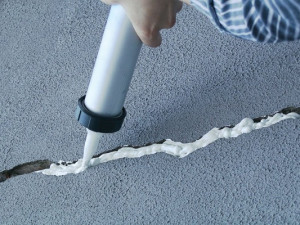
So, then not more than seven to eight months may be its shelf life. So, it is very important you cannot apply it for after a very long time once, it is produced then shelf life is important and this is important for much other polymeric material that is used in constructions right. So, it can be used within specified time within the specified shelf life and not beyond that then it is important at times to convert adherent by using a primer which would be prime coat as, I said in case of painting. So, you put a primer. So, that you convert it such that adhesive can bond it this is can be done by anodizing or etching by of metals for example you can do etching in some cases to obtain a more suitable state where the adhesive can bond. So, that is the idea adhesive can bond it right more suitable state alright now followed by this is that this process of conversion that you were doing it must be compatible with the system. For example if you use if you use, let us say acid in case of metal. Now, you know metal corrodes in acidic environment. So, compatibility with the adherent is important for example acidic material on metal would mean increased corrosion risk. So, that is important, so whenever you are using a conver some sort of conversion some sort of primer that should be such that it does not be compatible with that substrate and does not create a problem of durability or similar situations. So, that is about the adhesives, let us look at sealants the other kind of materials which is very much used in construction and corresponding materials. We will see Sealants are similar to adhesives they are similar to adhesives except that they fill gap see adhesives bonds 2 material 2 component. Now, sealants what do they do they do similar things. They bond 2 material alright but gap between them which has been left for various purposes you know. So, they actually fill in the fill in the you know gap and it is not necessarily need to bond the substrate I mean; not a very strong bond is necessary, but there should be actually filling the gap you know.

So, need not bond and not necessarily bond the substrate right for example this can be used for making it leak proof don’t want water to enter. Or it should be able to allow expansion contraction thermal expansion and contraction and fill in the gap do not allow moisture or something to get it, but allow its expansion and contraction of the component between which the sealant has been put. So, that is the sealant in sealants we put. So, they have similar sort of material right and we put but that should be you see the sealant should be resilient, because it should be many a places it would should allow expansion construction of the basic material or substrate where it has been applied right.. So, there we had fillers for good gap filling properties and it must have good slump resistance you know resistance against flow should be there should have low slump you apply the sealant and if it flows down. If you apply the sealant and if it flows down the gap then the sealant is not a good sealant. So, that is why it should have a good slump resistance against flow desirable properties flow maximum should be three millimeter desirable properties maximum flow should be 3 millimeter should have good elastic recovery, because as I said sealants go into the gap between 2 components and those component themselves might be expanding and contracting. So, if they are expanding and contracting they should the sealant should be able to take care of this deformation you know or periodic deformation you know repitive deformation and should have good elastic recovery should not crack themselves should not show permanent deformations. But, deform and come back to the original state.

So, that is what is the elastic recovery or resilience adequate tensile modulus it should have should be able to withstand should have good cohesion and adhesion properties. Cohesion properties means; it must be strong itself, adhesion means should have good kind of bond with the substrate and resistance to compression and shrinkage, because it should be dimensional stable should not be shrinking too much. So, then this will get problem it will actually induce stresses on to the substrate itself. So, this is the properties desirable properties of the sealant you know should have low flow otherwise you apply the sealant it will flow through the gap and will not actually close the gap. Elastic recovery should have good elastic recovery, because it has to with stand lot of deformations and should have adequate tensile modulus. So, adequate tensile modulus means should not expand itself too much under the same force, then what will happen it will actually exert pressure on to the substrate. So, should have good adequate tensile modulus of elasticity it should have good strength itself and it should be able to bond with the substrate. And it should be able to withstand compressive forces also, because it is not likely to undergo both compression and you know tensile stresses. It is likely to encounter both tensile and compression stresses, because it is filling the gap and should have shrinkage low shrinkage characteristics. This would make clear what the sealants are and what are their failure characteristics. For example: this is my substrate 1 and this is the other. This is the gap where I fill in the sealant you see this is the sealant now that is what we are saying that this sealant should be able to bond here adequately bond here adequately right and then should because this can expand. Or this can contract this gap can be smaller than; it should be able to withstand the compression and also when it starts expanding back it should recover easily right it should recover easily. Similarly, when this expands it will be subjected to actually tensile stresses.

So, it should have good adhesion. So, that it will also expand and withstand able to withstand this tensile stresses itself, besides that it should have good modulus of elasticity or compatible modulus of elasticity, because if it is under the same tensile stresses and if it is trying to expand more it might actually induce some stresses there right or if it is not expanding might induce again tensile forces here. So, that kind of things where it should have a compatible modulus of elasticity and should not flow when your applying, because this is usually applied in liquid state should not flow down through this rather get filled in. Now, they are oil based linseed oil with lycopodium powder it makes it putty. So, that is a sealant basically. So, now failure modes if you see the adhesion failure. You see the adhesion has failed the bond between these 2 has gone the adhesion failure right. So, this is 1 type of failure this falling involves the substrate itself has gone this falling, because the substrate itself has gone. There is a strong adhesion but it is such that actually it is taken away this sealant is up to here the gap remains still below and then cohesion failure means; itself, has failed you see the cohesion failure means this itself has failed. And if this is it is also true for adhesives if it is also true for adhesives right, then there is folding also there is folding means actually this is folded actually you know dimensional instability actually at the surface. So, it has folded. Intrusion is some external material quite often occurs, in case of road sealant used in roads construction may be an aggregate or something would have come in and pierced into it pierced into the sealant. So, intrusion that has taken place then the sealant once this has removed this has gone away sealant there is this failure in the sealant okay.

So, this are some of the mode of the failure of the sealant. And this also we understand that similar sort of behavior you know this diagrams also explains what would be adhesives, but adhesive will actually continue through it will be through and through. Cohesion and adhesion that is we have seen those failures that takes place besides that there could be excessive extrusion the whole thing coming out exclusion you know under deformation when this is compressing let us say lot of material comes out. This could be another kind of failure slumping that takes place, in the liquid state or if it is in molten state everything close down chemical attack is attack from the outside external environment and removal under pressure supposing, there is high water flow through this see if it goes away its just washed away under pressure. So, these are other kind of modes of failure which is possible for sealant right which is possible for sealant. If we see some of those sealants all you can see their service life for example you know putty and similar sort of oleic acid or oil and resin sort of thing; their life’s are generally of the order of around 10 bitumen sealants their life’s are around 10 rubber bitumen situation makes it around 10. There are butyl rubber solutions you see 1 of the common type of sealants that are used are butyl rubber solution, when I was talking about product, I just mentioned them. So, butyl rubber solutions which are used they are 10 plus acrylic resins sealants 15 flexible epoxies 20 very commonly used 1 is poly sulphide. There are several mono component bi component system I just put roughly here poly sulphide is 20 years of life poly urethane is type 20 years of life silicone also 20 years of life. So, these are the kind of sealants which you can have and typical service life ideas are of this kind that means; after this time after 20 years you have replace provided you have done it properly; their application is proper if the application is not proper you may not actually realize it. So, this is life of sealants right. Let us go to another class of material structure elastomers, we have defined what are the elastomers and in structures where do they use them you see vibration isolation under machines machine foundation. Because you do not want vibration from the machine to be transferred to the structures well these days base isolation is also done for seismic structures, So, they are also of sometime in noise control in building.

You do not want noise to transmit from 1 floor to other there are other kind of construction also those which we will do sometime later on what is called floating construction. But, vibrations supposing you do not want it to be transmitted machine vibrations or the noise generated, then uses isolators and bridges of course, we use bearings that means from structural element to the peer say the beam guarder to the peer. So, it supported on bearing. So, that lot of vibration that is not transmitted that is it absorbs. So, you know lot of shocks and vibrations are absorbed the system those are used are carbon loaded natural rubbers reinforced with steel plate. Let us take carbon loaded natural rubber together, with reinforced with steel plate also laminated blocks of synthetic rubber poly chloroprene or poly isoprene quite some time, with cork particles and the nylon rubber reinforcement this has been used for vibration isolation pads. So, vibration isolation pads would be natural rubber loaded, with carbon then reinforced with steel plate and then also other varieties are laminated blocks, with synthetic rubber with reinforced with cork particles and nylon rubbers can be used. Because this is for resilience you know shock absorbing it should be damping characteristics you know it should have sufficient damping characteristics. So, resilience it can absorb this energy and release it later on lot of damping properties can absorb lot of energy and that is why they, can actually do not transmit the do not transmit the vibration do not transmit the vibration right do not transmit the vibration okay. So, that is what has been used in bridge PTFE are very commonly used poly tetra fluro ethylene Teflon, you will have heard of this.

So, Teflon are used PTFE are used polymeric name is poly tetra fluro ethylene poly tetra fluro ethylene that is Teflon. This is very commonly used in bridge bearings neoprene bearings have been used. So, these are the use of structure elastomers, we defined elastomers earlier some usage; I am just mentioning and material that goes in. Then, we would like to introduce you to composite sandwich panel another kind of polymer composites, which are used in construction you see this panels, can be used for various purposes roofing walling, etc., It is basic structure as you can see is, with sandwiched, so you have leaves interior. So, inner leaf the outer leaf inner leaf and the outer leaf. So, it has got leaves actually this is a leaf this is a leaf and you have a pigmented fire retarded gel coat. Because as I said many of this polymeric material are susceptible to fire or high temperature they would degrade decompose or even burn when subjected to fire. So, therefore you need a pigmented fire retarded gel coat you know, you wanted to have a paint basically the color also show. So, interior would be something like this then you have a skin which is also fire retarded, which is which is basically, the you know outer leaf of the sandwich panel. Now, supposing I have transverse loading from this direction or this direction, it will be bending and you know the bending stresses are maximum at the outer leaf outer fiber takes the maximum stress. So, bending would be actually, taken care of by this fire retarded skin and also by this and this core transfers the shear you know transfers basically it is a shear connector. So, this must have good shear resistance, because you know in bending maximum shear is at the center. So, this can resist very high bending stresses provided this leaves are capable of withstanding the bending stresses themselves.

So, usually there will be fiber reinforced plastic glass fiber reinforced poly ester or such rigid fiber reinforced composite you know very strong; they are they can take lot of tensile load or it can its capable of high tensile stresses and high compressive stress also. So, strength come tensile strength should be high composite strength should be high of this 1’s whichever way it is. So, tensile and compressive strength should be high for this leaves this should have high shear resistance shear resistance, because it has to withstand, but it has got other purpose it can act as thermal insulation. So, you can have poly urethane foam core. So, this core is suppose to withstand, I mean; the shear transfer the load from outer leaf to inner leaf or the inner leaf to outer lo leaf right. The bending stresses from outer leaf to the inner leaf and withstand the shear stress bending shear stresses. So, therefore this course are not very strong, but at the same time they serve the purpose or functional purpose of thermal insulation. For example: poly urethane foam will have very low thermal conductivity and also serve the purpose of let us say: noise and protect you know noise insulation and so on. So, surface skins of course has to be fire proof and if it is outside it must be UV radiation proof, because it is exposed to the sunlight. So, this is what a sandwich panel construction is and polymeric materials have been used not much in India till date. But, they can go in making of various kind of roofing system you know, they can go in production of various kinds of roofing roofing system. So, actually they actually can go into production of various kinds of roofing system and also walling system they can go into walling system roofing system and walling system etcetera right. They can go into roofing and walling system itself and can resist bending load functionally efficient system. They are light weight and also we can design them for specific color texture, we can design them by eternal surface for rejections of solar radiation or acceptance because absorptivity can become high or low. Therefore, we can make them design them you know tailor them to specific properties.

So, they have lot of advantages they are light weight, but remember they are costly also robustness will not be there in such structures, but you can make large span say you know large span roofing bar stand roofing for bar stand or dome or similar sort of you know places where you want column free space you can use them column free space you can use them. So, roofing shelf structures wall panels also, because they are light weight. So, in very tall buildings where you have frame construction you can use them; for all structures right. So, we can see now into water proofing treatment you remember, we discussed about the surface treatments earlier and coating was one of them the coating is nothing but something like paints. So, therefore you can have polyesters epoxies and acrylic etcetera. We discussed about the coatings but then we discussed about 2 other systems called 1 we call as pore lining system. And we said there is something called pore blocking system the material those goes into those that go into I mean; those go into the pore blocking system and pore lining system. We will discuss that right now. For example you know alkoxysilanes are the monomeric organo-siliconic compound containing carbon nitrogen hydrogen oxygen and silicon atom and they can penetrate deep into porous material and on curing can bond with the substrate. So, this material silanes can bond with the substrate very easily they are low viscosity, they can go into the pore and large number of this alkoxysilanes join together forms what is called siloxanes m stands for metals r stands for alkyl group r stands for alkyl group. And then h2 SiO3 and several siloxane together forms silicones. This silicones can form you know they either, can dissolved in a solvent and make pore lining treatment. They can go the actually silanes, you can penetrate into the concrete and then polymerize right.

So, this polymerization can give silicones which are pore lining treatment the pore blocking treatments are liquid silicates or silico fluoride remember I talked about silico fluoride used in used for water proofing. So, they are use they are pore blockers they react, with lime present in the concrete system and forms CSH gel or insoluble calcium silico fluoride. So, they are pore blocker because they form the CSH gel and blocks this pore they are pore blocker epoxy or acrylic resin can also be used for pore blocking purposes. So, that is what is a pore blocking and pore liking lining treatment for water proofing silicones are for pore lining treatment. And then fluorides are for blocking or sometimes epoxy or acrylic resins can also act as pore blockers. So, therefore, we have discussed now almost all uses of polymers in construction. We have looked into concrete repair and we have looked into water proofing system. We have looked into panes adhesives sealants and that is the major uses and also looked into composites, they are used in polymer you know in construction. So, that finishes our discussion, on polymer with this is I think, we can conclude. Thank you.

Make Money at Home By Starting a Perennial Edible Plant Nursery in Your Backyard

Just want to give you guys a quick reminder if you guys love my videos and want to support me, check out compassion-tees com link is at the end of the video. All right. This is John Kohler with growing your greens.com today we have another exciting episode for you. And today I’m here in southern California, Orange County. It’s a beautiful day. I swear it’s still January now. You’re probably seeing this maybe February and lusher when you, when this will air, but it’s currently January in southern California and it’s 80 degrees. I’m like in a short sleeve shirt. Looks you guys are still freezing. Anyways, aside from how the weather is, the reason for today’s episode is that I’m here just in the standard residential home, you know, attract home and one I want to share in this episode is a two main things, you know, uh, one is that I want to share the story of how this gardener basically turned his gardening hobby into a full fledged business. We’re actually, he is licensed actually from the state, which we’ll talk about later. Um, as a nursery to actually sell plants starts or, and specifically edible plant starts and that’s how I found him actually.
I’ve found his ad on craigslist and he’s selling some of my favorite plants actually in the whole wide world. He sells, propagates cells in the local area, but then he also has it on etsy and sells it online and will ship to you guys out there. So if you guys are looking for some of my favorite plants, the purple tree collards and you know that January bands or the longevity spinach, also the Okinawan spinach. Actually I liked better than the longevity is finished because of our deep purple leaves. He grows these and he sends them out to you guys, you know, not only making a side income for him, but also more importantly teaching his kids. I think they’re like eight and 10 or something. Eight and 12. I’m about business about like how to run a business, how to like, you know, not work for the man. I mean he’s worked for the man his whole life as an entity, as a full time job, but as a part time thing. He wants to spread the, spread the plant, diversity out the people that make a little bit of money on the side because he’s going to be retiring soon and he’s going to probably get into this business in a bigger scale once he retires from his regular Gig and uh, and basically his garden style. We’ll, we’ll go back in the back and share with you guys how’s garden style got brought about.

Anyways, this is his front yard, which, you know, doesn’t really have anything edible. And I walked up and I’m like, well this is odd because most places I walk up to you to make a video where they’re selling perennial vegetables and they usually all food forest in their front yard. There was like none of that. I’m like, wait, do I got the right house? Am I missing something? The challenge with that is if you’ve got a wife, right, you’ve got to do what the wife wants, right? The white gave them, you know, rain of the backyard. But the front yard, it’s got to stay how she wants it because she doesn’t want any animals. You know, I like to encourage everybody to, you know, grow some, grow, some edibles that don’t look like edibles in your front yard if you don’t want to like look too weird like them hippies that are down the street that have all the fruit trees in the front, right roast of non edibles. There’s plenty of things that fill in some of the bald spots along the bottom, like some purple sweet potatoes, purple sweet potato vine, or is amazing. You can plant some purple sweet potatoes or even like, um, you know, other plants and they’re just gonna grow and they’re going to make a nice ground cover. You’d never know there an edible and they look amazing and they’re beautiful.
Then when you get hungry, just come out to the front yard and dig them up and you’ve got an instant meal. Oh, and also you could eat, eat the Greens. Oh, and the extra bonus credit, if you could find this one a, there is actually an edible sweet potato, a vine that’s actually grown for the leaves, for edible leaves. And actually it doesn’t really make roots. It just makes common roots. I found that in once in Texas had cuttings and I lost it, so that’d be kind of fun to grow up front anyways, not much to see in the front and actually let’s go to the backyard. Should the guys more about this gardener and how he turned his hobby literally into a business and also at the same time teaching these kids about making money. All right, so I’m just about to head into the backyard, but before I do, I want to let you guys know what you’re going to see before you see it so that you’re not shocked. Right? Because I know there’s a lot of shock sometimes. I mean if you walk into my back yard, you see a full on garden. It’s just solid. All my raised beds this time of year are totally planted out. Fill it up. It looks lush. It looks like it’s growing. It’s great. That’s because I work at home, right? I’m home all the time. You know, I, I spent several hours as long as the weather’s nice in my garden every day doing this, doing that pruning stuff, planting new stuff. Like I’m always there. Taking care of it, and unfortunately not all of you guys have a work at home job where you could be home a lot and take care of your garden.

Maybe you’re retired, maybe you guys could do that and that’s great, but for the rest of you guys, which is probably most of you guys honestly watching, you guys have a real job and you’re trying to like fit in gardening time on the weekends, maybe a little bit. If you come back, come home after work and you will feel tired and you and you want to do something, you might do a little bit of time there and then your garden reflects on you and how much time you put into it. You know if you put a little bit of time into it, it’s going to look all right. If you don’t put any time into it, let’s go into terrible. If you look, put a lot of time in it, it could look amazing. You know, and it’s important to me into my garden always looks nice. Not only because it a beat us because it’s also more beautiful to me and I don’t do it just because the videos, because I don’t like seeing when I got yellow leaves, I’m like treat college and I got to pick them off and they got to go in the compost because they’re going to do more good in the compost, breaking down and turned into more so than me looking at it and be like, oh, I’m not doing good because my plans got yellow leaves. Well that’s because it’s winter time. They’re getting old and it’s been cold and whatnot.
Anyways, so I wanted to give you guys a heads up. You know, this guy has a full time job. He travels a lot for work so he’s not here and so what he tried to do as he tried to build some raised beds and put in Pumpkins and squash and just all the normal things like the annual crops that most people grow that most people, you go down to the nursery and you buy annual crops to plant out. You grow them for a season. The season’s done, poof, they’re gone. And then guess what, you got to pull up the dead stuff and you’ve got to replant the new stuff for the next season. He doesn’t have the time to do all that stuff. So he found, actually he’s been watching me now for seven years. He found some of my videos where I talk about perennial vegetables and he saw specifically the one about the Purple Tree College, which is my favorite plants to grow in my whole garden. He started growing that and that’s when I got him to catch the perennial vegetable bug. Oh my God, I want you guys to catch the perennial vegetable bug. Perennial vegetables are the most amazing festivals and I will say that they work better or worse in some location. So zone nine, you’re good with perennial vegetables, right? Um, I mean I visited a, you know, a lady’s House and in Utah in Salt Lake City area that had also perennial vegetables will, she got shows most be plenty of fruit trees in her front yard that just keeps coming back every year. But in general, perennial vegetable, you playing at once and it just keeps living multiple years or just keep living and living might even outlive you and you have to do anything you have to like tend to, you don’t have to harvest it, they’re pretty much hardy, you don’t have to take care of it.

And then you’re basically going to have food. So you interview if you’re gone as long as your stuff’s on the irrigation system and getting water, you could be gone for two weeks. You come back, it’s still growing, you know you don’t have to do much to. And so that’s how this garden that I’m going to show you guys, and this is the winter season, so a lot of his fruit trees and the dormant stage and it hasn’t been, even though it’s 80 degrees today, that got some rain couple of weeks ago and it’s getting colder. Pride didn’t really freeze here because it doesn’t really freeze. We’re kind of have a nice ocean influence, a warm southern California surf weather. So yeah. Anyways, without further ado, let’s go ahead and show you guys the backyard. All right, so this is the backyard. I just walked down the alleyway and this is when we entered into the back yard. You could see their things to bring huge trampoline, right? And if you got kids, you guys should probably have a trampoline for your kids. Just make sure they’re safe on it. There are lots of accidents happen on trampolines. Anyway, they got the netting up and I’m sure the kids have tons of fun on this and you know, always wanna let you guys know there’s, you know, there’s always a way if you don’t have a lot of space because you’ve got kids and you’ve got a trampoline or whether you’ve got a small yard, like a lot of new homes these days have small yards and two story homes.
You have a lot of square footage. You know there’s always a way to grow some food and I want you guys to think carefully, especially if you don’t have a lot of room to grow with us because of trampolines or because of other reasons, is to grow the most valuable crops to you. The most valuable crops, you may not be the most valuable ones to me, right? Maybe you love mangoes. He actually has a non docked my mango and those guys didn’t. No mangoes. Well no non dogma there. One of my favorite mangoes and the entire world. They’re like, they taste like you’re eating perfume. I’m not joking. The mayors in the store that we get here, even in southern California, list of the local grown mangoes, which are usually the Keats, um, they taste horrible compared to a non knock mine and you guys are in Florida or are lucky to have those guys, but you know, that could be important to him because he wants to have those good mangoes that he, he got as a kid or that he, that he loves the flavor of, you know, you might want to grow annual vegetables because you love eating your lettuce and your homegrown letters. Nothing tastes better. That’s like your favorite food in the entire world for your favorite thing. But to me, what also really overlays into, you know, growing my favorite food and the most Bible food for me are perennials. Because literally you could plant them once and without much work as you guys will see, they could just grow a lot of food for you without doing really much of anything. So you guys are in zone nine, you know, South Texas, south Florida, Louisiana, some when those places down there by the golf, you know, this video is for you.

If you’re in like many parts of southern California, northern California, where don’t get freezes, this is going to be for you. Some of the crops that I’m going to go over today, um, will die. They’ll lose their lives and are free in a freeze frost. Um, so you will have to grow those like indoors or even a heated greenhouse, you know, especially in the wintertime. So you don’t lose your plants. The other amazing thing is like this guy started a nursery literally in his backyard with the plants that he’s growing in his backyard, that he harvests and eats and dries, will make patterns and heat that when he travels and whatnot. That’s what uses for a stock to basically literally this guy is printing money in his backyard and not really bringing money, but he’s growing plants, taking cuttings, ruining them, and then selling them for five to $10 a pop. So you know, that adds up and it’s super simple when you’ll see some of the explosive growth when he has on some of these plants. Anyway. So without further ado, let’s go ahead and take a look at his best growing crop and the crop you guys definitely want to grow. If you guys live in anywhere in southern California, you know, and it’s, and it’s stays warmer, doesn’t like freeze. And this plant can handle down to like 33 degrees, 32. You need to protect it and cover it, but 33, it’s fine. And even through the wintertime here it is amazing. So let me go ahead and show you guys that flint nips. Alright, so now we’re gonna. Shoot.
The guy is actually the one amazing plant that you guys should definitely grow in southern California. That’s a perennial. It’ll grow year round if you guys are lucky enough to live in Hawaii or South Florida, you know, you should definitely be having this plant and it’s right behind me. You guys could see, I mean basically the whole screen for the most part, it’s just all those green plants. And then maybe you see a tree here, a tree over there. The kids got a loquat and he’s got an apricot or whatever and he’s got random fruit trees around. Um, but the main plant is right here. And actually this is a, he told me this, he says, John, that’s two plants I planted. Two plans basically took over this whole area, right? This plant is called [inaudible] and Ben’s also called longevity spinach. Right? And that’s because if you eat it, you’re going to live a long, healthy life and hopefully you’re going to eat this and also exclude other things that you heard would normally be eating processed foods, junk foods and animal foods and excess. Right? This is, I think, believed to be called the cholesterol lowering plants. Um, that being said, I wouldn’t eat just for lowering my cholesterol, would not include foods that contain cholesterol to help lower my cholesterol, you know, my opinion is that I like to, you know, try to eat the healthiest foods in the planet that have a lot of healing properties and this is definitely one of them.

And look at this two plants, I don’t know how long this has been planted here, but this is creeping out over into his knights, rocked in area that I’m standing on and he’s just taking over. And the other cool thing is not only does he have literally an endless supply of food to eat, he also didn’t do much, right? I mean he planted this one, see, probably waters it to be on an irrigation system and then basically just grows and he doesn’t do anything and so he has food to eat. But more importantly, number two, he’s printing his own money because here’s the thing, right? Each one of these growth basically stems. You can just come do it and basically snap this guy off, right? He snaps this off and as you guys will see the process that a little bit, he basically just grows this little snapped off piece into a whole new plant with roots. He sells it in a pot and then he sells them between five and $10 depending on the plans and all this kind of stuff. Right? You also could just send these guys out, just the cuttings out the people fresh and the people could route them themselves and actually that even it sells for less money and all he has to do is literally come to the backyard, step these up, put them in an envelope and pay the post office which recently raised their rates to ship these people and literally like, you know, people are trading money for this. Which I think this personally, the generic programs is more valuable than money. Right? And I’m going to eat it. They’re, I’m eating a profit. So.

But here’s the amazing thing, like a lot of the perennial vegetables and even some of the fruit trees, you know, you can take cuttings from, you can let them go to seed. You could harvest their seeds and sell their seeds. There’s so many different ways you guys could actually turn your hobby of gardening into a business. What do you want to do with like a full fledged business? Like he’s here. We’re actually, he got licensed with a business license and licensed by the state as a nursery, which also means other regulations come into play where he has to answer to the Department of Agriculture with, you know, uh, making sure his sisters, he can’t sell citrus because that’s quarantine and they have to do all these inspections and tests on stuff which is actually a lot of red tape. So you know, if you’re not going to be big, you know, might not be good to, you know, if you’re just doing something on the side, sell a few plants here and there, you know, I probably would just do it, you know, there’s plenty of people selling plants on the side on, on craigslist. But yeah, you could definitely make an extra income by offering some other plants that you guys are growing right now. I know you guys. A lot of you guys are watching me a lot, are growing some of these plants and it’s really easy to propagate these as you guys will see in just a little bit, so stay tuned anyway, don’t want to cover some more of the plants that actually he really loves and I love that.
Easily propagates through his methods that he’s using here. So the next plant I want to shoot the guys is actually one that could handle the frost, so maybe down to like zone eight, zone seven, depends how cold it gets me because this is actually in the cruciferous family of plants and unlike standard cruciferous family of plants which are known as annual is, that means you could grow them for maybe like a season, whether that’s a, you know, six months or a year, you know, then the plant basically goes into its reproductive cycle, will produce a flowers that seeds and then basically be at the end of its life. And um, and then you have to start over again, right? And plant the seeds. These guys right here are known as the Purple Tree College. This is probably my single most favorite plant that I’m growing actually, and these are the special ones. These are purple one, so purple ones are known to be like in the northern California Bay area and actually these tree collards are a tree collards. He originally purchased from Berkeley as cuttings. He got them implanted. Actually there’s one plant here which is just sprawling. It like comes up, it falls over, comes over. I mean some of the tall ones are like maybe up to 12 feet tall, but this plant is literally also literally growing him money, not only because he now has really never have to buy any kind of Kale or cards because he’s can harvest these tree collards here. The nice large leaves can be used as rap, so then you have to buy tortilla shells, but the smaller green zero can be put into a green smoothies or juices or actually you know what, especially in the wintertime, I just like eating them plain. Wow. These are so sweet.

As I said, these can handle the cold weather, a mine this year, it got down to 26 and I’m sure it could go even a bit colder than that. And aside from reducing just the leaves that you, you will eat, you can basically just take a cutting so he could take the tip cutting like on the generic, just like break it off right here. He has a lot of like ops shooting from the main brands that he could basically just clip off and then route these. He’s been experimenting with just like little small cutting, like not even that large that will then grow roots and then he’ll be able to sell the plants. And uh, you know, this is important for a few reasons. Number one, for the money, yes, people like to do things for money, but number two, more importantly for me is spreading that genetic diversity of this, of the tree collars out to other people. You know, I mean if you’re in southern California also, I mean the tree collards are no brainer.

You should definitely be growing the tree collards because it literally, it’s a year or year round food source that you guys could have that is so easy. I mean, these guys might get David’s once in a while if your soil practices aren’t good and you know, you’re not taking care of it and watching after plants. But for the most part, these, these plants are like pretty tolerant of a lot of conditions. I mean this, these are the plants that have been broken even though he’s traveled around a lot. So the next perennial vegetable that Jason grows here is this guy right here. This is known as the, uh, okay, now and spinach, also known as [inaudible] or by color. So this one’s related to the longevity, spinach, but a little bit different. This in my experience, and Jason’s also a bruise a lot slower, so it just doesn’t make as many leaves to eat as fast, but you’ll be rewarded because the leaves actually are a lot more nutritious because if we pick one of these leaves, as you guys could see, it’s green and that’s what most leaves are. But on the back, look at the back, the back is actually a purplish colors. These are basically pigments that make it purple, that are Anthocyanins, give this extra healing potential. Extra antioxidants which are good for us to eat is quite good.

The junior pokemons generally will do well in the full sun, the longevity it’s finished. But this guy I found pretty much likes it in the shade. And consequently, um, I think, uh, Jason’s found this out too because it’s actually underneath one of these trees here. Uh, you know, that provides us some shade. But this guy actually looks quite healthy. And once again, this plant, literally he just takes cuttings off of it and literally sticks them in dirt and then they grow more. And these are probably the three main plants that he’s focusing on, like propagating in a big way by cuttings and selling cuttings and actually hold plants with roots on them already. If you guys are buying these, I would encourage you guys to get them already pre rerouted because you will have a lot higher probability success of succeeding with them. You know, once a rooted there pretty much established plans, but if you guys are getting a cutting, your job then is to get the cutting with no roots to get them to have roots, which then can be more difficult, although you will save more money by buying them as cuttings. And these are the three points that I want you guys to grow. Once again, this one doesn’t like the frost either. You know, I don’t have direct experiences with this.

Actually I have, I still have some growing, but it grows in my greenhouse year round at Arbor. Take it out. It doesn’t like the full sun of Las Vegas by any means, but in the greenhouse it’s shaded, gets some nice light. It does fine, but slow growing. Now, aside from that, he also has many other basically perennial style crops that basically he plants once and they grow year round. So I want to cover some of those. Some of, of these actually he will sell seeds and some of which he doesn’t actually anyways, and maybe some of them, he will start selling seeds. So let’s go ahead and share it with you guys, some of you that are perennial plants that he’s growing in his yard that you might also want to grow if you’re in a similar climate. So we are here in southern California, so are there, were anywhere in southern California or even like a south Florida and even South Texas. Um, you guys could get away with growing some of these plants. All right, so now the next plant is a plant. You guys is a perennial plant. You guys could grow basically wherever you live, even if freezes and you’re in Wisconsin or Michigan. This is one I definitely want you guys to grow.

This is actually known as the French sorrel. So the French sorrel, as you guys can see in southern California when it’s 80 degrees and it’s been probably in the sixties, seventies and the wintertime, it’s doing amazing. Um, these leaves, I mean this is a nice big outcropping. Like this thing is like maybe at three feet by three feet mass of green, Zapier this is what they look like and when you eat them, wow, that’s quite good actually. Okay. It’s like, reminds me of like a lemony spin it so it tastes like lemonade kind of has that oxalic Aleke quite good. And now this guy will grow year round here, but in other places right here will go dormant in the winter, but the roots will still alive so that come spring right when it warms up. This will be the first thing that’s coming out of the ground. So you will have the freshest greens to eat in the springtime. That’s why I like it so much. Plus it’s also, I’m really nutritious. So of course meant yes. Another perennial, depending on where you live. I mean in general the roots will stay alive year round by the top. Growth may not have you lived somewhere where it gets too cold, but men does an amazing plant. It, you know, it’s highly beneficial. Plan can flavor things really nice. Uh, but also quite nutritious for us because of all the essential oils in the mint. And also for him.
I mean, once again meant for him is like printing money because literally you could take, you know, a dig up some of their root, the roots off the mince and replant them. You could probably just dig up little pieces right here with ruth on them, plant them, and then grow them out, you know, to sell people mid plants and yeah, you might think it’s kind of crazy if you grown mint ones, you have so much you can’t even know what to do it, but people still don’t have men so they could buy their mint and he could route him and he gets on the plants and this is basically his mother stocks. So he has all these mothers that he’ll be to take cuttings off of and you know, sell their babies. Is that like a prostitution? So the next plant, I want you guys to grow up. You guys live in southern California or maybe like South Florida or Hawaii. Um, other, other than that, this tree may not live that well or that long because it doesn’t like the frost. This one is actually known as the pigeon pea. So that pigeon pea is commonly used in like permaculture is a chop and drop or as a nitrogen fixer because it is in the pea family, it’ll basically fix nitrogen in the root and literally make your soil more fertile. So this is often planted like next to you know, a fruit trees when they’re young because these guys go really fast to shade them out but also provide nutrients to the adjacent trees. But the other thing that you don’t know is that actually it also makes it flowers and actually it’s in flower right now. So let me go ahead and pluck a flower here for you guys. Did you guys what it looks like? So this is a pigeon pea flour. The front is just kind of look a yellow but at the back we’ll get it back. Man. That’s kind of pretty.

And now I do eat the flowers, right? Hmm. I’d know if I eat a lot of flowers but I can eat the flowers by basically he’ll let these peas grow and heal. Harvest them and he’ll harvest and when they’re young and eat them, like edit Nami. And then also if they get older, he’ll harvest them for the, for the beans themselves, removed the beans and basically make it, make it like a re fried beans. So cook them up and mash them down. And he also actually sells a seeds for people that want to grow their own pigeon Petri. So this is like, you know, once again, and this, this tree is amazing. Oh, let me show you guys. It’s been two years. There’s a lot on here. So this is dry beans from last year and we could crack this open self driving so that you don’t have to do then you just come out here and you guys could just a harvest out the seeds. And that’s what the pigeon pcs looked like. They just look like little beans are. These must be cooked in order to be eaten. Although, you know, I have a, I did visit my friend Chris who said you could eat the young pods like raw. Um, but yeah, I would be wary of eating a bean family plants raw. They should mostly be cooked. All right. But yeah, one amazing tree. Um, yeah, southern California. Doing quite well actually I think it’s the first tree I really like. I mean this thing is like 12 feet tall and maybe like, I don’t even know like eight feet wide, like looking super good. Like this to me would be a really nice tree to put in the front yard because it doesn’t look like it’s edible. It just looks like a tree with some nice pretty flowers. But then also he could be growing more beans in the front yard too. Alright, so the next plant, I want you guys to grow up.

You guys live in like a southern California area where you don’t get any true freezes. Like I’m able to grow this year round in my unheated greenhouse. But if you live somewhere where it’s freezing, this guy is not gonna make it. No, this is related to the tomato. So this, you can think of this as like a perennial, a tomato in quotes because of fruits or liked tomatoes, but they’re totally not. I’m, I love this fruit. So amazing. This is known as the Cape Gooseberry, also Paul Highbury, also Golden Berry, and that these are actually quite popular now at health food stores to get them dried golden berries and if you want the seeds just go to your local health food store. A good health food stores will have the dried golden berries get the dried golden berries. You could eat them, dried, they taste amazing, but then open them up, open a few dried ones up and take out the seeds and plant those, and you could have this very plants. You can grow this as an annual and in climates that frost and in climates that don’t frost, you’ll be blessed like he is here to basically have a four foot by eight foot raised bed. You guys could see this as a raised bed. This is where it used to do as animals, but then he planned this once and then you got busy and it does grow and basically took over the whole thing. It’s like a Golden Berry and a a mulberry in here. Maybe a few other plants, but basically he has just one huge Bush which will provide him, you know, not maybe not quite year round, but you know, most of the year some fruit.

So it actually goes into the flower. The flower kind of looks like, um, you know, like, like a little bit like tomato flower is a little bit different. And then they wanted to get pollinated. They turn into little, a little, uh, like berries. So this is kind of like Chinese lantern. I basically there’s a husky branded or Tomatillo and uh, you know, one of the things that Gartner talk to me about is that, you know, guarding teaches patients and unfortunately in our, in our lives, how we’re living today in this modern age of 2000 in year 2019. And you know, we, we don’t have a life of patients. You know, we live in an environment of instant gratification and we want things now, you know, if you want, if you’re hungry, you go to a fast food joint, you order your food and they give it to you right then and there. You don’t have to wait and you know, I think a lesson that can be taught to kids and adults alike is, you know, patients, right? We need to have patients with other people and more employee, especially with our plants. You know, as soon as one of these a pull out berries come out and you see it and it like makes a nice little like, you know, a lancer and you’re like, okay, I got one man, I’m going to eat it. And you open it up and you see like there’s a little green bury inside there and then you eat it and you’re like, oh God. I mean I’m not joking. That really tasted bad. Then you eat it. You’re like, man, that thing is terrible. Well that’s because you just picked it and it wasn’t done growing.

It wasn’t done. Ripening. Right? So then you gotta wait for them to ripen and you’re only going to know if they’re ripe. They taste good. If you grow the plants and you harvest it at different stages and you could see and you know, have you listened to my videos? I try to shoot the guys my experiences and hopefully you listened to them and if you don’t, that’s your problem. I’m the best way to harvest your poll. Hobbies. It’s actually not harvest them at all. There’s still like, let them drop onto the ground when the plant, when the fruits are ripe on this plant and with many but not all plants. Um, it’ll drop the fruits. So luckily as luck would have it, there’s one here on the ground and if we open this guy up, so number one, this guy looks dried in number two to open this on the camera for you guys when we opened it up looking at. Oh my God, look at that thing like, so this one? No, there’s some defect on this side. Maybe some bugs got in there, but look at that. That’s the color. It should be. Not Green. It should be like nice bright orange man. And now we’re going to eat this on camera. Oh my God. That’s one of the best golden berries ever, ever had like, seriously, make sure I’m not eating a bug here because there’s a bug hole or something. Wow. Golden Berries in January. Wow. I mean it’s so sweet. It’s so delicious. It is so good. And actually there’s some research that says these guys can can contain b 12.
I don’t know if that’s accurate or not, but nonetheless, you know, fruits and vegetables are reaching different phytonutrients and phytochemicals that make us healthier and at the same time they taste great and fruits and vegetables are so similar to grow in your backyard, you guys should only be grown some golden berries, whether annually or perennially, if such a climate because I mean literally by doing nothing, he has a lot of food and you know, of course you could harvest is a fruits, eat them fresh. You could freeze them, you could freeze dry them, you can dehydrate them. And also, you know, he has all the fruits. He could actually also harvest the seeds out of them and send those seeds out to people so that they could grow their own golden berries to inexperience. The patients of having a fruit or vegetables are ripe into perfection before you get to eat them. All right, so this plant doesn’t look like much now. And if you guys live in a place that frost, this plant is looking like nothing right now, mine totally frosted out, um, you know, after the weather cooled down, this plant really doesn’t like it too much below 40 degrees. It’s really not like in life. This is known as the Malabar Spinach. And this is the red stem Malabar spinach. The one I prefer. It kind of makes it more deeper, uh, you know, red veined leaves and uh, this guy, uh, you know, grows if you live in like, um, you know, the tropics, like south Florida or Florida where they don’t freeze or rarely ever freezes in Florida, but, um, this can grow year round. Um, so the cool thing I learned is that this guy could be propagated by cuttings, so he will propagate this in season, in the spring, summer when it’s nice and warm just by taking cuttings and propagating in the methodology guys just in a little bit. So stay tuned for that. But then in the wintertime, he harvests the seed.

So right now there’s all these dry seeds and the seeds that you guys are seeing right here that are just hanging. Let me go ahead and pull that off. You can see a little cluster of seeds right there. I mean this is money. He’ll sell the seeds, you know, for cash. And then now you could actually grow these guys out yourself. Um, you know, in the, in the, in the summer season, you know, when it’s quite warm, doesn’t like frost and have your own plants. And these guys grow up pretty fast once they get established, like I swear the first several weeks or maybe even the month, they’re growing really slow. Like they may be like, might move my grill like one millimeter a day of that. But once they get up to leak at least a foot, then their credit growing by leaps and bounds. We’re literally, I think the main thing with Malabar is that if you’re starting from seed, you need to have a heat map that they’d like a nice warm germination. Um, evidently it’s been warm here because they are germinating in his yard. Let me go ahead and talk more about a germinating your Malabar spinach and uh, watching all his, uh, just coming up on their own. All right, so as you guys could see behind me, right, like here is Malvar spinach growing and all these guys back here, they’re kind of looking at Jack Dump because there’s, there are sprouting a, but they’re kind of looking like a little bit, having a little bit of a hard time. Um, our Malabar spinach and how he grew this is basically they fill up this whole fence behind that. He grows them up some trellises and then at the end of the season they basically just drop all the seeds because he harvest is as many as he can, but there’s always extra seeds.

Nature always provides abundance and I love that about nature. And then you harvest them, then the rest drop and then the basically they now really grow for next season’s crop. So this is like literally he had to plant this plant once he, it grow for a season, it drops seeds and now every year it cycles like, you know, drop seeds at the end of the year and then starts new ones and they pop out and they just grow on their own. That challenge I have had, we’re in a climate where it gets pretty cold, is that the soil doesn’t warm up and then my seeds don’t germinate until it’s well into the season and then they’re never really established to well in wwe and then it gets super hot. So I have to actually start from transplants grown early and put out so that they are, have a nice size by the time that he comes on so that they can handle 100 plus degrees. Whether that being said, these guys can easily handle 100 plus degree weather, you know, provide. They’re nice in established plants. Um, you know. So that’s another one that I would encourage you guys to grow. The Malabar Spinach, one that I like. It’s a heat tolerant, leafy green. Soon another plant that he grows here that also is a perennial vegetable that can be grown year round depending on your specific climate. Like Phoenix, it’s no problem to grow year round. Southern California shouldn’t, shouldn’t be really much of an issue, but they have had a lot of rain. Maybe it’ll get cold to a. This is known as the Moringa and you guys can see he’s got nice green growth. I couldn’t keep my green growth on my plants. Even the ones that I brought in my greenhouse still got a bit too cold for them.

They dropped off, but the root ball will stay alive. So if you live in a place where it does get cold, hopefully not too cold, you could cut this tree off of the base. Mulch heavy. Keep the root alive. It’s basically like Kinda like, almost like a big radish root, like on the bottom. And that’ll stay alive and then come spring. Actually it’ll pop out new growth. Right? But here in southern California, he’s keeping the green growth, uh, you know, around. And this one, he also likes to sell seeds for it. So his big trees, some of them went to man, I don’t know, 15 feet tall, he’ll grow them out and he’ll have seeds that he then will sell for you guys so that you guys to the Marina Marina, also known as the drumstick tree. Some arena is a tree that I would encourage you guys to grow. Actually this one, this one might not be too bad growing them in the front yard too because these guys actually can get quite big. And to me they look kind of ornamental. They don’t look like you’re growing something edible in the front yard. All right, so the next plant I want to show the guys actually want to haven’t seen outside like Florida or Hawaii. I think it’s kind of unique that he’s even grown it here at all and it’s actually doing quite well. This is known as CSO, spinach and I’m not really familiar with it actually too much. I know it’s from I think South America originally and this one doesn’t like freezes either. Uh, he says you can probably get it by cuttings and it actually does, uh, you know, roots fairly easily.

That being said, I haven’t grown up myself so I don’t really don’t know, but I’m glad he’s grown. He’s basically grown in an elevated a container and it looks like it’s growing pretty well despite like the cold temperatures here, which I don’t think it’s froze here yet. Um, you know, having a little bit of challenges isn’t like the super cold weather. It might be good to maybe put it in a little bit warmer place, but you know, come the spring and summer. I’m sure this guy is gonna do really well. He actually got these plants originally from Florida and got shipped to him and now he’s throwing them out. So that’s amazing. And the other thing I wanted to show you guys in this, this is like extra credit. If you guys are like super plant nerd geeks and you want to take a chance on something, this, I would only grow if you have a frost replaced, are going to definitely grow that inside because this will not take a fraud. Now the other thing that’s really cool is this guy right here, you’re like, John, that’s not really cool, man. That’s just treat college man. That’s just pretty normal.
So if you guys know why this plant is unique is because this is not from a cutting, these are not college from cuttings. His tree college will go to seed a every year or some years and produce seed and then this is actually a tree collared from his seeds. So normally when tree collards go to flower and set seed, right, they’re promiscuous like I would like to be or maybe I, I wish I was when I was a kid. Um, and they will basically a cross pollinate with other brassica family plants. So for example, the tree colleges that I grow in my backyard, they’ll cross pollinate with dinosaur Kale, they’ll cross pollinate with ornamental cabbage, they’ll cross pollinated with ornamental Kale, they’ll cross pollinate with my Broccoli, don’t cross pollinate with, you know, any other Brassica family plant that I had to be grown. Actually a cool crosby, like a rubella. I don’t know about our cross pollinate and tree collards. That’ll be interesting. So my, my tree collards seeds will have properties of the traits of the tree college, meaning like grow tree ish, but also sometimes have like leaves looking more like the Dinosaur Kale. So actually those are kind of cool. But the unique thing about Jason hears that because he basically goes perennials and he doesn’t have time for annuals and he’s working too much. He doesn’t grow any other Kales here. He only grows the tree color or tree collards. So basically the seeds that he’s producing and one of his neighbors in a, in a local area has some kind of other cruciferous vegetable growing. He has his tree collards are treated seed because they’re only meeting with other purple tree collards.

And you know, as evidenced by looking at these, these, this tree color that’s from seed. It looks exactly like a tree color for me. So I don’t do DNA testing, but if I did, I’d put definitely money on it. This was like 99 percent, you know, I’m just like the other one because it’s not getting cross pontis. That’s actually quite cool that he, he’s the only guy that I know of that has like true to seed treat columns. And then even if you’re one of them plant geneticists and you’re like, John, you’re wrong. There’s like point. Oh, oh, one probability that it’s not totally true because it’s a little bit different. Well then I’m wrong. All right, so aside from a lot of the vegetables, uh, Jason also is grilling some trees here, so he has different, you know, uh, trees like Suriname Cherry trees and fig trees and citrus trees. And actually here is a Kumquat tree. He has a loquat tree, a feijoa or pineapple guava tree. But uh, this is a Kumquat tree. And the cool thing about this Kumquat is look at this. This is just like in a little plastic pot. This is like smaller than a wine barrel.

So I won’t let you guys know unit if you’re renting, you know, if you don’t have a lot of space and you just have a little patio, right? You could just draw a little tree in a pot. I would encourage you guys to try to get the largest pot size do you guys can and after a few years and one size pot, you definitely want to pot the plant and pull it out of the current pot and put it in a bigger one so it can’t spread its roots more because actually restricting root growth will, can restrict the size of the tree. It can also hurt the production, you know, in the long run. If you do want to end up moving one day and then planted actually in the ground, it’s not going to be good if it’s like totally root bound. But yes, even in a small space you guys could see that a tree can actually be quite productive. All right, so another really cool thing that Jason is doing here is that along this fence line here, he’s basically growing up his fence. So this is just the wood fence that he basically put some, uh, some baling wire on and some little eyeballs to basically create a structure so that this plant could grow up the fence. And actually what he’s growing here is the passion fruits.

So he has one passenger in the front and some passion fruit here and he looks like he’s going to be growing in a lot along the fence and this fence line could get totally filled with green. So I think, you know, a green fence would look a lot better than just a wood picket fence or whatever. Um, and also he’s grown a lot of food and it’s going to look beautiful. And also he does also sell some of the passion fruit plants as well. Now down below here, I don’t know if you guys could see this, but right here this could hook. So it took another perennial vegetable that in southern California, I haven’t really ever seen it do like super good maybe in the spring and maybe fall when it’s like kind of rainy season, a little bit warm, not super cold. It’ll be humid. I’m not exactly sure really likes when it’s like not super humid personally, but my research is out. But in Hawaii it grows beautifully. And likewise, south Florida grows beautifully, but they have nice weather and humidity. Sometimes in California may get dry depending on where you are. But yeah, this took years, definitely not like in the winter it looks like it’s still alive, but definitely has dropped all its leaves and for me personally, um, I was going outside in the fall and it did great. And then when, once it started getting too cold, like under 60, I brought him inside.

So Mike took is currently in my bathroom, so hopefully I don’t get raided by the police for going to, took in my bathroom with led lights that people normally use for growing cannabis. Okay. So I wanted to stop here and talk about two things real quick. Number one is, uh, you know, growing in pots so you can grow in containers. I mean this is literally a half of a plastic barrel that was been cutting half filled half with dirt, pop some holes in the bottom and now you can have an instant pot garden. I mean I could literally pick this up and carried away and they actually didn’t have my own nice junior procon bands. It’s a nice well rooted in here. This could be actually another mother plant for him. So even if you don’t own space, you can grow these plants in containers, you could take cuttings off this and still propagate more and there’s a lot of offshoots happening. This actually looks like one of his health healthiest plants here on the property.

So yeah, container gardening, super easy. You could even start a nursery, you veer renting and that’d be really cool. Episode to make. The other thing I want to talk about while I’m sitting here is hurt his fertility practices. So he uses organic fertility practice here. He grows using organic methods. He doesn’t use chemicals and all this kind of stuff here. And even over that, you know, adjacent to a surfer and he makes use of the, of the resources of the ocean, right? Because he loves riding the waves and he loves some of the ocean nutrients that can have a positive effect in the garden. So one of the things he does is he collects seaweeds, he’ll collect the seaweed, he’ll let it dry, and then he’ll basically add it into his soil to add different trace minerals and plant oxygens and growth factors that will help the land plants grow even better. And so this could be a waste product. I mean, in the state of California as an individual, not a business you are, you can go down to the ocean and the harvest seaweed and collected up to a certain point, I think I forget the exact amount. Maybe it’s like 10 pounds per person per day. So take your whole family and they get each collect 10 pounds and then use that in your garden of course, if you don’t want it. And I would encourage you guys to do that in a, in a place where it’s clean and safety gets this up from Monterrey area. So there’s a lot cleaner than here in southern California where there’s lots of people and what not. And then the other thing he likes to do, he uses official motion. So fish process, fish waste, um, he’ll use that to grow his plants and these are some of the, some of the best things to use in my opinion.

You know, I’d rather use fish waste or fisher motion over, like, you know, cow manure from a factory farm or that’s being sold at home depot. Now the other thing, aside from just those products from the ocean, he also uses land based nutrients. So as you guys can see here, I could pick up and there’s like a bunch of leaves on the ground. Like you’re John is places messy. Manny’s not like raking up as leave. No, he’s leaving the leaves to basically compost in place to add and create further fertility to the soil. Furthermore, he was like bringing in shredded wood chips and, and you know, dropping pieces of wood on the ground that then over time we’ll break down and feed the soil to make the nice fungal dominant. You know, a soil that I liked so much. And so, you know, the fertility practice does it have to be super hard? Oh, he also uses the rock dust as well as the worm castings that we talked about, you know, I’d encourage him to also, you know, a spray compost teas, you know, on some of his nursery plants as well as around his whole space here just to get that soil microbial engine running even stronger. All right, so the next part of this episode, since I’ve gone around the yard and showed you guys a lot of the plants, he has more and I can’t go over all of them. He has some really cool, unique things like that I don’t even know the names of or whatever, but I really want to kind of get into the meat of this episode and it’s basically his, his nursery, you know.

So this is a commercial, you know, licensed nurtures from the states. Once again, pros and cons of doing, um, you know, getting licensed and everything, you know, there’s a book think everything I want to do with illegal and he’s has definitely had jumped through some hurdles dealing with the state of California Agriculture Department and growing to some of the things that he wants to make available to people, uh, due to red tape or laws that are there for many reasons. All right. And I’m not going to get into that or my views on those. But anyways, I mean literally this is his nursery business right here. It’s contained in a greenhouse. That’s what is it, I don’t even know. 10 by 10 or something like that. Um, and this is where he’s growing plants and literally printing his own money technically is not printing money, but he’s, he’s duplicating plants legally and selling them for money. So it’s like literally printing money. Anyways. Let’s go ahead and take a look at the plants he’s growing and more specifically how he does it. All right? So how it propagates these plants or basically roots them from cuttings is not rocket science guys. I mean, literally he goes to home depot and he buys some clean wash sand with us like playground sand or kind of build our sand. Um, he basically just gets the sand. He cuts off the plant like you guys saw me do earlier. You cut off plants and here’s the junior, uh, by color or the Okinawa and spinach you guys saw.

And actually down here in this bin here, he has the, uh, junior pro bands and what he does, he takes one of these plastic mixing totes, you know, for concrete, the smallest size or even here I’ll use just these, these simple like oil drain pans. Of course you’ve got to put holes in the bottom of this or holes in the bottom of this hill, filled with sand. And then basically once a day, you know, most of the year, except in the summer when it’s hot, a twice a day, he’ll come out and are in water. The sand and any excess water will drain out the bottom of a holes on the bottom. But otherwise it has a nice moist environment. Um, and also well draining environment without any nutrients. Because you know, the plants don’t really need nutrients at this point and I’m just stuck in here. These plants, even without rooting hormone, although rooting hormone may increase your level of success doing this, but he found rooting hormone was expensive and you just found by doing without, without buying and putting on reading more minutes, he’s still successful. Um, these guys will basically roots, um, the agenda, a pro com bends or junior by color. He says it takes maybe two to three weeks of Nice roost until I moved up to the next stage. And how they’ll tell you it’s just, she’ll just gently tug and see if there’s any resistance to know if there’s, you know, that did strike or roots and he has a very high probability of them getting to a route. And, you know, in this bin here, these are actually all the tree colored cuttings that he’s done.

And some of these are really thin cuttings. And uh, you know, they’re not even that tall. I would estimate this to be like maybe three, maybe four inches max on some of these guys. And some of these guys maybe even two inches tall. And as you guys can see, they’re growing the leaves out now. One of the things that’s important to him when I’m doing the routing here, he tries to remove as many leads as possible. So he’ll basically just maybe like two or three leaves up top because the more leaves on here, the more the plant has to actually keep the leaves, the leaves alive instead of sending nutrients down to make the roots is what he wants. So he said he’s, even if he has like a half a leaf on the top, it’s still where route, you know, I prefer to maybe keep like two small leaves on top. But as they roots, uh, you know, he’ll let them to grow more leads. But on the initial stage they’ll try to like strip. Actually almost all the leaves out, oh, what’s it grown here for two weeks. Then he moves them up to the next stage. And let me go ahead and show you guys that. All right. So as you guys can see, here is the next stage. Once they are on rubric. And here’s another tub, just have a genuine being rooted in sand and he raises sand actually, so you just have to buy the standard ones pretty much. And um, they just root out and then he’ll basically pop those up into the neck size, which basically he has these four inch size pots that he’ll basically fill with some local potting soil here. And uh, once they, we’ll put them in there and then he’ll basically just grow them out. Now he will let these guys, since they have roots still let them grow more leads and to actually get nice healthy and established a to a good size until he sells them. So you mentioned just put these in and then just ship them out like, you know, I could tell by coming in here and looking at all these plants, these plants actually look quite healthy. Uh, even more so. Like he did have a recently an aphid outbreak.

And actually I did see earlier, like a lady bug that was floating around here. So he released actually lady bugs inside here to keep ETA is instead of having to spray some kind of toxic pesticides. So he’s doing things as naturally as possible here. And look at this plant. This is like a giant Neeraj bicolor. Okay, now it’s finished. This is one nice plant like that. And the cool thing is, you know, he has some amazing prices. I’m not going to quote price online because it’s prices are stuff to change, but he had actually quite affordable prices for the plants and you know, these are actually quite healthy plants too. Now, aside from the ones that he does a cuttings off of, which are the, uh, junior or broken bands, a John Deere or by color and the tree collards, he also has many other plants have elbow for sale. So let me go ahead and shoot the guys, some of those. So aside from the ones that he started himself, he also makes other plants available, whether he starting seeds like these guys over here. So he will have ringa trees available sometimes. Right now he doesn’t have a whole lot. He’ll have the Ashwagandha that he starts from seeds, sometimes they’ll have things like this, which is the a passion fruit bond that he’s grown. He’s grown also some mulberries and also some kind of like a Kiwis and have those available so he has. Then he has actually two more greenhouses outside and you had like baby bananas out front and some other plants. So there’s a lots of different things. They basically he nurses up to health, you know, in these four inch pots in really nice environment here in the sun and growing some healthy stuff from what I can see. And actually today I’m even going to be taken home. So in his January by color in January pro commends for my garden. Alright. So my time has come to an end here at Jason’s plant nursery. As you guys can see, I’m taking a bunch of plants for myself and got three of that giant procon bands that he started and grew from cuttings himself here.

These are nice healthy plants that I will now be growing in my garden because I lost a lot of my plants. Totally. They might come back because of the frost, but I’ll protect these guys and only plant them out after frost is passed. And then also now I’m going to get more. I have a few growing already, but I’m going to get more actually nice healthy of that. John Nehra bicolor. These are the favorite plants actually that he’s growing up. I’m not, I, I have tree collards and all this kind of stuff come to my Kazoo, but these guys always could use more. Just like a plant nerd there. The thing I want to mention is that actually A. Jason has a really nice, um, food for his package, so he’ll have plants or cuttings with seeds of some of the best plants that perform well for him in his southern California climate. And if you guys live in a similar climates, then I would recommend his food forest package to get started on some of these really valuable crops. You guys grow your son, of course, no matter where you live, you guys should definitely get those purple tree collards as well as these guys and doing your procon bins and the junior a bike color. I mean, I would actually favor more than junior by color just because of the purple leaves, but these guys grow a lot slower.

These are better in a shady spot, but these guys are better than a sunny spot. And if you want one that’s more productive, you’ve got to get the uh, gender, uh, uh, procon bands or the longevity is finished. They grow a lot faster. We’re going to provide you a lot more food than these guys at tend to grow a lot slower. But I’m getting a both. Alright. So I will put a link down below to Jason’s etsy store. You guys could see all the different plants and seeds and everything he has available so you guys could support him and his business and hopefully one day he will retire soon. I’m from his real job. And then basically kickup is basically back your nursery up in a full speed. Oh, he also propagates like Goji Berries. So he has true Goji Berries. It propagates. He sell them to local nurseries. They’ll sell them to you guys as well. I mean he’s doing a lot of cool stuff. So I hope to come back at a future point and once he gets there, he retired from his real job and then even gets, takes this into the next level. I can’t wait to see what he’s going to do and I want to encourage you guys, if you guys thought about turning your hobby into business, start doing it, you know, start small, start propagating some cuttings and selling them on craigslist or selling them on Ebay or treat your own etsy store to sell it, you know, start creating an income for yourself that’s independent from working for the man or somebody else because you know, it is so rewarding.

One of the best things you guys could do is to work for yourself because you’re your own boss. And the other thing is if you’re your own boss, hopefully you’re going to work harder than you ever did before. Then you work for somebody else because you know when you work for yourself, if you don’t perform, you don’t have any money and then you can’t pay your bills. So yeah, got to work harder. But I will say, you know, having the time of the free time to do with what you want is one of the most valuable things that I like, uh, you know, because I do work for myself. So anyways, if you guys enjoyed this episode here at Jason’s, learning about his backyard, literally nursery, that he started literally out of his, out of his passion for gardening and starting with annuals and then getting into perennials and seeing how valuable they are and nobody’s really probably getting perennials and making them available. Um, that’s how he started it. And that, you know, he’s basically filling a need. He’s, he has a passion for this. You love seeing plants grown. He literally got the gardening bug and hopefully after this video, maybe just a little bit more, you guys will have the gardening bug too, like I have as well. So once again, the link is down below for Jason’s etsy store. A thumbs this video. You guys liked it, you always want me to come back next time I’m here in southern California, visit him. Maybe he’ll get to be in an interview one of these days. Also, be sure to click that subscribe button down below so you don’t miss out on my upcoming episodes and make sure you click the little bell so you get notified of new videos that I have coming out about every three to four days. You never know. Worship. Oh, what are you learning on my youtube channel? And finally be sure to check my past episodes about past episodes, our wealth of knowledge over 14 or episodes that this time did you guys all aspects of growing your own food at home. So, uh, with that, my name is John Kohler with growing your greens.com. We’ll see you next time. And until then, remember, keep on growing.
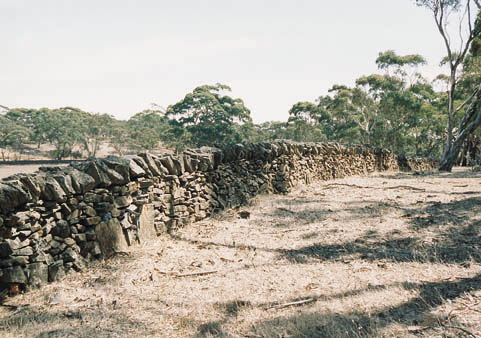
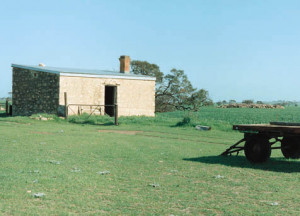
Idea for recycle plastic bottles and old t shirts for production Witch Castle

Hi, today I want to show you How I will make a Witch House and I will make this house again from recycling material. I will use plastic bottle and I will cut the top of plastic bottle. I use 2 smaller plastic bottles. On the bigger plastic bottle I will draw a door and from top of plastic bottle I will cut strips about 2 cm wide. And i will fix this strips with hot glue gun on the line. I will fix plastic bottles together with duct tape and now I will cut strips from old t shirts and I will cut strips about 10 cm wide.

But it’s not important. This strips must be bigger than are plastic bottles. Here I have stripes and now it’s time for make concrete. I will mix concrete with water. This mixture should be more dilute. Now I use gloves protect my hand and I will start dipping strips into the concrete. I will put stripe across the edge of the plastic bottle. above the door I use smaller strips and I will make a shape the door. I will do this same around plastic bottles.


If is your mixture is too much dried you can use more water. and I have a first layer and I have a first layer and I will leave to dry for couple of hours and I will make a cone from cardboard for make a roof. Here I have a cone and I will cut wheels from old t shirt.

Here I have 2 wheels and I will cut one wheel smaller. I will covert cone with plastic bag. I will deeping fabric into the concrete mixture. and put these wheels on the cone and I will make a roof. and I added one more smallest wheel. and here is my dry castle I will make a hole into the plastic bottle. I will make a second layer. I put more concrete on the smaller parts o the top. After drying roof I remove cone. and here is my roof.


After drying I will remove more plastic bottle. I put castle on the correct place on my garden and I will fix roof on the castle with concrete and I have a new cute decoration. and I have finished. I made this decoration, new decoration for my garden and it’s again from recycling material and it’s looks nice. You can use some lights inside for night and it will be nice decoration for your garden. Please subscribe me or leave me message what you think. See you next time. Bye.

Interview with S. Gurumurthy Part 2: Prospects for Indian Development Models

Namaste, Shri S. Gurumurthyji and I have had an exciting conversation on his ideas of development and economics. In part one you saw him explain the rise and fall of the Western development model. He explained what’s different and distinct about this Western model and how it’s based on their metaphysics, their theology, and their civilizational assumptions. Why this particular model did so well for the past few hundred years and why it won’t do well anymore now. He explains the rise of alternative models and the importance of every civilization having its own development model. Now you will watch part two of our conversation. In this, Gurumurthyji explains prospects for India developing its own model, how this model will be different than the Western model, how it will be better for our civilization, how we’ve made some mistakes blindly copying the Western model, how other civilizations like China are developing their own model. So this is important because we want to decolonize India’s economic theories and create our own. Please watch. The government of India has been watching this, the UPA government; they just shut their eyes to it. It is only the government which came in the NITI aayog, when the cabinet gave the mandate to NITI aayog, which they constituted as a think-thank: what you should do for India.

There they said that model from outside cannot be transplanted into India, you have to develop a model, which will work in and for India, it’ll be a bharati approach to development. Of course, there were several other things which they said, but the important point is that the Indian government for the first time took notice of the global developments which have been taking place from 1995, with the Francis Fukuyama’s writing, and then settled back governors of the G20 nations, then the World Bank, then the United Nations. Now the Indian government has at least philosophically accepted this, that there has to be an Indian model for development. -So they opened the door for a new kind of inquiry?

-Correct. But the nation is not prepared, academia is not prepared, -intellectuals are not prepared.

-Business are not prepared? Corporate people? Or not?

-Corporate people maybe, because they are probably the ones who understand. Politicians and corporate people are probably the ones who may understand India better, -not the academics or intellectuals.

-But aren’t the corporate people too invested in the international markets?

-Too much controlled by them?

-You see, what the corporate people… Because I move with the corporate people, I advice many of them, they’re very close to me. They can shut out economics from culture and deal with it individually. They will never give up the culture, but at the same time, they will not give up the advantage of dealing with the global market according to its rules. So, they’ll be able to play it, but they know the truth. So, that there has to be an Indian model for the development is no more a suggestion or theory, it is something which has now come to be recognized. But no work is being done. You may ask me why. Because there is no India-centric thinking on any subject in India, then how do you develop India-centric thinking in economics? There’s no India-centric development in sociology, for instance. We still follow the same western anthropological model, atomization of society, destruction of identities, and then subaltern theories. I’ll take the subaltern theories. Subaltern theory was developed by the church, that there is no social mobility for the lower castes, it is the upper cast who dominate. This has been some kind of the Marxist church-infused thinking. Completely demolished.

-In fact, one way the church wanted to deal with the Communists and the Marxists in Latin America is to assimilate some of those things and Christianize them. So, this subaltern theory as a result came out, because they wanted to give to the poor some alternative to a Marxist, communist revolution, so to keep them within the church, because they’re very devout Christians in Latin America, to keep them within the church they came up with this sort of, you know, liberation theology and stuff like that. To show that this subalternism, as a result, championing the underdog, but championing the underdog in a way that Christianity is a solution.

– There, the political conditions were not favorable, and so they had to do that, but here the political conditions are so favorable, it was loaded against the majority. There, they had only used this to divide the majority community, in religion, in polity and as a democratic force, there was no majority ruling India. Except the numerical majority. There was no cultural majority, there is no sociological majority, there is no philosophic majority in India. So, it became a numerical majority. And the numerical majority was constructed by the deconstructed social forces through these caste, community, region, religion. In this the minorities were protected, their identity was protected. The majority identity was completely left unprotected because the Hindus did not have an identified center of power. Like the church, for instance. But how this idea… that there has to be an Indian model for development is not being taken forward, is because of the overall academic, intellectual and political atmosphere, in which the political atmosphere has begun easy now. Today it is no more… 30, 40 years back to assert oneself as a Hindu required great effort. In fact, when I was in RSS, joined RSS in 1970-71, in fact there were hundreds of people who would dissuade me, why are you joining RSS? Why are you calling yourself a Hindu?

Look after your life. You are an intelligent man. That means the entire social atmosphere, the ecosystem was dissuading Hindus from public participation. And so, if you are a particular caste man you’ll participate, if you are a minority you’ll participate, if you are a communist you’ll participate, but those who think of India as a cultural entity, as a philosophical entity, as a tradition, value systems: no, public life is not good for you. You keep all this in private. So the entire hoary tradition of India was reduced to a private affair. So, this is what is going to produce the economic model. This is not in the academia, this is not in the public discourse, not in the media. So, to develop an Indian model today requires a much larger effort, than merely study of economics. Now, I’ll go into what is the economic issues. You know, whenever I discuss with people, there is the Prime Minister, or the Reserve Bank Governor, or someone, I made many presentations to them. They were shell shocked. You see, we began globalizing in 1991, he began bringing global capital, global technology, global models, management, everything. The corporate sector was given such a powerful push, lower rates of taxation import duty less, everything. So this organized sector, as it is called, corporate sector, public and private put together, which is supposed to be the fountainhead of Indian economy, between 1991 and 2014, the total employment that they added was just 2.8 million.

– That’s it? This is in the economic survey, doesn’t require any research.


-And all this big talk and very low impact on employment.

-Completely. I spoke to Mr. Narayan Murthy. Narayan Murthy said, no, we have our self-produced 3.75 million employment. I said, others have reduced, what it means? So, when I made the presentation, the prime minister said this is shocking. How did we survive? I said we survived, because of what your economic, national economic survey. They make a survey every ten years. That survey said there are 58 million micro-businesses, which produce 128 million jobs. So, it is this that has sustained India. But you must understand, for this sector there is no organized financing, Banks advance is only 5% -of the total requirements of twelve lakh-crores of capital.

-Even though their bad debts, that’s probably very low. -Nothing. 5% only we’re advancing. They are borrowing at 60%, 120%, 240%. Then the prime minister conceived the idea of Mudra. That you will lend to them, through an intermediary institution, the bank finance will be made available to an intermediary to lend it. The Reserve Bank of India said we’ll not allow any intermediary to be brought in, and if intermediary will not be brought in the banks have no capacity to lend to them directly. Immediately go to China. There is a beautiful book, written by two Harvard scholars on Deng Xiaoping and China. This is a book which came in 2013, where, equivalent to our micro-enterprises, which are called own-account-enterprises, there is a 28 million town-and-villages enterprises. This 28 million town-and-villages enterprises produced 128 million jobs. You know, how Deng Xiaoping built this up? Deng Xiaoping had a very big problem of having to conform to Karl Marx. Otherwise, he knew he could not do anything. Somewhere, Karl Marx wrote in his book, if you employ more than seven people you are a capitalist. So, Deng Xiaoping said if you’re employing seven people or less it is not capitalism. That is how he built private enterprises. 28 million small units, employing 10 people each, 128 million, it is the research done by Nobel laureates, it is these 28 million small units which lifted China out of poverty, by lifting 180 million people out of poverty, in 10 years.

-Very decentralized, good.

-The same thing was to be done in India, -the Reserve Bank stopped it.

-Which year was that? Now, 2016. It is still a struggle between the Central government and Reserve bank.

-Because, you cannot allow decentralized things.

-Control. You need control. This is the Western model. So, why I’m mentioning this, this is the philosophy, this thought, this structure, this education, this very psyche is working against the stated idea of an Indian development model. So, this requires a huge shake up. And this shake up cannot be done by the government because the government has to do fire fighting all the time. In India there is election every year.

-Though only five fears once you have a general election. -But some election is going on. Some election or the other, every election is a national election thanks to television. So, we are in a catch-22 situation. You cannot correct the economy unless you correct the sociology; you cannot correct the sociology unless sociology and economic relationship is made clear by the role of culture. Very small, very telling example of what is the impact of culture on Indian economy; just I’ll give you three examples. One, the role of the family. The family in India is probably the main driving force of the Indian economy itself. So, in 1991-92 when the tsunami of globalization came all my corporate clients, they were very worried about what would happen, and they all said that we may not be able to continue to do business in India. In fact people like Montek Singh Ahluwalia began telling them you better sell your industry. Because you can’t scale up your production to global levels, you can’t access global capital and all that. I began travelling across the country, listening to what Mahatma Gandhi was told by Gopal Krishna Gokhale.

That after you come back after a long time, you must travel across the country, for one year, never speak one word, just observe, and then you make up your mind as to what to do for the country. This advice I took, and began travelling from Ludhiana, Batala, Rajkot, Jamnagar, Morbi, right down to Tuticorin in about six years I covered about 16 industrial clusters along with a team of people. My idea about India completely changed. The real entrepreneurship is only in middle towns in India. There are about 2008 hundred artisan clusters, about 350 industrial clusters according to UNIDO study, which contributes to 60% of India’s productions and exports. Completely out of the radar of the government, of FICCI, of banks.

Pile of domestic garbage in landfill

-Which is the place with the highest per capita income in India?

-Ludhiana? I have asked this question at IIT, IIM and no one knows. It is a place called Morbi in Gujarat.

-OK. What do they do?

-The total population is 2.4 lakhs. 1.4 lakhs is employed. They run textiles, they run ceramics, they run diamond cutting. It is a mixture of Muslim and Hindu community. And once when Koyna Dam burst, they were wiped out. In 2001, there was an earthquake they were wiped out. Nobody. No IIM, no IIT has ever done a study of it, like in Ludhiana.

-How did they bounce back of all this?

-Social capital. Their capacity for community to support each other in difficulties, lend to each other. You know, this is prevalent because this is a relation-based society. If you have to define, the line of difference, the clear line of difference between the West and us, generally Asia, it is the difference between contract-based approach and relation-based approach. That’s a paradigm difference. In fact in economic also this is being recognized. A relation-based society can work with a market economy, but it cannot work with a market society. Where the society still begins functioning on market principles. Market is based on contract, efficiency, merit and things like that. But relations do not exactly function on this basis. So, a market society reduces a family, everything, even nation into a market, like America incorporated.

That approach is western, it is failing, it is becoming inefficient. So, a huge shift of economics, wealth-building, GDP is coming back to Asia: where Karl Marx and Max Weber went wrong: they never knew that prior to colonization, full-scale colonization, it is Asia which had 60% of world’s GDP, and India and China together almost 59-60%. It is colonization that reversed it and took the GDP to Europe, and it is now returning, because the western model has no sustainability. I’ll tell you three things: one, the colonialism lasted for 150 years, full blown colonialism lasted for 150. Communism lasted for 70 years. Globalization lasted for 25 years. You see? All these western approaches are having shorter shelf life, because there is no durability in western approaches. Once you reduce everything to the contract, sans culture, sans sociology, sans relationship, sans philosophy, its shelf life becomes less and less, you can see this, colonialism, communism and globalization. They have themselves given up, that it is not possible to have a one-size-fits-all model which was globalization. So, the point that we are coming to is that the state dependence is directly proportionate to independence from relationship. The more independent you are from your father, mother, husband, wife, -You become dependable of those guys.

-So, interdependence is the rule of social capital, we are dependent on each other, nobody is independent, nobody is free unless that person doesn’t want anything from the world. There is a beautiful sloka in Mahabharata “tyajet ekam kulasyarthe, gramasyarthe kulam tyajet. graamam janapadasyarthe, atmarthe prithivim tyajet” the meaning is this, that you compromise your personal rights for the sake of the family, there is a trade-off between the family and you, “tyajet ekam kulasyarthe, gramasyarthe kulam tyajet”, when it comes to the community, the family gives up certain rights to make the community, just as an individual gives up the rights to make the family, the family gives up some rights to make the village “graamam janapaasyarthe”, if you want to build a nation, then the villages have to compromise their rights, then you are only interdependent, “atmarthe prithivim tyajet”, a man who sees the self as the most important thing, for him the world is nothing, he is only out of this system. The real free man is the one who doesn’t want anything in this world. This is our basis, you cannot say, I want to be free, but I want everything, my family has to educate me, but I’ll be free of my family, that the society will have to do this but I have nothing to do with the society, the nation will have to do this, and I’ll say I’m a global citizen. This is completely western-oriented anthropological modernity, which is fatiguing and failing in the West, because Max Weber said, I misunderstood him first, I thought he was promoting this, but he was perceiving this… -It was more a diagnostic than a prescription.

-Yes, he was not advocating this, he was saying this is what is likely to happen, if you see the evidence of how things have moved forward it will be this. Atomized families, atomized communities, atomized individuals worshipping material world. But he said, this will lead to disenchantment of the world. This is the word he uses. And move towards limited dictatorship and religion. This is what he has prognosticated for the West. Because you cannot sustain these ideas which have less and less shelf life. For a society which is going to live for thousands of years. So, I think the kind of development which is taking place in the West, questioning the values of the “Age of Enlightenment”, to what extent you can have individualism, to what extent you can discount the society, religion and all that. This is now sourced in Max Weber’s theorization of disenchantment with the world which will develop in the western anthropological modernity. It is at this time when the West is probably getting weakened. Not on technology, not on anything, not on its methods, but on its philosophy, way of life.

-After all, there is a…

-This a big defeat for Christianity, that is what it is.

-Absolutely, they promoted it and they got it. You see, even Christ he said I have come here to separate you, the father from the son, brother from the sister, the root of destruction of relationships is in Christianity itself.

-And the whole biblical theory that God made the earth as a man’s property to exploit. No rights of the earth itself, no sacredness of the earth, it is just material property. Human relationship with earth, is as good as human relationship with one’s own family, one’s own village, one’s own surroundings.

-That’s not there. And you know, this conservation movement in the West -is only to conserve the raw materials so you don’t run out of it.

-You conserve it for future. -So, it’s material, it is only a material goal, that you conserve this you don’t put chemical dump in the river, because it’ll be bad for the fishing industry. -So, it is a kind of..

-Absolutely. Ultimately, it is anthropocentric world. It is not an eco-centric world they’re thinking. But one difference is there, some Scandinavian thinkers have begun thinking of deep ecological consciousness. It’s come somewhere near our way of our Isavasya Upanishad, “isavasyam idam sarvam”. It comes somewhere near that, but the West has a very long way to go to understand this. So, now coming back to where we are, I think that we need to begin with assertion of the Indian civilization. Time has come. Because the West is fatigued. It may have technological superiority, this or that. But the human element is weakening. The state is in a flux because of multiculturalism. There is no core culture concept in the West.

-And they don’t know how to handle it, because they don’t have a model for this.

-Because they don’t have a core culture. You see, because they destroyed the concept of core culture. Even America, which have the idea of core culture. In fact, in his theory of civilization clashes, Huntington said, the core culture of America is WASP, but America is not in a position to accept it.

-He is still regarded as some kind of outlandish person.

-Yeah, and kind of provoking clash and all that stuff.

-If America had accepted, WASP is our core culture, we can live with other cultures, that’s different.

-No, there’s no core culture, it multiculture.

-You see, this hypocrisy, of claiming there is no WASP culture and we are all open, this post-modernism, led them to policies where a whole lot of non-WASP people have come in and they don’t know how to deal with it. We know how to assimilate and we have an open system, a whole different system but different jatis can coexist and so on. But America doesn’t have that. So the structure being very centralized, but now the composition of society is not willing to conform to one centralized hierarchical thing, so many immigrants, so many languages, so many this and that, America does not know how to handle this much diversity.

-Because, their mind is homogeneous, but they have to live with diversity.

-So, the homogeneous mindset has created a diversity through immigration and other policies, because of a kind of hypocrisy, and a belief in a lie that they started believing, that we are going to be post-modern, beyond identities, beyond borders, never really understood that this creates issues they don’t know how to solve.

-Because, post-modernity has no philosophy. Unfortunately in India, because we were not used to this capitalist model, we did not distinguish between the market segment, and non-market segment, and so it didn’t work. This work was actually done by Credit Suisse an Asia equity division which said the listed corporates, -they produce only 5% of India’s GDP.

-That’s a big thing to understand. To reveal that is a big thing.

-Listed and unlisted corporates put together, produce only 15% of India’s GDP.

-The rest are tiny, tiny…

-Agriculture, tiny, these things. And both put together produce only 9% of India’s employment. All this was slowly coming out. But at the time I said, unless you harness the middle India, which functions on relationships, largely. Even corporate sector, functions only on relationships and pretend it functions on contracts. In Birlas, in Tatas -It’s mostly family.

-Family and people last for lifetime nobody drops out of TVS or Tatas, or Murugappa, Birlas, anyone who joins employment, joins , it’s a relationship between the employer and employee.

-Like in Japan, it’s been… Asia is different. So, I could see it empirically, I saw something different happening. For example, the entire Ludhiana development was because of a community called Ramgharis, They were these ironmongers, blacksmiths. The same thing in Rajkot. Wherever I go, one community was driving the development, and others were benefitting out of it. So, I zeroed in on the concept of family and community as social capital. Which was recognized by Putnam, and which was recognized by Francis Fukuyama as something which is an evolution out of culture. That is the mainstay of the Indian economy, the entire middle-level economy.

-So, Traditionally, that was the role of the jati structure.

-The shrenis. And that functions even today, and that makes the market economy work and the best example I can give you is Tirupur, which was studied by Boston Consulting. One R. K. Chari wrote a book in 2001, as to how Tirupur has emerged as the knitwear capital of India. 68% of the Tirupur exporters are educated less than 10th standard. Only 7% are graduates. They export 5 billion dollars worth in knitwear garments today. They negotiate at the global level. Tripura is the only place where I went where I heard, sir, tomorrow is the US Fed meeting, we don’t know what’ll be the change in the interest rate. I was stunned, this so-called illiterates are talking about that, because it’s going to affect that export interest. I found a huge amount of capacity building on traditional lines. The economies are stable, and they are not bothered by globalization. They are not bothered by equity market.

-There is no single point of failure, it’s all decentralized.

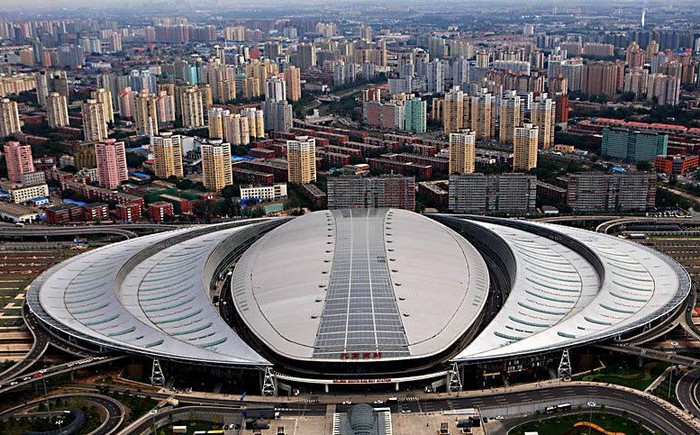
-Absolutely, and one helps each other. So, I wrote a book, which I could not publish, of course, that there is intense relationship between caste and economics in India.

-We should publish it. One of the things we want to do is to publish that book, and develop a conference, we want to develop a swadeshi Indology conference on the whole social, economic matrix with the Indian model, and this would be a wonderful thing to do.

-So, when I brought this out at that time I had said this Mandal movement, it’s a political movement, actually should be a cultural movement. You need not have to go and ask a carpenter, come on, come and attend ITI classes and I’ll give you certificate. You have to go there, see how he works and give him certificate. It is an empirical talent that is available already. But you classify them as unskilled workers. A mason, blacksmiths, goldsmiths, carpenters, and there are 315 varieties of traditional trade in India which is classified as unskilled because they have not come to your school.

-They classify uneducated people and educating them means removing them from that.

-Correct. Unless you get unskilled you cannot be classified as skilled. I tell you, there is no greater way of damaging the Indian economy. It is good that they don’t want to be part of this… I had been to Jalandhar, it is a revealing incident to me. I had gone to a carpentry works, and the proprietor told me, sir, the Australian Cricket Control Board places, they order for cricket bat only on my… 1994. All cricket bats. Everywhere in Jalandar in one corner. He said, sir, you look at the carpenter, he will make 50 willows a day, see the Maruti car parked outside, that is his car. He will come whenever he wants, I tell him, you produce 50 willows or 40 willows depending upon my export order, you have to produce. Sir, he will come and if his mood is good he will produce 100 willows and he will not come tomorrow. He has a Maruti car, he has his own house, but still a carpenter. I went and asked him: did you go to an ITI? He said, what’s ITI? Incidents after incidents. A Patel imported a diesel engine in 1954, and he dismantled it, and he found that by reverse engineering he could make it, that is the diesel engineering manufacturing in establishment of 2500 ancillaries and 55 assembling units in Rajkot.That is the springboard of prosperity. They don’t know one word of English. No one knows what English language is in Morbi. Surat which has emerged as the largest business center in Gujarat. 25, 30 years back, it was a public lavatory, because all the villages used to come and dirty the city. It was a political problem. How to drive them, they used to come with their cattle, there was no water, everybody thought these villagers were making our city rotten.

They came and learned diamond cutting. Now nobody comes to Surat. 9 out of 10 diamonds are cut in India. Indians have taken over, out of 24 billion dollars diamond trade Two-thirds, 16 billion dollars, diamond trade is in the hands of Indians today. -And Surat is a large part of it. -No university has studied it. Nobody even knows about it. So, how will you develop an Indian model which is based on relations? First, you don’t even have the knowledge of it. We haven’t studied the case studies. -So, I said, because of all this I produced a theoretical model that families and communities will drive the economic development of India. And we may not need foreign capital, except marginally. And everybody abused me and this Jagdish Bhagwati, the American economist, Columbia University, and he produced a 72-page paper in which three pages he dealt with on India family and women. This is important, in fact you should reproduce those three pages. In that he said, you see, your families are saving 19% of their income, 19% of the GDP, which is waste. You must bring down your savings to 10%, convert this 9% into expenditure. So you buy more goods then, there’s more production, then more employment, then nobody can stop you from being a top economy in the world. So you should cut your savings.

I know you produce such rotten goods, nobody is going to buy these goods, so, bring imported goods, cut down your import duty, bring foreign technology, produce goods here, the Government of India began doing all this, he said, this is just not sufficient, your Indian women are so responsible, they want to take care of their children, their husband, their in-laws, this is not going to work, you must make them consumers, you must produce a desire in them to buy, unless you turn women into buyers, your economy is not going to…


India Agra. Taj Mahal, shortly after sunrise.

-So, the whole Americanization of Indian family life and women.

-Completely. So, we began doing it. So, huge advertisements, and there were, just like we praise Gods goods are praised by songs and all that. But you know the Indian women sang the songs, but they did not buy the goods. This is reflected in the fact, the family savings and GDP went up from 19% in 1991 to 28% in 2000.

-The opposite of what he wanted.

-Absolutely. In fact, between 1981 and 2007 they had captured half and half the command economy period, and liberalization period in form, there was absolutely no difference in the behavior of the people as to how they would allocate their income, to spending or saving. In spite of the change in the government policy there is no change in the behavior of the people. So, our savings went up, national savings went up to 37%, national investment went up to 49%, that is our great growth rate went up to 9.5 %. This was captured, by no less than an economist by name Shankaracharya, was adviser to the government, this is stunning, that India is able to post 9.5% growth rate without foreign investment. This, what happened, but when this question was put to Jagdish Bhagwat: Gurumurthy says, India will develop more by domestic savings and domestic consumption. Who is Gurumurthy? He’s one of the persons who is articulating a very powerful antiglobalization idea in India. Oh, you call him an economist, if he can be an economist, you can call me a bharatanatyam dancer. This is the arrogance of the position. So the families not only provide measured consumption, capital needed, it is because there is self-restraint on an individual. There is propensity to save. Yes, to take care of the children, yes, to take care of the parents, yes, to take care of the near and dear, nobody’s incomes belongs to himself in India. This is a relationship. No one’s money belongs to only oneself in India. So this is one part, the other part is social security. In the West social security is provided by the government. The discounted value, future social security, health security is estimated at 68 trillion dollars in America.

-They’ll never be able to fulfill that. It is going to go bust, it is bankrupt, it is just technically they don’t want to admit it.

-So, if they admit it the economy is over. You are now taking over your family functions.

-Taking care of the elders, infirm people. -Actually, this is the biggest failure of the state that is so clear documented.

-This is a failure of the state.

-There is a brilliant document, American Economy in Transition, 1980, by National Bureau of Economic Research in America, all the leading economists came together and held a conference, in which Milton Friedman, the Nobel Prize winner, he was also there. He said, what we are doing is wrong, we are taking over family functions, we have already handed over the kitchen to the multinationals. We are now handing over the rest of the areas of functioning of the family to the government.

-Families will cease to exist.

– Big statement. So, what happened, now in America how many families cook today? Virtually none.

-The kitchen is MacDonald’s. -So, families have been nationalized. All family functions have been nationalized. Government functions like water supply, these are being privatized. So, this is modern economics. Nationalize the families, and privatize the state. Why you’re forced to nationalize families? Because your anthropological modernity -is destroying relationships.

-Very big point you made.

-Throwing people out of the family’s safety net. So you need a state safety net. It is not that economics brought this about, it’s your sociology which brought about this… So, the social model destroyed the economy also. Put burden on economy. The family savings, to total savings in America in 1960 was 80%. Corporate savings was 20%. In 2006, third quarter, the corporate savings, national savings was 120% because the family’s savings was minus 20%.

-All in debt. Borrow and spend.

-And for the president of America led this campaign. That we should buy. So, destruction of the relationships, substitution of the contract, led to state dependent society. Now there are many researches in America, how 50% of the American families are receiving doles, and how we have become a state dependent society. We are free from our near and dear, but we are dependent on the remote state. Thank you for watching part two of my conversation with Gurumurthyji in which he explained the prospects for developing an Indian economic model. In part three, we will discuss what is India’s future in the world.

CCTV Documentary《Megastructure II》(1):Chinese Expressways and Railways

This is a miracle in the human road building history. within only 30 years China has increased its road mileage fivefold and built the largest highway network in the world. The railway mileage has exceeded 120,000 kilometers. China’s High Speed Rail (HSR) has started from scratch and reached to near 20,000 kilometers in 8 years. It accounts for 60% of high speed railroad in the world. Here is where the most complex tunnels and bridges are built in the world. More than 20,000 tunnels and over 1 million bridges connect where otherwise impossible to cross. China’s 230 airports and 3.5 million flights have created the second largest air travel network in the world. Along the 32,000 kilometer coastal line exist 7 out of the 10 most busiest ports in the world. Massive and convenient traffic networks are helping China maintain its vitality. It appears to be an impossible mission, but the Chinese have made this miracle with their hands. South Taihang Mountains, where the Indian plate and Eurasia plate collide. In the steep cliffs exists a road of hope. Xiyagou, a small village with less than 300 residents, is isolated from the outside world. In the past, 90% of the people from our village have not gone out of the mountains.

They don’t know the world outside. They have no school to attend. They don’t know what soy sauce and vinegar taste like. If people get a disease, they have to rely on their body to fight it. If one’s body failed to resist it, he would pass away in his early age. The villagers determined to dig out a road on the cliffs even if they can only use hammers and chisels During that time, hundreds of millions of Chinese are like them, having the same aspiration. They want to be connected with the outside world, and live a better life. In their eyes, this is the key to change their lives. This is a map of China. There are 660,000 light dots on the map. Every single dot represents a most basic administration unit China has an ambition that even the most remote villages will be connected by public roads. In 1949, the total length of public roads in China was 80,000 kilometers. In 1978, it reached 900,000 kilometers. Starting from the economical reform (1978), we have seen rapid development in China’s industrialization. And this has lead to a demand in transportation

We had to strengthen our road infrastructures, from covering more areas to also using more advanced technologies. Since 1988 when China built its first highway in less than 30 years, China’s highway mileage has increased to 120,000 kilometers (74,564 mi). It has become the largest in the world, surpassing Canada and the United States. Today, the China’s highway network is nearing its completion. What the engineers are facing next are the endpoints of the roads and those most challenging segments. In Wanzhou, a city with 800,000 migrants, people still keep the tradition of waterfront people. Here is the heartland of the Three Gorges, adjacent to the Yangtze River. For a long time, the roads here are far less convenient than those in the east. Transportation by boats can no longer satisfy people’s need of fast travel. But now, it’s about to change. Fuma Changjiang Bridge is the longest suspension bridge in the Three Gorges submersion area. The south tower is 166.6 m (546 ft) tall. the north tower is 210.5 m (690 ft) tall. Today, we are going to install the first suspension cable. After this is done, we are going to install another 216 cables in the next 2 months. After the main cables are installed, we are going to install the suspender and steel box girder.
Fuma Changjiang Bridge is a crucial checkpoint for Wan-Li Expressway that goes from Wanzhou to Lichuan, connecting this mountainous region onto the national highway networks. The bridge crosses 1,050 m (3,444 ft) over the river, with no pillars in the water, trying to minimalize the environmental impact. The two main cables are critical to carry the bridge that hangs 100m in the air and weighs 20,000 tons, almost 3 Eiffel Towers. because, in the coming 100 years lifetime of this bridge, they cannot be replaced. Therefore, the first cable installed is very important to overall safety of the bridge. On the catwalk, workers are installing the last post, a support for the main cable. This hanging walk built with iron and wood is the only platform for the workers. On the south end, workers are building the anchors on which the main cables will be securely fastened, ensuring the safety of the bridge. Now everything is ready It’s been raining since this morning and luckily it has stopped now. The steepest part on the catwalk is angled 45 degree and it is 100 meters (328 ft) in air, so it is very wet and slippery. Now we hope the fog will go away so we can start the installation of the first cable. Two 25 ton anchor windlasses have started slowly dragging the cable and anchor forward also causing big oscillation Engineers need to adjust the windlass speed to have the cable fall onto the pulleys safely “Turn it to 3 gear” At the safe time, it won’t be too fast to create too much tension The wind over the river has caused a greater challenge to this task The worker are paying a close attention to the red string because when it starts to twist, the main cable’s endurance will be greatly lowered.

The anchor is being dragged, smoothly passing both towers passing 1,000 m (3280 ft) over the river and fastened on the other side Next, workers will be installing another 215 cables and then use a compressor to create the two main cables, responsible for carrying the entire bridge Passing mountains after mountains, aerial work has become the biggest challenge to build Wan-Li expressway In just 94 km (58 mi), there are 1,407 pillars, among which the highest is 40 story tall. In western China exists enormous mountains and valleys for a long time, architect had to find the best route along the rivers and valleys the spiral roads not only are very inefficient but also would cause big damage on the environment a 180 degree turn is a nightmare for the drivers but today, the Chinese engineers already have the capability to straighten the roads they are building roads through the mountains and bridges across the rivers On Yaxi expressway, the bridge-tunnel to road ratio reaches 85%. it’s basically bridge after tunnel and then tunnel after bridge you can rarely see normal road Yaxi expressway, starting from the rim of Sichuan basin, needs to cross the wall-like Hengduan Mountains at the altitude of 3000 m (9842 ft) In the past, it would take one more than 10 hours to drive a distance of 300 km (186 mi) Now, the engineers have decided to go through the mountains but a problem has surfaced From Shimian to Mianning, we have to cross the Tuowu Range which is very high the road needs to climb up 1.5 km (0.93 mi) in a 57 km (35.4 mi) range especially this portion, it needs to climb 500 m (1640 ft) Elevating 500 m in 4 km means the average slope will be 9 degree For a fully loaded heavy truck, this is a dangerous slope the architects need to creatively reduce the slope by 70% We used the same idea in the spiral parking garage and designed two spirals here it first spirals into the tunnel, comes out, connects the bridge and then do this one more time One spiral climbs up about 120 m (394 ft) Yaxi expressway has become one of the main road in Southwestern China, cutting the driving time by 50% In less than 30 years, China has seen rapid development in its highway system Taking the capital Beijing as the center, radiating out with 29 main expressways plus many inter-regional expressways a road transportation network that connects every town with population of 200,000 has been formed But inside cities, new problems appeared In the 1980s, China is known to the world by a unique way of transportation At that time, China was called the kingdom of bicyles every 1 person out of 2 owns a bicycle The China at that time won’t expect such a radical change coming its way Everyday, Liu Bo will go from his office underneath a bridge to construction sites all over Beijing Beijing, the capital of China, a huge city with more than 21 million residents, has 5.6 million cars If parked closely to each other, the cars will cover the entire central districts For the convenience of the people, 6 ring roads (expressway), 7000 km (4349 mi) of public roads 1,200 bus routes and 18 metro lines constitute the public transportation in Beijing Even that is the case, the roads are still overloaded, which causes some great challenges to those who maintain the road “The maintenance are mostly done in the nighttime.
We are trying our best to achieve this without impacting people in the daytime” Sanyuan Bridge, located on the 3rd Ring Road, sees 13,000 car passing per hour during the peak hours Overloaded for a long period of time, the entire bridge needs to be replaced but if replaced by using the normal process, closing the road for 2 months, it will bring a huge problem Engineers plan to do the replacement in an extremely short time They are going to use a very smart plan Friday Nov 13 2015, the replacement process started at 11 pm In less than 6 hours, the 1600 tons bridge was dismantled In 24 hours, the site was cleaned up Two vehicles carrying the new bridge moved 60 meters at the speed of 1m/min (3.28 ft/min) After 70 minutes, the new bridge was in position. Concrete were poured and asphalts were paved Sunday Nov. 15, the traffic was back to normal at 6 pm Behind the 43 hours hard-work was a careful preparation done in 150 days and nights. People going to work on Monday didn’t even realize the bridge now has a new look Along with the rapid urban development, the roads have becomes more and more complex Due to the lack of space, 31 cities in China choose to move its traffic underground But in some other cities, because of the water, the situation becomes more complex At the bank of Yangtze River, a monster that stands 5 story tall and weighs 575 tons is ready to go Wuhan, where Yangtze River and Han River meets, is a transportation hub in central China.

But now, the wide water body has created a bottleneck for the traffic in the city According to the design of the 2nd Yangtze River Bridge, the throughput is 100,000 car/day, now it’s close to saturation In order to ease the traffic pressure, 19 cross-river bridges will be built but the dense bridges will bring a problem to the ships Designers decide to find a different solution to maximize the throughput An under river tunnel with both road and rails was included in the plan The diameter of the tunnel will be 15.2 m (49.8ft) The upper level will be a six-lane bidirectional road and lower level will be used by the city metro The excavation will be done using a tunneling shield Works are preparing to hoist the “tooth”, a round cutter, of the tunneling shield into a 44 m (144 ft) deep well This is a huge and heavy steel giant It’s also very tense inside the well The main driver, the most expensive and delicate part of a tunneling shield, has been assembled They need to set up the scaffolding in order to connect the cutter and the driver After 4 hours of preparation work, they started the process to install the cutter Two belt-driven cranes were used to lift the cutter

The cutter was first lifted up horizontally and then slowly rotated to a vertical position It might sound easy to do, but every step needs to be done carefully and it might takes hours This crane can lift up a 750 ton object With its help, the gigantic cutter was moved down slowly At 10pm, the transformer like cutter was installed successfully Nowadays, tunneling shields have been adopted widely by Chinese engineers but they still have a much bigger ambition Here in Eastern China in this factory that was established merely 5 years ago workers are cleansing two old machines full of rust these two main drivers, having a diameter of 16 m (52.5 ft), are parts of a Chinese made super tunneling shield that was built for WeiSan Road in Nanjing Tunneling shield is a high-end machinery, related to many scientific fields It is very complicated and contains numerous parts In this field, China used to lag way behind the world 1958, in mountain areas of southwestern China, where it was called road forbidden area Chinese started to build a railroad that would connect Chengdu and Kunming This was the first time that this country started to use machineries, 90 years behind the West From that point onwards, Chinese started from zero, pursuing its dream of manufacturing advanced equipments After half a century, China’s manufacturing power has already stood out in the world but super tunneling shield machines were exclusively controlled by few companies in the world As the chief engineer of Nanjing WeiSan Tunnel, Zhang Boyang still remembers what happened then At that time, the foreign companies priced it for CN¥ 700 million (US $111 m in Feb 2018) We need two of these When we talked to them, they didn’t lower the price or make any compromise, but we felt it was too expensive We thought if you can make it, why can’t we ?
Forming the team, a new factory was built and Chinese started to build their own super tunneling shield machine These are some of the blueprint we drew when designing the tunneling shield We have over 7,000 drawings, created by around 50 designers working days and nights, to create this tunneling shield from the paper Built in 2 years, including R&D, TianHe No.1 (tunneling shield) cost less than CN¥ 500 million (US$79.5 million, Feb 2018) On Jul 2, 2015, after 1000 days and nights non-stop moving, Tian He No.1, which is 130 meter long and weighs 4758 tons, appears at the gate of the tunnel All the hardwork and perspiration have been worth it Stories like this are happening all over China Transportation pushes the country’s development and economic improvement brings more requirement to the road These mutual forces often surpass people expectation In some cities, new problems surfaced, expanding the traffic capacity Moving south 1500 km, the Pearl River, the second largest river in China by volume In its delta region locate the most developed cities in China Here is also the core of China’s export trade Many industries are concentrated here, making it the manufacturing center of the world Therefore, the Pearl River Delta region has built the densest highway system in the nation but it’s still far than enough Humen Bridge, the only East-West bound road over the river, supports the rapid development on both shores of the Pearl River But today, in mere 20 years after its completion, the bridge is now way overloaded traffic jam has become a norm The wish to create another east-west bound bridge has existed for over a decade Humen 2nd bridge is on its way Crossing the estuary, two world-class suspension bridges over 1000 meters need to be built simultaneously This is a challenge that has not been done before The main tower is 260 m (853 ft) tall, equivalent to 90 stories After its completion, it will become China’s tallest suspension bridge tower Adding 10 km long approach and two overpasses, the cost will multiply compared to normal bridges

The constructors need to be prudential in order to finish the task fast and safely In order to build these 8 giant towers in the shortest time engineer utilize overall hydraulic self-climbing formwork enabling the working platform at the top of the tower to self climb as the tower construction progresses “The north and south side are ready, the oil can go now” After 4 hours, a smooth climbing finishes On the other side, at the islet that connects two bridges segmental beams are being made More than 3500 beams of 50 kinds need to be manufactured and assembled here The biggest one weighs equivalent to 120 cars On average, 7 beams are produced per day from 5 assembly lines All production are standardized and computerized in order to finish everything in 3 years Even though the project duration is 5 years every task is calculated in terms of hours Engineers are trying their best to make this bridge open to public as early as they can, to expand the capacity in the Pearl River region Giant road network connects the entire country today’s China has the second most cars in the world Compared with 1990, it has grown 310 fold but this is not a pleasant trend “China can never be like the United States, becoming a country on the wheel” China’s car ownership now is at 13% and US is at 70% If China has the same ratio as the US, the entire world won’t be able to supply enough gasoline All kinds of problems have emerged high energy consumption traffic jam smog Chinese decide to walk a different path to move its people and cargo more effectively at a large scale the answer is railroad A network of 120,000 km (74,564 mi) is built 25% of world cargo is moved with 7% of world’s commercial mileage Especially for large cargos, railroad’s advantage is more obvious 100 km north of Beijing a beautiful S-shaped curve presents a heavy duty rail that has been running for over 23 years everyday, these “black steel dragons” snake their way here these trains come from Daton – the coal capital of China Coal is the most important energy source in China Even today, where the huge transformation are happening in the energy structure coal still supply 66% of China’s energy comsumption The 653 km long Daqin Railroad transports 1/4 of China’s coal Just like the aorta, it supplies blood(energy) to the East China (most of China’s population are located on the east coast) Daqin Railroad is a dedicated railroad to transport coal from Western China to Eastern China In 2002, its design capacity is 100 million tons after several upgrades, in 2010, its capacity reached 400 million tons In order to achieve such a big throughput on a single railroad the hauling power of the locomotives need to be improved At Daqin Railroad, the most commonly used locomotive has a hauling power of 20,000 tons One train-load of coal, if loaded on a 5-ton trucks, would require 4,000 trucks these locomotives are shipping coal nonstop to Qinhuangdao on the east where the coals will be loaded onto cargo ships But for a long time, China has another great ambition To build another north-south bound heavy duty rail that is 3 times as long as Daqin railroad This is a new challenge

In the Loess Plateau, wheats are turning yellow here is the deep inside the Zhongtiao Mountains Chen Changzhen has lived here his entire life In the old days, if we want to go to Taiyuan or Yunchen we had to climb over these Zhongtiao Mountains We started here in the morning. When we reached the other side, it would be dark The winding range once blocked Chen’s way out it also hindered the construction of Menghua heavy duty railroad Crossing the entire range, a 18.46 km (11.5 miles) tunnel needs to be built the first challenge encountered is the complex geological conditions here This is the most difficult tunnel on this railroad it has big water flow so far the water flow is 11,000 cubic meters a day (2.9 million gallon) the water flows out from the crevices in the sandstones 174 meters above it not dealt properly, the surge can submerge half the tunnel in no time “we have to pump out the water constantly, easily couple hundreds to a thousand cubic meters an hour ( 1 m3 = 264 gallons)” “If we don’t pump out the water, here would be submerged in an hour” Engineers first drill deep holes in the grits then pour fast setting concrete when it becomes stable, the explosion and excavation begin. it needs to be reinforced right away to ensure safety Compared to normal railroad, heavy duty railroad requires a stronger support from its base the foundation needs to be 1 meter tall It’s the first time engineers try to reinforce the arch and the base simultaneously A 24 meters long self-track trestle made their plan feasible the excavation is being conducted at the front trolleys can go above the trestle workers underneath can reinforce the concrete simultaneously in a very short period of time, a closed ring-shaped tunnel can be completed In the dark, facing the mud and noise everyday, this is these workers’ daily working environment Thanks to their efforts, China’s road network connects everywhere Compared to large cargos, to deliver small quantity cargo is more complicated In order to deliver things from all over the place to their destination, a different system is needed Cargo Grouping System Zhengzhou – at China’s Heartland Due to its unique geolocation, more trains are passing here than anywhere else Here, West-East Bound rail intersects North-South bound rail, creating the largest cargo transfer center in China Zhenzhou North Railway Station has China’s largest cargo grouping system 228 tracks are laid in a 5.3 km long station This is a train coming from Shenyang in Northeastern China It carries cargo going to Guangzhou (South), Xi’an (Northwest) and Nanyang (Central) The boxcars are being disconnected here Disconnected boxcar, taking different tracks, will then be regrouped with other cars going to the same destination At its peak time, over 30,000 boxcars are being processed here daily How do they achieve this ?
Xin Yafei, a connector at Zhenzhou North Railway Station A connector’s main duty is to disconnect the boxcars Where I’m standing right is called the camel hump it’s low on the sides and tall in the middle, just like the hump of a camel Via gravity, the boxcars are regrouped Here is how it works the arrived trains were pushed backward onto the camel hump according to the number shown in display, Xin Yafei will lift up the hook between cars to disconnect the boxcar Inertia keeps the car going into the grouping field Fully automated braking system make the car go at a certain speed and slowly latch onto a parked car in the field All track switching, route arrangement and signals are all decided here – the control room Also in Zhenzhou, 40 km away near the airport, a huge building is under construction In the future, a high-end science and technology park will be built here Ding Jianguo, the project lead, needs to accelerate the construction of this park’s surrounding infrastructures “People will be shopping here in the underground mall, then do entertainment on the ground” “It’s an L-shaped transit center” Tens of companies have already signed the contract and ready to move in here once built In the recent years, Zhenzhou, a city that was not considered a developed city in central China, is undergoing its transformation gradually In 2014, it has become the largest smart phone manufacturing hub in the world More and more high-end equipments and electronics manufacturers are setting up plants here These changes are not coincidental We buy components from all over the world and we sell to all parts of the world Why we choose here at Zhenzhou airport is because we see the fast and convenience of air frieght It will help us greatly in our industry Located at the center-most place in China, not only Zhenzhou is a hub for China’s freight rail and highway network but also the air freight has increased year over year Because if an international cargo flight choose here to transfer, it’s going to be very convenient no matter where in China the cargo will be shipped next A 2 hour flight from here covers 90% of China’s population More and more companies are seeing this advantage Zhenzhou has become the fastest growing area in terms of air cargo 2 years in a row Besides cargo, China has an even larger demand in passenger transporation Everyday, more than 9,000 flights take off from or land on 230 airports This is the second largest air networks in the world China is buying more than 300 planes every year In order to satisfy the ever-growing need for passenger transportaion the Chinese have started to build its own airliner Even that’s the case, it still can’t satisfy its people’s travel need China not only has the largest population in the world but also has the largest moving population Chunyun (lit. Spring Festival Transportation) is known to the world as the largest periodic migration in human history In just over a month, more then 3 billions people are on the way It’s like China has moved half or World’s population once China needs to find its own solution to move such large amount of people “Can you be a little faster ?

I’m in a hurry” “My family just called. My wife’s due date has been preponed. She is at hospital right now. I need to get back home and I just bought a high speed rail (HSR) ticket ” To a frequent traveller like Chen Jun, HSR has become his primary way to travel, not just for emergencies. HSR to me is very convenient. For instance, I’m meeting a client here at Jinan in the morning. Then if there is a such need from Shanghai in the afternoon. I can just hop on a HSR and go to Shanghai in the afternoon. If my day is planned well, I can achieve a lot of things This is the choice of the Chinese people – HSR The reason is very simple While it can satisfy the huge passenger transportation demand, the per person 100 km energy consumption is only 1/12 of what airplane needs The Chinese plan is to build a super HSR network connecting every city together at the speed of 300 km/h, forming a giant economic zone The Jing-Hu (Beijing-Shanghai) HSR that Chen Jun rides often is the most important part of this plan In 2011, China invested 220.9 Billions Chinese Yuan (US$35.1 Billions in Feb 2018) to build Jing-Hu HSR Not only does it connects two of China’s biggest cities – Beijing and Shanghai, along the way, it also covers nearly 1/4 of China’s population There are 14 cities within population over 1 million It also connects Bohai Economic Circle and Yangtze River Delta Economic Zone At Railway Science Academy, the center of Railway ticketing system, Zhu Jianshen pays close attention to various data We did some calculation Taking the daily 400,000 riderships for example, the direct ridership from Beijing to Shanghai is only in the 10,000 range. which is only 3 – 4% of the entire ridership The rest comes from passengers traveling in the cities between Beijing and Shanghai It means the Jing-Hu HSR has a great economic impact on cities along the way, and this is the biggest difference compared to air travel Every 5 minutes, a train departs promptly on Jing-Hu HSR, having more schedules than most public buses After 5 years in operation, Jing-Hu HSR has already moved 490 million passengers Where the HSR passes, the economy becomes more connected and vital HSR in China no only becomes the main way to travel at mid-to-long distance, but also becomes the booster to acceleration people and economy exchange


The developed metropolises drive the economic development in the region Everyday, more than 350 CRH380 high speed trains are running on Jing-Hu railway at the speed of over 300 km/h (186 mph) This 1318 km (818 mi) trip only takes 4 hours Numerous puzzles need to be solved for something like this to happen The train need to cross Yangtze River at the speed of 300 km/h So the Chinese built Nanjing Dashengguan Rail Bridge, the world’s first six rails bridge with the highest design load The Danyang–Kunshan Grand Bridge , with an astonishing 164.5 km (102 mi) length, does not aim to become the world’s longest bridge The entire bridge hangs over and crosses Lake Yangcheng, overpassing 180 roads It also solves the issue that the foundation would descend over time In order to ensure the system is running at such high speed besides those super-scale project every part and link of the system need to be coordinated well In place less known to people, some unnoticeable details are the keys At Nanjing South Railway Station it’s full of travelers during the daytime At midnight, when the trains stopped and travelers left Wang Wei and his colleagues’ work have just started Our team is responsible for the device maintenance We have 38 junctions here at Nanjing South Station At this side, there 20 junctions and 100 switches The other side has 18 junctions and 90 switches The junction is the key point to control the speed of a high speed train Unlike cars or boats, trains have no steering wheels to control its direction It relies on junction to lead the train from one track to another

The faster the train is, the larger the radius is when making a turn and therefore the longer the junction is in order to prevent derailment Tens of switches need to be controlled simultaneously in order for train to switch lanes at the speed of a couple hundred kilometers per hour Wang Wei’s job is to ensure the absolute safety of these junctions the track can’t have any damage the connection needs to be seamless Every contact points of the switches need to have good contact For the entire high speed system, no details can be overlooked All these details have made China’s HSR develop rapidly in a short 12 year period of time becoming the world’s largest High Speed Rail network Covering 20,000 kilometers in length, it accounts for 60% of world’s HSR. What’s more important China has made HSR a real public transportation tool for mass transit It has become more and more Chinese’s preferred way of traveling And thanks to the convenience the HSR brings, Chen Jun will not miss one of his most exciting moment in his life China, on its way of pursuing better transportation, is far from stopping After the 30 years rapid development, the large scale road networks are nearing completion As our country’s transportation infrastructures, including roads, railways, waterways and civil aviation, become complete developing an integrated system inevitably becomes next historical need What we called hubs are where these transportation connect After 4 hour 48 minutes moving south on Jing-Hu HSR, it arrives at Shanghai Hongqiao Station This is a gigantic transportation hub It has everything except waterways If one has the need, he can take plane to other places There are 91 domestic and international flights leaving here everyday West-bound HSR will take passengers to the farthest province in Southwestern China Long distance bus will take you conveniently to surrounding cities and towns Metro will take you into the city in 20 minutes High efficiency, speed and low energy consumption at the same time different transportation systems are developed in a coordinated fashion this is the future of China’s future transportation From the hand-digged road on the cliff to the bridge hanging over the natural obstacles in Three Gorges from the heavy duty railroad supplying energy to China’s development to the high speed rail that connects cities in mere 30 years, Chinese constructors have built road into almost every villages and built the world largest highway and high speed railway network connecting the entire China as a one day economic zone every new route that appears will bring people more convenience and empower the economic growth and this is not the end in the last 30 years, there is a project that has changed the speed of this country’s development Advanced large equipments and innovation have given engineers more confidence to conquer the nature that they were unable to conquer From the south to the north, we are going to tell China’s story of building bridges Coming next: Mega structure II: EP2 China’s Bridges

Rice Daubney’s Darren Tims discusses implementation of BIM using GRAPHISOFT ArchiCAD

My name’s Darren Tims, I’m a principal at Rice Daubney.
I’m just going to show you a bit of a snapshot of some of the work we’ve been doing over the last number of years, particularly in relation to the way that we use technology in our practice and BIM.
So what I’m going to cover is who we are and what led us to BIM, what are the benefits of BIM and how we actually work and how we actually create what we do.
The Ark in BIM – and the Ark is a building that we’ve recently completed so it’s a bit of a case study – and just touch on some of the issues that relate to the future and what our industry really needs to grapple with.

So who are we and what led us to BIM?
We’re a major architectural practice based in Sydney but with a small office in Brisbane, about 105 people in total, and we work in the commercial, retail, health and research, and defense sectors of our industry.
In about 2001, we took a step back from our CAD software, which we’d had for a number of years, and really thought that we weren’t getting the best out of it.

How did we know that?
We knew that other industries were producing work like this, this is obviously the automotive industry, but we knew that the shipbuilding and other design industries, aircraft industries, were producing this kind of information.
We knew that it was possible to take the design and documentation from one model by virtual building, because our software vendor Graphisoft was telling us that, but we really weren’t doing that.
We also wanted to reduce some of our risk.

There’s a lot of things that an architect does that are high-risk, and it’s usually the more – if you like – boring things that we have to do within our profession.
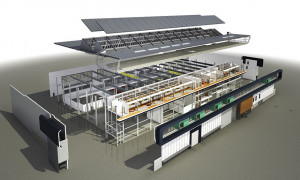
What you see here in the background is a precast concrete schedule that’s been automated from a model, and in the foreground we have a door-window schedule from a recent DER schools program.
We wanted to be producing what we call bulletproof documentation, and there have been a number of studies in our industry about the standard of documentation and its decline over the years.
We knew also that there was potential to reduce our risk and therefore increase our profitability in addition.

This is an image taken from, it’s a screenshot from a smart board in our office, we use this in consultant meetings, this is actually taking a DCA consultant through the model into an existing building that we’re adapting, to help him to understand in the third dimension the fire compartmentation in this building.
I spoke a bit before about the quality of documentation in our industry.
This is a report that was commissioned in 2005 by industry bodies in Queensland, it identified a number of problems in our industry in relation to documentation.

There are lots and lots of problems, just to reflect on a few of them: 60 to 90 percent of variations in our industry are due to poor design documentation, and that’s estimated to cost our industry around 12 billion dollars a year.
The worrying thing from this report is that at the time CSR said that standard was continuing to decline, and I’ve seen very in our industry that’s said that decline has halted or indeed has been reversed.
Some of the root causes that the report identified:

Inadequate use of CAD.
CAD really hasn’t delivered, in my view, very much for our industry in the last 20 or so years.
We really took on a piece of technology that simply replicated what we had been doing for hundreds of years, and that’s drawing two-dimensional lines, in this case electronically instead of on a piece of paper.

There’s also a direct correlation to a reduction in fees.
I don’t think that’s entirely about being part of a competitive market, though that’s obviously part of the problem.
But also procurement methods have changed in the last 12-15 years, particularly the introduction of design and construct contracts, which probably 90 percent of our work falls under.

So all that means that we need to get really smart about the way we use technology, the way we collaborate and work together as an industry.

This is a diagram that the CRC, a government funded research body until the end of December, and the Institute of architects got together and collaborated on to produce really for our industry so that we could understand the different stages of BIM.

At the bottom you’ll see a bell curve with the word Uptake on it, that’s really where the Institute felt that the majority of our industry was working.
Very much in the intelligent 3D realm.

We don’t believe that that’s true; we actually think that most of our industry are very much still working in 2D CAD;
there is undoubtedly people pushing into the 3D realm and working in 3D and there are also people doing great stuff with BIM as well.

What I’m going to talk to you about is Liverpool hospital predominantly, and also the Ark.
The Liverpool Hospital started very much as a one-way translation, we were delivering models to other consultants, we are now getting models back, not from consultants in this case but from subcontractors, D&C subcontractors;
and I’m also going to talk about the Ark as a bit of a case study.
The Ark is very much a two-way translation of models, it was set up as a BIM project from the beginning, we managed to convince the investor to take that leap of faith back in about 2006, and we’ve now delivered on that with an as-built BIM which I will show you.

The dotted line really represents about as far as I believe you can go today.
And that’s really based around a couple of things, model server technologies, still have a little bit of work to do in our view, and also there are some legal and liability issues that our industry needs to grapple with, which again I’ll touch on a little later.

Just to give you an idea of Rice Daubney’s journey with BIM:
we purchased ArchiCAD in about 1995, we previously before that had a piece of CAD software called JVS, so we were very much working in a manual 2D realm and a 2D CAD realm right up until, as I said earlier, around 2001.
At that point we took our switch to 3D, we did a pilot project in 2001 and in 2002 mandated 3D for all our projects across the practice.
And as you can see from the arrows on the bottom, we’re now very much into the one-way and two-way translation of models.
So we’re now at a point in time, and I think our industry’s at a point in time, when 3D is quite mature, we’re now very much moving into the realm of BIM.
And that’s really where we’re heading and that’s what I want to show you today.

So what are some of the benefits of BIM?

We believe that you get very much better design from using BIM and that’s largely because we’re making a lot of design decisions earlier.
What you’re seeing here is a cut-through of a project of ours.
That section is through the same model, so it’s just really being shown in different ways, it’s being graphically presented at the bottom of this slide to show a client a visualization of the room, in this case obviously the lecture theater, and at the top of the slide is graphically represented as the drawing that a builder can build off.
But they are both from exactly the same model, cut in exactly the same place in that model.
So you can see the level of detail that goes into these models, and that’s really why we’re getting better design.

We’re having to make a lot of design decisions much earlier in the process.
We have better control and consistency over our QA processes and therefore, for us, less risk.
This is a shot, an extract of the model from Liverpool Hospital.
The red walls that you can see in this hospital are fire compartment walls, and the green walls are acoustic walls.
When this model is passed over to a subcontractor and he’s running ductwork and pipework around the building, he knows that when he hits one of those red walls he needs to think about fire dampers and fire collars.
So it’s very intuitive for him.
Similarly, when this drawing is printed out in 2D it’s printed in color, and those walls are represented in color.
So when someone’s jack-hammering a wall on site and looks at this drawing and sees that it’s a red wall, he understands that he’s now breaking through a fire compartment and he needs to address that issue.

This is a snapshot from the Ark looking down on top of the building, straight down the core of a 20-something story building, and you can see all the structure and architecture have been turned off, this is just the services.
You can see how complex this is and you can see how being able to work in 3D improves the coordination process for us, both pre-tender, but also with subcontractors, and that’s very important in term of our collaboration on site.

We believe we have better staff attraction and certainly better staff retention.
Most kids today coming out of uni are being taught in 3D at the uni.
We’re now starting to see the first generations of architects that have only ever known 3D.
They want the latest iphone, they want the latest DVD player, they want the latest piece of technology, and they’re going to want to work with the latest technology, and that’s certainly part of the reason that we work this way.

We also believe that we’re improving the construction knowledge of our staff.
What you see here is a number of shots within a single model, but you can see when you strip down that model there are studs being drawn, there are top hats being drawn, there are gaskets being drawn between glazing and cladding, there’s a plan in the middle of that diagram which is traditionally what a builder would have got.
Our staff are virtually building, they are starting to understand what they are asking builders to do on the site, and they are certainly gaining better construction knowledge through the process.

We’re certainly getting better communication, not just with our clients – I think that’s an obvious one from the point of view of visualizations.
Again, this is a screenshot from our smart board, these images get attached to minutes of consultant meetings.
In this image, we’re trying to convince a mechanical consultant that his ductwork can’t go on the ceiling of this building.
So he’s working in 2D, we’ve modeled his major duct runs which you can see in color at the top in red and yellow and blue, and we’re really working on the smart board live in our model to show him that he needs to be feeding his air through the floor and not in the ceiling void because there is no ceiling void.
He really couldn’t grasp that from the two-dimensional perspective.

We believe also that we’re getting improved productivity from the way that we’re working, and hence, for us, improved profitability.
At the end of the day, we’re a business and we need to show a return on the work that we do and the commitment that we make to technology.

So how do we actually work?
Right from the master planning stage, we start our BIM models.
What you’re seeing here is the staging model for Liverpool Hospital which I’m going to talk about in a little while.
The colors obviously represent the different stages.
But at this stage we can look at this building in an urban environment.
That’s really important for buildings like this that are campus type buildings, how they relate to their surroundings.
We can do shadow studies from these models at this stage.
We can take initial quantities off, we can take initial areas off, and therefore clients can get budget costs even from this very early stage.
So it’s still starting to build information into the model and that’s really what the models are about, being information-rich, and capturing that knowledge now right from the start of the process.

We work in a number of ways, we still have paper, we use butter paper, that’s absolutely valid in the way that we work.
We also use SketchUp, which is what you can see here for initial modeling of our buildings.
You can see that same building that then gets translated into ArchiCAD, and obviously a level of data is now being started to add, and ultimately that becomes a visualization which is used for submissions for DA, or obviously for clients and to attract potential tenants.

We have a number of methods of doing visualizations.
This is the PPP bid for a hospital, unfortunately we didn’t win, but this is a very big building, a $750 million development, and this was documented fully in 3D to quite a decent level with the Ff&E included, in about six months.
We also use Artlantis: Artlantis is a great plug-in for us, it does lots of what we call quick and dirty images.
All our project teams are capable of producing these quick images, to sell to clients what we’re trying to do.

Here you can see some examples of some DA documents that we’ve recently submitted.
I spoke earlier about how much more information we’re putting into our models, and the design decisions we’re making earlier.

Better, Stronger, Faster: Fabcon Brings That to Precast Concrete

Better, stronger, faster our versa core panels they’re one of the strongest panels, one of the lightest panels, and one of the highest insulated panels on the market. So to be light, strong, and highly insulated all at the same time it sounds like it’s too good to be true but that’s what we’re making and thats what we’re selling. So when it came time for one developer to expand in record time they called Fabcon. This is building one over here and now it’s on to building two. What would normally take months can now be done in a fraction of the time with versacore precast panels. This project has about 300 panels to be placed on it, its going to take us about three weeks to finish this project.
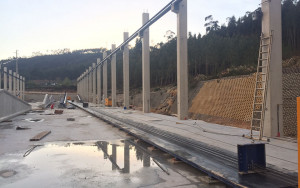
One of the big advantages of Fabcon is the speed of erection and the economics of putting the panels in. If you were doing a building out of masonry per se you’d have probably four or five times the number of manpower on the job. Typically we only need eight people to install panels on our project. The engineering behind each panel and their load-bearing ability make these panels a necessity when you need to aim high. We have the capacity in terms of load-bearing to build really high panels so people who are in the fulfillment and distribution business who need to have a lot of clear height space our panels can be engineered to support the roof span that’s needed for those large facilities and we create a larger footprint inside because there’s less structural steel. [Music] A Versacore panel is not just free cast concrete it’s also pre-stressed concrete. What that means is we’re running pre-stressed cables throughout the panel and each of those cables is under a great amount of tension.

If you want to think about our wall as a bunch of little Jenga blocks stacked up you can imagine if I put one on top of the other I could eventually make something that looks like a versacore wall panel. But if I pushed on the Jenga blocks they would just burst open right? But if I take that same statute and I wrap them in rubber bands now you can imagine if I push on the on the Jenga blocks they may spring open but if I relieve the pressure they’ll spring back in place. And the prestressing cables inside the panels do the same thing, they allow us to make panels that are in excess of 60 feet in length while still only being 8 inches thick. It’s a much more durable panel it’s also much stronger for its weight than just conventional concrete, reinforced concrete. The panels behind me here these are panels that we just installed this morning. You’ll see you can still see the joints between the panels. We have a caulking pro that starts typically a day or two after we begin erecting the panel we’ll talk in those seams as we install and we place a brace on the panel the temporary put them in place.
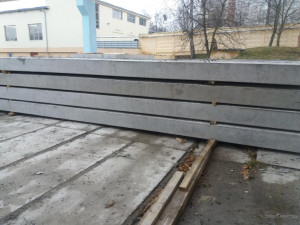
He’s currently welding some of the connections that tie the panels together but its an efficient process we complete all that welding as we erect every day. So that it’s a streamlined process, as we’re erecting the building we complete all our work as we’re going. Fabcon can customize every versacore panel to include window and door openings something that’s not previously available to contractors. You’ll see we’re looking at some of the openings we cast into the panels. These are based on how the architect wants to lay the building out, where they want their doctor locations, and clerestory windows for laid into the building. They’ll give us detailed architectural drawings we produce shop drawings that locate those openings where they want them in the building and we cast them where they want them in the project. And what you will see there’s some little stems on those openings are actually larger dock doors for trucks to back up.

A constant commitment to advancements in technology meant Versacore went from a hollow core to a foam one. We take recycled foam and the recycle foam goes into the billets and the billets actually get placed into our Versacore product which increases the r-value of a product. In fact it’s not just the foam this recycle we actually recycle the steel if you look at the steel and the foam and the other components that we actually recycle and put into to the versa core product up to 58 percent of materials that we use for this recycled material. But what are the guys on the job think about the lighter panels? Do you think if this wall was blocked you know and what they’d have to do to set up scaling and how many guys they have to have you know and and then to be able to have this where it’s one step in the insulation the finish everything’s done. I think that’s why they’re leading the market. Staying in line with their commitment to less waste Fabcon customizes every panel to each specific project. Each panel is a custom panel, so we don’t produce anything to stock. They are cast in one continuous pour and then cut to length later. Like 30,000 pound lego building blocks these panels can be taken down and reconfigured into new buildings using a unique numbering system.
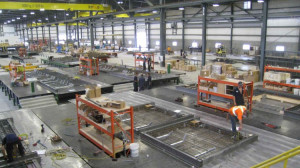
One example we have here in the cities recently was a large retail distribution center that was doing an addition to their building. There were a few hundred feet of wall panels that didn’t fit the structural requirements of the new building. So in this case rather than taking the precast down and disposing of it the general contractor came up with the idea originally cooperation between our engineer, the architect, and those sales were actually taken down and repurposed to build a catholic school in a small Southwest Minnesota town. Now that’s sustainable! So what gives Versacore the leading edge? We make it in the factory we ship it and we put it up all ourselves it’s all under one roof start to finish. But the benefits don’t stop there. It holds the roof up it holds the wind out, it reads this in seismic condition, that resists fire events things like that but it also has the insulation in it for the energy efficiency. With so many choices and color variations the design options are endless. We’re standing in front of the Fabcon precast sample wall at the savage location in Minnesota. This is just a small section of the variety of panels that we can produce. You can see just by glancing across the wall there’s a very large range of color options.

There is a lot of science behind it. [Music] What they’re doing is you’re going to and picking panels and prepping them to go under a truck to a job site. Every panel you see out here has a job number and a part number for where it goes on a specific project. Each job has a you know eighty ninety couple hundred panels and they all unique and specifically drawn and produced. We have a mobile tracking system so all our ground guys have tablets in their hands and as a panels come off the bed they input by a number so specific location in the yard that they’re located. Fabcon’s comes commitment to their buildings last long after they leave the jobs site. These buildings are going to be around a long time they’re gonna be here long past anybody that works here now and it’s nice to know or a comfort to the customer that whoever they pass their business on to their heirs you’re a different business well that sort of thing that Fabcon is going to be here to help them care for that building, to meet their future needs, and to do whatever modifications, additions, expansions whatever that they need.

Nestle plant in Burlington catches fire

TONI: THE CLINTON COUNTY SHERIFF’S SAYS MITCHELL WILL BE CHARGED TONIGHT. TOYA: A TWO ALARM FIRE SENDS MORE THAN A DOZEN FIRE DEPARTMENTS TO AN ICONIC COMPANY IN SOUTHEAST WISCONSIN. BURLINGTON’S NESTLE PLANT IS RECOVERING FROM A FIRE. 12 NEWS NICK BOHR IS LIVE THERE AND NICK THEY’RE STILL WORKING , TO CLEAN UP. THEY ARE. THE MAIN THING IS THAT NO ONE WAS HURT. THE FIRE ON THE SECOND FLOOR ON THE SOUTH SIDE HAD EMERGENCY VEHICLES DESCENDING FROM ALL AROUND TO BURLINGTON.
 

MEMORY STILL FRESH OF A FAR THAT DEVASTATED JUST TWO YEARS AGO. ON A BITTER COLD JANUARY IN 2013 , A FAST-MOVING FIRE DESTROYED A PLANT WHERE 300 PEOPLE WORK. NO ONE WAS KILLED. FORTUNATELY, TODAY’S FIRE WAS NOT NEARLY AS DRAMATIC OR DEVASTATING. THEY WERE ABLE TO ISOLATE THAT FIRE IN THE SECOND FLOOR OF THE ICONIC NESTLÉ CHOCOLATE PLANT. THE FIRST, SECOND, AND THIRD FLOOR — THE FIRE IT SELF WAS CONFINED TO A MIXING UNIT AND EXTINGUISHED QUICKLY.

THE 14 DEPARTMENTS THAT SHOWED UP CAME IN HANDY. WE HAD CREWS INSIDE BY 500 FEET. ONCE THEY WERE IN THERE WITH AIR TANKS, WE HAVE TO SEND ANOTHER CREW INTO COVER FOR THEM WHEN THEY RUN OUT OF AIR. CHOCOLATE CITY USA IS A SIGN OF NESTLÉ’S IMPORTANCE HERE. ARE YOU ALWAYS THINKING WORST-CASE AND ERAS WHEN YOU GET THAT FIRST ALARM? WHEN YOU GET THE FIRST CALL, YOU ALWAYS PLAN FOR THE WORST AND HOPE FOR THE BEST. IN THIS SITUATION, THE ECHO LAKE FOODS FIRE — ALL EMPLOYEES ARE SAFE AND ACCOUNTED FOR AND THEY ARE TURNING THEIR ATTENTION TO FINDING THE CAUSE OF THE FIRE. THE PLANT WAS EVACUATED FOR ABOUT THREE HOURS, BUT YOU CAN SEE THAT THE EMPLOYEES HAVE RETURNED. NESTLÉ TELLING US THAT NO ONE WAS HURT. ONE FIREFIGHTER DIG COMPLAINED OF DIZZINESS, BUT HE WASN’T