Having looked into basics of polymers; now let us look into some of the specific uses of polymer in construction some of course; we have looked in the last time, in our last lecture. This lecture we will look into concrete repair and protection paints and coatings using construction adhesives sealants uses of elastomers in construction, then we will look into composites and lastly the water proofing materials. So, we will look into materials not really the techniques, but mostly the polymeric material those goes into the this sort of processes, but remember that we actually stopped when we were talking of polymer concrete composite. We stopped with only 1 polymer concrete, there are 2 other types of polymer concrete composites and I, would like to first go into them and then go into the repair process. Now, 1 of the most important type of repair material that goes into concrete construction is polymer concrete polymer concrete composites. We call it you know one of the variety is polymer cement concrete PCC. So, you can see that what we see is PCC polymer cement concrete also called polymer modified concrete. Now, unlike last class last class at the end we talked about polymer concrete where, the hydraulic cement binder is completely replaced by a monomer resin and hardener system which together, with the aggregates forms a polymer concrete like a epoxy concrete okay. Epoxy concrete now, polymer modified concrete does not remove the hydraulic cement binder completely.
So, therefore cement and water both are there and at the same time you add a polymeric material which modifies. Or you say that is why you call it either polymer modified concrete or you call it polymer cement concrete PCC that is why the name PCC So, hydraulic cement binder, with water can be replaced partly. So, we are replacing it partly by polymers to form polymer modified mortar or concrete mostly used for repair purposes the example is latex modified concrete. We have mentioned earlier about latex and this is latex modified concrete, you know the rubber we talked about the rubber the rubber latex is there, in last class. So, this is latex modified concrete is 1 of those polymer modified concrete. There are varieties of them some of them we will discuss when we talk about repair this concrete is also stronger and it can be made into a very highly flow able micro concrete and of course, can be used in repair works where you know concrete cannot flow. This concrete can be used for highly flow able micro concrete for repair purpose. So, its processing is similar to that of ordinary concrete that means; say you have cement water system and thus modify polymer you know modify the latex system mix them together, in the same manner as you mix the ordinary concrete and that gives you polymer cement concrete. Polymer cement concrete, so that is another variety which is used right the other type of polymer concrete composite is called polymer impregnated concrete. This is really not making concrete really with the polymer. But, once you have made the concrete then we impregnate the polymer. So, this is PIC polymer impregnated concrete.
Now, hydraulic cement binder concrete is impregnated with low viscosity monomer. So, you make a good concrete in the beginning and then we would impregnate with a low viscosity monomer that will polymerize inside the concrete inside the concrete pores to form polymer impregnated concrete. So, hydraulic cement binder concrete is impregnated with low viscosity monomer that is polymerized to form polymer impregnated concrete. Now, this concrete surface becomes basic idea is that you see you cannot impregnate it to very deep within the section, but you can penetrate up to certain depth within from outside surface. So, the surface becomes impervious stronger durable and high abrasion resistance this has been very successfully used in bridge deck wearing coats you see what happens is bridge deck you know they have a wearing coat. Because, actual structural member the deck member the structure reinforce concrete or prestress concrete member is protected, with wearing coat. Now, this coat with time tends to give away, because of the traffic abrasion. So, it gives away and then what you do you got to replace it now replacing is very difficult you cannot remove it and then put it back. So, what you do you relay over the old 1 another layer and if you go on doing that actually the deck weight of the wearing coat on the deck becomes very large. So, time comes when actually it is no more longer viable to put that but supposing I put now, a material put the wearing coat alright and impregnate it with polymeric material polymer impregnated you know make it polymer impregnate concrete.
The abrasion resistance being very high its life cycle is much higher; this is used successfully over bridge deck the actual technical process of impregnating in pre-cast members could be evacuate them. Put it in a vacuum chamber evacuate them then expose them to the monomer which then impregnates, into the concrete pores together with the of course, the catalyst and other thing through which it will get polymerized. So, you can polymerize chemically by adding some sort of hardener or catalyst or whatever, it is the agent or else you can polymerize it through heat or radiation or similar sort of thing, in case of pre cast elements. But, then pre cast elements polymer impregnation is not in use, it is possible but what about cost and see to as I said bridge wearing coat you can just flood it the ponding can be done. It can be ponded with the monomer and then it is covered up because otherwise; it will evaporate might use a little bit of infra red heating by heating pads or may be allowed to chemically polymerize within the pores. The polymer loading in such cases is not very high, but anyway it gives you good abrasion resistance and life of the wearing coat increases, in such situation. So, polymer impregnation can be used in similar sort of situations. And not under pressure, but just like just you know just load it do ponding and things like that now, such concrete is such concrete has got much higher strength than ordinary concrete. You can have a very high you know strength improvement ratio can be very high 2 to 3 times easily compared to the parent concrete. If you impregnate with the polymer the strength would increase 2 or twice thrice, because now the pores are blocked. So, the crack cannot propagate durability improves because the pores are not there again blocked etcetera.
So, lot of properties improvement abrasion resistance improvement takes place and this can this has been used successfully. So, this is another kind of polymer concrete composite three types we discussed 1 is polymer concrete other is polymer modified concrete and the last 1 is polymer impregnated concrete. So, this continued from the last class. Now, let us look at now, the concrete repair and use of polymeric material in concrete repair; we are not going to look at repair system as such. But, we are trying to see the application of polymers in concrete repair. Now let us schematically look at the repair process you see, if I look schematically to the repair process. If, I look schematically to the repair process right look schematically to the repair process, it will be something like this it will look something like this concrete repair process. If I look at it will be something like this you see first of all to do any repair to do any repair I must first find out what is the cause of the damages then accordingly provide a solution that is the idea right repair essentially means; finding the cause of the damages and then finding a solution. Anyway that is separate but that is looks at the repair, because you are looking and trying to look at the materials used in repair process. So, we reconstruct the structure repair means we reconstruct the part of the structure. And all the functions that it was supposed to do that is that should be restored. Now, there are 4 types of process involved the bonding process the injection process surface repair process and application of coating. So, surface repair injection bonding, so main process is involved at this and then repair materials we used would go into those processes right. Now, bonding means what well it will give us restore the mechanical function that means; if there was a strength flaws or something there is a crack or something. So, it does a bonding between the 2 portion which has got cracked and the load transferred from 1 side of the crack to the other side of the crack should be possible.
 So, mechanical load transfer or for example: if there is a elimination before the reinforcement and the concrete. So, when you do this bonding job you know concrete the reinforcement will get again bonded with the concrete and it can carry the load. So, here the mechanical functions are important right then you have got injection grouting sometimes through injection grouting you have injection you can improve the concrete itself. You improve the concrete itself, by injection by some inject you know some element injecting certain things we will see that what are the material that using then surface repairs are mainly required for mainly required for durability point of view. And then of course, from the point of view of aesthetics as well in such situations then sometime some time mechanical performances are also important, but most often it is the protection against leaching against corrosion and such things. So, surface repairs go into this mainly and then sometimes aesthetic also as you can see from here. So, the surface repairs purpose is aesthetic protection as well as sometime mechanical both injection and bonding goes to mechanical performance, but injection can also go into protection also because you inject material to block the pores from outside. So, injection is different than impregnation, because impregnation could be without any pressure application injection is surely through pressure application, then application of coating of paint mainly for protection purposes and aesthetic purposes.
So, these are the processes involved in repair process and then material corresponding to this we will try to see some of them right. So, that is what we will try to see what are the materials corresponding to this processes each of this processes. We look into materials corresponding to this processes, so let us see what are the classes of repair product according to this repair processes that we, mentioned; if we look at the material first without looking at the processes. Then there are of course, product based on hydraulic binder and we are not going to look into that because this, we have seen earlier Cementitious material. There are very or there can be special discussion on repair materials. We are not looking into repair materials here rather we are looking into polymeric materials that go into repairs. So, therefore this we will not look much but we will look into hydraulic binder with additives again there can be 2 types other than polymeric the polymeric type. So, we will look into we will concentrate ourselves into the second 1 that is polymeric system and you remember, we mention about polymer modified cement concrete system cement mortar system right and that is what it is. So, product based on hydraulic binder with the additive that is our polymeric additive and latex modified concrete for example: polyvinyl acetate Styrene-Butadiene poly acrylic and similar polyvinyl acetate PVA sort of poly acrylic Styrene-Butadiene rubber SBR systems.
These are the 1’s which are the examples of latex modified system, because you know latexes are nothing they are basically fine powders that is what we said sometime earlier that ultra fine material actually, here they are powders not emulsions dried from emulsion ultra fine powders very fine powders which when you add to the cement system they actually formed intermediate bonds between, the cement system particle themselves Cementitious particle themselves and strengthen the whole system of course, the details of this mechanism we are not going to look into any moment. So, there are usually the latexes rubber latexes goes in polymer modified concrete and then Styrene-Butadiene rubber SBR system as it is called it is very commonly used for repair works, then poly acrylic and polyvinyl acetate are also used quite often. Now, this could be mono component in that case it is premixed system that means; the manufacturer normally would give you a it would be mixed from the factory itself. So, it is a premixed system or you can have bicomponent that means you mixed in c 2 together, with the Cementitious system and together with cement aggregates filler etc., and get the repair product. So, this is 1 class of repair product that is product based on modified hydraulic binder right that is polymer modified concrete system then the most commonly used are the product based on synthetic resin system. So, let us see some of them synthetic resin system product based on synthetic binders most common ones are epoxy resins epoxy resin is a bi component reacting material reacting in ambient temperature.
I can just give you a common day today examples: which you many of us would have used every day at our you know residences or house or home is nothing but the epoxy system. So, you have got 1 glue component and a hardener component now varieties of epoxy systems are there which are used in constructions. So, they to have it is a bi component system reacting in ambient temperature you mix them up together and they actually react you know in the ambient temperature chemically. They are poly ethers formed by reaction between poly epoxy base and hardener which are poly amine. So, you have a glue and hardener system as I meant or it is called base and hardeners right this is the hardener are usually poly amines. So, poly epoxy comprising of active hydrogen this poly amines comprising of active hydrogen atom okay; details of chemistry is again. We, will not look into but just sort of information based the product after polymerization is highly cross linked structure and this reaction is exothermic. So, since it is highly cross linked thermo sets right it has got a very high mechanical properties, very high strength, very high strength chemical resistance very high mechanical properties chemical resistance strong bonding to usual material. So, therefore it can acts as a acts as a act as a very good adhesive as well. So, it has got very strong bonding to ordinary material. Let us say stones or sand, so aggregates therefore it can form good concrete very good strong concrete and next it has got a very high chemical resistance. So, good dimensional stability shrinkage characteristics are good dimensional stability means; shrinkage characteristics or swelling characteristics. So, this is good actually not very large and therefore this is used in concrete repair extensively very used concrete require extensively but then this is relatively costly material. Therefore, their uses you know economic consideration has to be given whenever you are using such materials epoxy resin based materials other than this are poly urethanes.
They can be used for structural and non structural repairs and poly urethanes can forms paint coating etcetera okay. The other product product wise classification we are trying to look at. So, what are the kinds of product? We said that the polymer modified cement binder system is 1 of the product, then directly resin binder system like epoxy resins then; we have poly urethanes they are used in different types of works paints coating and if they are non structural repairs. Then you have surface repair products they are mainly against crazing. Now, what is crazing is fine cracks which we have mentioned in case of concrete fine cracks form due to may be due to shrinkage or due to effect of fire etcetera. And there you might use um you know polymer modified system they are used polymer modified system. Then bug holes which are left by the water at the shuttering at the surface in the concrete you will find bug holes which are nothing but the water that was sticking to the mould right. So, there once you open the mould this water would have evaporated leaving those void space right normally, rounded shape void spaces you would see they are called bug holes and you want to repair them polymer modified system will be a good material spalling of concrete same case you can use polymer modified system well, you want to bond structural bonding of reinforcement metals and composites you know epoxy resin formulations are very commonly used. So, bonding many a times epoxy resins formulations are used right alright. Let us see what are the product from usage point of view injection grouting now, this is used where you want to improve a actually the soundness of a concrete itself. For example a porous concrete it is not very sound it is not very sound you know its strength could be low durability itself could be low depending upon the situation not that every here, you will use. But, you can use injection grouting, so what you will do at closely spaced places you actually make nozzles and through nozzle under high pressure inject slurries or grouts.
Now, these grouts could be of the 2 kind that is cement grout type. Now, we are not discussing again cement grout type perhaps we might have discussed earlier, but not now ultra fine cement grout but epoxy resins are also used for injection grouting. So, this is 1 of the use where polymeric materials are used then anchoring again epoxies are used anchoring means for example: you want to possibly anchor. Let us say you want to put a steel bar inside concrete now what will you do you want to anchor it inside concrete already the concrete is already made it is not in the fresh concrete. So, it is already made hardened concrete. So, what you do you drill a hole into the concrete you drill a hole into the concrete and then you can bond it with epoxy, I think I must have mentioned this earlier somewhere. So, you can bond with epoxy. So, here also again epoxy resins are used then unsaturated poly esters are used for such anchoring purposes then damp proofing product which, we will discuss at length some time later on water proofing or damp proofing products they are siliconized. So, we will talk about those siliconized silicones as there or fluorinated derivatives, you know this could be this could be what are called pore lining treatment. We will discuss this sometime later on in this lecture itself and there could be pore blocking treatment. So, this products go there then mineralizers silicates associate, with organic molecules these are the 1’s which go into damp proofing product they are going in to damp proofing product. So, in concrete repair then we see a the types of materials which go into the concrete repair the epoxies the poly urethanes, then we have seen product wise anchoring we have epoxy poly esters unsaturated you know or poly esters.
 Then, we have seen that um in case of a bonding again epoxies. So, epoxies is very commonly used and in sense say some other repairs like bug hole repairs some sort of you know repairing part of the concrete is to polymer modified systems and then water proofing etc., We have this ones are siliconized. Let us see what are paints and coating what are the polymers used in paints and coatings now what is a paint is a film forming product it is a film forming product in liquid or powder form and if it is powder form, then you will dissolve it in a kind of solvent if it is liquid form then it is straight away available made up. Definitely made up of opaque mixture opaque mixture of pigments fillers binders additives and the solvent is called vehicle the solvent in it will be there. So, if it is liquid the solvent will already be there. If it is a powder obviously you will have to dissolve it in solvent which is mostly would be water. So, this is this is this is what the paints are now, you see the paints are used over steel structure very often to protect it against corrosion right. So, polymeric paints are also used for that purposes along with of course, other inorganic paints but polymeric paints are used in this 1. So, at the moment we are looking at the materials used in polymeric paints. Now, therefore the paints can be it could be something like this liquid paint you apply it and then what you get it becomes dry and you have dry paint onto the substrate which could be concrete or steel or whatever, you are using in the construction. So, this is what the paints are now, as I said it has got different it has got different powders you know powder is made of different components the first 1 is pigment. Now, pigment first 1 is the pigment the pigment is here the pigment gives what it gives us color function pigment gives us color function pigment gives us color function, it gives us color function right pigment, it gives us color function then you will have fillers.
Let us see what does filler do let us see what does filler do filler gives us filling effect reduces the use of primary material making it economical but it gives us rheological characteristics. So, paints use powders which contains pigments fillers then binder binders and various kind of additives So, let us see what those binder are supposing, I do not have any powder into the paint then that is called varnish. So, in varnish you don’t have powder right it is just a liquid which you apply and thus varnish right So, in paints ofcourse you have resins which are the binders which goes in as binders and they ensure essentially they ensure the coating of the ensure the coating of the powdery material coating of the powdery material you know they ensure coating of the powdery material they ensure coating of the powdery material they ensure coating of the powdery material and its most you know this is important part. Because, this will ensure that it is bound its is bind you know it is bind the binding is proper of the powdery material with the substrate, it will remain in contact you know it will bind it. So, the binders ensures the binding of the powdery material, with the substrate and this is mostly important. So, the epoxies vinyl and silicones are the 1’s which are used for such binders additives could be wetting agent fungicides etcetera;, because it should not be attacked by fungus. So, therefore fungicides or plasticizing agent flow ability etcetera solvent which is also called vehicle makes a application possible. Because, if it is not in a liquid form powders you cannot apply, so this makes the application possible and it can act in more than 1 manner for example it may evaporate or it may help the reaction right. And if it evaporates leaving the solid there this is 1 mechanism otherwise; it can help the reaction. So, that it polymerize there and remains you know solidify the whole thing solidifies may be by partial evaporation and partial reaction.
It remains partially by polymerization. So, it remains on the surface. So, oils acrylic resins chlorinated rubber epoxies and poly urethanes etc; they form the solvents right they form the solvents alright they form the solvents right. Now, usually you will have you can have three coatings you can have thee coatings for example primer now, a primer ensures adhesion to substrate that means it is a bonding you know the boding has to be proper it ensures proper adhesion to substrate. Then this intermediate coat which is in between the primer coat and the final top coat now this is essentially meant to have compatibility between this 2. So, you have the primer coat which will ensures there is a bonding with the substrate. Then intermediate coat ensures that there is a bonding between primer and top coat it only helps you know it makes, it compatible the bond is therefore you know it is rather it is a compatible between these 2 coats the primer and the top coat intermediate coat is therefore compatible, with other coats and top coat essentially is meant for resisting the condition resisting the environmental condition. That is any aggressive chemical coming in it should provide the durability and also from the aesthetic point of view. So, coating is essentially meant for top coat is a essentially meant for aesthetic and also from durability point of view it will protect the rest of it and this intermediate coat actually bonds this top coat, with the primer coat and primer coat will bond the whole system with a substrate. So, that is how it is right now if I have large quantity of powder there if the powder is concentration is high then; it is flat paint you know lot of powder as you can see lot of powder satin finish paint the powder is relatively less and glossy finish powder will be less. So, this might will have a little bit of rough surfaces where this will have a very plain surface and in varnish you do not have any paint varnish, in glossy paint you have very little powder in satin finish you have powders on illusion is already more than this but in this 1 you have flat paint.
So, you have relatively rough kind of surface and the particles sets right on to top of it here is the liquid which, we have put in and there is a coat of the liquid which solidifies and remains there a no powdery material and that is what varnish is? So, this what paints and coating used as you know for steel structures. Steel structure is very common to use them over steel structural elements to protect them against corrosion environmental corrosion then the even it is used in concrete surfaces but in exceptional cases where for protection purposes well where, it is aesthetic is needed then of course, it is very much used in you know in building very much it is in use for aesthetic point of view. So, that you get a good view and you know good view it gives and also it provides protection in fact if painted RCC structure supposing RCC structure it is painted it will provide sufficient protection against moisture ingress also, it will give some protection against moisture ingress and durability problem as well. So, that is what is paints now another class of materials which is used in construction and we have lot of polymeric materials, in use are nothing but adhesives polymeric materials are used in adhesives let us see what are adhesives. Adhesives are compounds capable of sticking 2 or more component to form a new entity adhesives are compounds, which are capable of sticking 2 components, 2 material, 2 components 2 elements. Let us say and then it will give you a new entity adhesive bonds are developed by adhesion and cohesion, we will define each of them adhesion and cohesion that is now its usually applied in liquid state liquid states and liquid form and it sticks to different substances by adhesion differing in nature of their chemical bond. So, what is the adhesion is the bond between the substrate between the substrate and the adhesive there are 2 different material right. So, adhesive adhesion is the force of attraction or the bond between the substrate and the adhesive itself. Now 2 different material which have got 2 different bonds for example in a metal and some other inorganic material which is which is non metal the adhesive can bond this 2 material together.
It will have adhesion with the metal as well as adhesion with the non metal which you are bonding. So, adhesion is the force which defines the bond between the which is the which is you know which is the bond between, the substrate that is the material the components that you are bond at the bonding and the adhesive itself where as cohesion is a force between the you know it is the strength of the adhesive itself, because on application this is applied in liquid form between 2 different substances and this substrates which are there they can have different chemical bonds. So, you apply them it will stick them it will stick them and it is in the initially in the liquid form and then after sometime, it will become solid and should have a high cohesion that means; within itself it must be sufficiently strong otherwise it itself, will fail. So, it should not fail therefore it should have sufficient strong after solidification sufficiently strong. So, it should form good bond with the substrate and itself, should be strong enough that is cohesion to carry the load and it should be durable. So, adhesives are basically this kind of material well the adhesion between the adherents can be due to bonding that means adhesive and the substrates bond between, them can be due to chemical bonding tackiness sometimes, it is called I mean it is a kind of bonding basically. Or by mechanical interlocking penetrating into the pores for example if your substrate is porous something like concrete and you put the adhesive over it the adhesive will penetrate into the pores of it and there will be a kind of mechanical interlocking. Because surfaces is rough or porous where as other kind could be there bonding. So, that is called tackiness bonding right and in all cases adhesive should be of low viscosity because you want to apply it easily. So, it should be of low viscosity.
Cohesion forces develop through the curing process, because the adhesive itself will get cured it was in liquid state will become solid. So, the cohesive forces developed through this curing process and you know through the curing process and the solvent. If there is any would evaporate and there could be formation of regions of crystallinity or there could be cross linking, because of the polymerization of the adhesive itself to provide cohesion it might get polymerized or cross linked cross linked structure or therefore could be crystallization or the fourth kind of process is by exclusion of oxygen from the surface which is not suitable against tensile forces. So, the mechanism of cohesion is either because the solvent would evaporate leaving the solid which is bonded together or because there is some polymerization and cross linking of the product or the cross linking of material or because of crystallization. Or because of oxygen free you know making oxygen exclusion of oxygen from the surface. So, this is how the cohesion is achieved quite often it is actually the polymerization of the material which ensures large scale cross linking and adhesive does not fail itself. So, it can carry the load because it is between it is between the substrate you know it is between the it is between the substrate since it is between the substrate since it is between the substrate therefore it can you know it can bond. It can bond we will see that since it is between the substrate it can actually should have sufficient strength.
So, it should be able to withstand that load let us see if we can look at it a little bit more. For example this is your substrate let us say and this is another substrate now the adhesive is in between right. So, this is my substrate this is 1 of my substrate and the adhesive is in between. So, 2 things is 1 it must have a good bond here it must have good bond here it must have good bond here bonds. So, this is my pores of adhesion it must have good bonds here the pores of adhesion and if I am transferring some sort of load. Let us say if tensile forces are there here then this must be able to withstand the tensile forces So, it should be sufficiently strong itself and that is what we say the cohesion. This cohesion develops through this cohesion develops through cross linking or evaporation as it becomes solids, so through solidification etcetera right, So, there is what it is okay. Now, continuing with the with this. So, that is the idea of adhesion and cohesion in case of adhesives right. Now, more important 1 more important issue is you see 10 degree rise in temperature doubles the rate of reaction. so if you have 20 degree centigrade you increase the temperature to 30 degree centigrade the rate of reaction will become double right similarly increase from 30 to 40 degree centigrade then rate of reaction will again become double. So, if I go from 20 to 40 the rate of reaction will be actually four times 2 to the power 4 if I go to 20 to 30 40 50 2 to the power 380 times and so on, so forth.
So, in this process you see 10 degree rise in temperature doubles the rate of reaction. So, rise of temperature from 20 to 100 degree centigrade therefore, will increase the rate by 256 fold that is 2 to the power 8 because 20 to 30 2 to the power 1 30 to 40 2 to the power 2 from 20 to 40 2 to the power 2 20 to 50 2 to the power 3 20 to 60 2 to power four and so on. And you will find 2 to power 8 is 256 fold. So, if you go from 20 to 100 degree centigrade reaction rate increases to 256 fold. Now, supposing a material which cures at hundred degree centigrade in 24 hours. So, at 100 degree centigrade it cures just in 24 hours now in 20 degree centigrade its rate of reaction will 256 times slower. So, if it was curing at 100 degree centigrade by 24 hours in 20 degree centigrade, it will actually cure in 256 multiplied by 24 hours which means; 256 days 256 days means; 7 to 8 months. So, that means if you keep the same material just it is cures in you know cures itself. So, if you keep it in 24 degrees 20 degree centigrade. If it cures at 100 degree centigrade in 24 hours in seven to eight months it will actually cure it it will solidify or the reaction will take place So, therefore shelf life is related to those products which you don’t like to mix and its cures on its own just apply the glue or the adhesive and cures on its own let us say right.
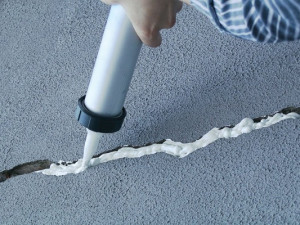
So, then not more than seven to eight months may be its shelf life. So, it is very important you cannot apply it for after a very long time once, it is produced then shelf life is important and this is important for much other polymeric material that is used in constructions right. So, it can be used within specified time within the specified shelf life and not beyond that then it is important at times to convert adherent by using a primer which would be prime coat as, I said in case of painting. So, you put a primer. So, that you convert it such that adhesive can bond it this is can be done by anodizing or etching by of metals for example you can do etching in some cases to obtain a more suitable state where the adhesive can bond. So, that is the idea adhesive can bond it right more suitable state alright now followed by this is that this process of conversion that you were doing it must be compatible with the system. For example if you use if you use, let us say acid in case of metal. Now, you know metal corrodes in acidic environment. So, compatibility with the adherent is important for example acidic material on metal would mean increased corrosion risk. So, that is important, so whenever you are using a conver some sort of conversion some sort of primer that should be such that it does not be compatible with that substrate and does not create a problem of durability or similar situations. So, that is about the adhesives, let us look at sealants the other kind of materials which is very much used in construction and corresponding materials. We will see Sealants are similar to adhesives they are similar to adhesives except that they fill gap see adhesives bonds 2 material 2 component. Now, sealants what do they do they do similar things. They bond 2 material alright but gap between them which has been left for various purposes you know. So, they actually fill in the fill in the you know gap and it is not necessarily need to bond the substrate I mean; not a very strong bond is necessary, but there should be actually filling the gap you know.
So, need not bond and not necessarily bond the substrate right for example this can be used for making it leak proof don’t want water to enter. Or it should be able to allow expansion contraction thermal expansion and contraction and fill in the gap do not allow moisture or something to get it, but allow its expansion and contraction of the component between which the sealant has been put. So, that is the sealant in sealants we put. So, they have similar sort of material right and we put but that should be you see the sealant should be resilient, because it should be many a places it would should allow expansion construction of the basic material or substrate where it has been applied right.. So, there we had fillers for good gap filling properties and it must have good slump resistance you know resistance against flow should be there should have low slump you apply the sealant and if it flows down. If you apply the sealant and if it flows down the gap then the sealant is not a good sealant. So, that is why it should have a good slump resistance against flow desirable properties flow maximum should be three millimeter desirable properties maximum flow should be 3 millimeter should have good elastic recovery, because as I said sealants go into the gap between 2 components and those component themselves might be expanding and contracting. So, if they are expanding and contracting they should the sealant should be able to take care of this deformation you know or periodic deformation you know repitive deformation and should have good elastic recovery should not crack themselves should not show permanent deformations. But, deform and come back to the original state.
So, that is what is the elastic recovery or resilience adequate tensile modulus it should have should be able to withstand should have good cohesion and adhesion properties. Cohesion properties means; it must be strong itself, adhesion means should have good kind of bond with the substrate and resistance to compression and shrinkage, because it should be dimensional stable should not be shrinking too much. So, then this will get problem it will actually induce stresses on to the substrate itself. So, this is the properties desirable properties of the sealant you know should have low flow otherwise you apply the sealant it will flow through the gap and will not actually close the gap. Elastic recovery should have good elastic recovery, because it has to with stand lot of deformations and should have adequate tensile modulus. So, adequate tensile modulus means should not expand itself too much under the same force, then what will happen it will actually exert pressure on to the substrate. So, should have good adequate tensile modulus of elasticity it should have good strength itself and it should be able to bond with the substrate. And it should be able to withstand compressive forces also, because it is not likely to undergo both compression and you know tensile stresses. It is likely to encounter both tensile and compression stresses, because it is filling the gap and should have shrinkage low shrinkage characteristics. This would make clear what the sealants are and what are their failure characteristics. For example: this is my substrate 1 and this is the other. This is the gap where I fill in the sealant you see this is the sealant now that is what we are saying that this sealant should be able to bond here adequately bond here adequately right and then should because this can expand. Or this can contract this gap can be smaller than; it should be able to withstand the compression and also when it starts expanding back it should recover easily right it should recover easily. Similarly, when this expands it will be subjected to actually tensile stresses.
So, it should have good adhesion. So, that it will also expand and withstand able to withstand this tensile stresses itself, besides that it should have good modulus of elasticity or compatible modulus of elasticity, because if it is under the same tensile stresses and if it is trying to expand more it might actually induce some stresses there right or if it is not expanding might induce again tensile forces here. So, that kind of things where it should have a compatible modulus of elasticity and should not flow when your applying, because this is usually applied in liquid state should not flow down through this rather get filled in. Now, they are oil based linseed oil with lycopodium powder it makes it putty. So, that is a sealant basically. So, now failure modes if you see the adhesion failure. You see the adhesion has failed the bond between these 2 has gone the adhesion failure right. So, this is 1 type of failure this falling involves the substrate itself has gone this falling, because the substrate itself has gone. There is a strong adhesion but it is such that actually it is taken away this sealant is up to here the gap remains still below and then cohesion failure means; itself, has failed you see the cohesion failure means this itself has failed. And if this is it is also true for adhesives if it is also true for adhesives right, then there is folding also there is folding means actually this is folded actually you know dimensional instability actually at the surface. So, it has folded. Intrusion is some external material quite often occurs, in case of road sealant used in roads construction may be an aggregate or something would have come in and pierced into it pierced into the sealant. So, intrusion that has taken place then the sealant once this has removed this has gone away sealant there is this failure in the sealant okay.
So, this are some of the mode of the failure of the sealant. And this also we understand that similar sort of behavior you know this diagrams also explains what would be adhesives, but adhesive will actually continue through it will be through and through. Cohesion and adhesion that is we have seen those failures that takes place besides that there could be excessive extrusion the whole thing coming out exclusion you know under deformation when this is compressing let us say lot of material comes out. This could be another kind of failure slumping that takes place, in the liquid state or if it is in molten state everything close down chemical attack is attack from the outside external environment and removal under pressure supposing, there is high water flow through this see if it goes away its just washed away under pressure. So, these are other kind of modes of failure which is possible for sealant right which is possible for sealant. If we see some of those sealants all you can see their service life for example you know putty and similar sort of oleic acid or oil and resin sort of thing; their life’s are generally of the order of around 10 bitumen sealants their life’s are around 10 rubber bitumen situation makes it around 10. There are butyl rubber solutions you see 1 of the common type of sealants that are used are butyl rubber solution, when I was talking about product, I just mentioned them. So, butyl rubber solutions which are used they are 10 plus acrylic resins sealants 15 flexible epoxies 20 very commonly used 1 is poly sulphide. There are several mono component bi component system I just put roughly here poly sulphide is 20 years of life poly urethane is type 20 years of life silicone also 20 years of life. So, these are the kind of sealants which you can have and typical service life ideas are of this kind that means; after this time after 20 years you have replace provided you have done it properly; their application is proper if the application is not proper you may not actually realize it. So, this is life of sealants right. Let us go to another class of material structure elastomers, we have defined what are the elastomers and in structures where do they use them you see vibration isolation under machines machine foundation. Because you do not want vibration from the machine to be transferred to the structures well these days base isolation is also done for seismic structures, So, they are also of sometime in noise control in building.
You do not want noise to transmit from 1 floor to other there are other kind of construction also those which we will do sometime later on what is called floating construction. But, vibrations supposing you do not want it to be transmitted machine vibrations or the noise generated, then uses isolators and bridges of course, we use bearings that means from structural element to the peer say the beam guarder to the peer. So, it supported on bearing. So, that lot of vibration that is not transmitted that is it absorbs. So, you know lot of shocks and vibrations are absorbed the system those are used are carbon loaded natural rubbers reinforced with steel plate. Let us take carbon loaded natural rubber together, with reinforced with steel plate also laminated blocks of synthetic rubber poly chloroprene or poly isoprene quite some time, with cork particles and the nylon rubber reinforcement this has been used for vibration isolation pads. So, vibration isolation pads would be natural rubber loaded, with carbon then reinforced with steel plate and then also other varieties are laminated blocks, with synthetic rubber with reinforced with cork particles and nylon rubbers can be used. Because this is for resilience you know shock absorbing it should be damping characteristics you know it should have sufficient damping characteristics. So, resilience it can absorb this energy and release it later on lot of damping properties can absorb lot of energy and that is why they, can actually do not transmit the do not transmit the vibration do not transmit the vibration right do not transmit the vibration okay. So, that is what has been used in bridge PTFE are very commonly used poly tetra fluro ethylene Teflon, you will have heard of this.
So, Teflon are used PTFE are used polymeric name is poly tetra fluro ethylene poly tetra fluro ethylene that is Teflon. This is very commonly used in bridge bearings neoprene bearings have been used. So, these are the use of structure elastomers, we defined elastomers earlier some usage; I am just mentioning and material that goes in. Then, we would like to introduce you to composite sandwich panel another kind of polymer composites, which are used in construction you see this panels, can be used for various purposes roofing walling, etc., It is basic structure as you can see is, with sandwiched, so you have leaves interior. So, inner leaf the outer leaf inner leaf and the outer leaf. So, it has got leaves actually this is a leaf this is a leaf and you have a pigmented fire retarded gel coat. Because as I said many of this polymeric material are susceptible to fire or high temperature they would degrade decompose or even burn when subjected to fire. So, therefore you need a pigmented fire retarded gel coat you know, you wanted to have a paint basically the color also show. So, interior would be something like this then you have a skin which is also fire retarded, which is which is basically, the you know outer leaf of the sandwich panel. Now, supposing I have transverse loading from this direction or this direction, it will be bending and you know the bending stresses are maximum at the outer leaf outer fiber takes the maximum stress. So, bending would be actually, taken care of by this fire retarded skin and also by this and this core transfers the shear you know transfers basically it is a shear connector. So, this must have good shear resistance, because you know in bending maximum shear is at the center. So, this can resist very high bending stresses provided this leaves are capable of withstanding the bending stresses themselves.
So, usually there will be fiber reinforced plastic glass fiber reinforced poly ester or such rigid fiber reinforced composite you know very strong; they are they can take lot of tensile load or it can its capable of high tensile stresses and high compressive stress also. So, strength come tensile strength should be high composite strength should be high of this 1’s whichever way it is. So, tensile and compressive strength should be high for this leaves this should have high shear resistance shear resistance, because it has to withstand, but it has got other purpose it can act as thermal insulation. So, you can have poly urethane foam core. So, this core is suppose to withstand, I mean; the shear transfer the load from outer leaf to inner leaf or the inner leaf to outer lo leaf right. The bending stresses from outer leaf to the inner leaf and withstand the shear stress bending shear stresses. So, therefore this course are not very strong, but at the same time they serve the purpose or functional purpose of thermal insulation. For example: poly urethane foam will have very low thermal conductivity and also serve the purpose of let us say: noise and protect you know noise insulation and so on. So, surface skins of course has to be fire proof and if it is outside it must be UV radiation proof, because it is exposed to the sunlight. So, this is what a sandwich panel construction is and polymeric materials have been used not much in India till date. But, they can go in making of various kind of roofing system you know, they can go in production of various kinds of roofing roofing system. So, actually they actually can go into production of various kinds of roofing system and also walling system they can go into walling system roofing system and walling system etcetera right. They can go into roofing and walling system itself and can resist bending load functionally efficient system. They are light weight and also we can design them for specific color texture, we can design them by eternal surface for rejections of solar radiation or acceptance because absorptivity can become high or low. Therefore, we can make them design them you know tailor them to specific properties.
So, they have lot of advantages they are light weight, but remember they are costly also robustness will not be there in such structures, but you can make large span say you know large span roofing bar stand roofing for bar stand or dome or similar sort of you know places where you want column free space you can use them column free space you can use them. So, roofing shelf structures wall panels also, because they are light weight. So, in very tall buildings where you have frame construction you can use them; for all structures right. So, we can see now into water proofing treatment you remember, we discussed about the surface treatments earlier and coating was one of them the coating is nothing but something like paints. So, therefore you can have polyesters epoxies and acrylic etcetera. We discussed about the coatings but then we discussed about 2 other systems called 1 we call as pore lining system. And we said there is something called pore blocking system the material those goes into those that go into I mean; those go into the pore blocking system and pore lining system. We will discuss that right now. For example you know alkoxysilanes are the monomeric organo-siliconic compound containing carbon nitrogen hydrogen oxygen and silicon atom and they can penetrate deep into porous material and on curing can bond with the substrate. So, this material silanes can bond with the substrate very easily they are low viscosity, they can go into the pore and large number of this alkoxysilanes join together forms what is called siloxanes m stands for metals r stands for alkyl group r stands for alkyl group. And then h2 SiO3 and several siloxane together forms silicones. This silicones can form you know they either, can dissolved in a solvent and make pore lining treatment. They can go the actually silanes, you can penetrate into the concrete and then polymerize right.
So, this polymerization can give silicones which are pore lining treatment the pore blocking treatments are liquid silicates or silico fluoride remember I talked about silico fluoride used in used for water proofing. So, they are use they are pore blockers they react, with lime present in the concrete system and forms CSH gel or insoluble calcium silico fluoride. So, they are pore blocker because they form the CSH gel and blocks this pore they are pore blocker epoxy or acrylic resin can also be used for pore blocking purposes. So, that is what is a pore blocking and pore liking lining treatment for water proofing silicones are for pore lining treatment. And then fluorides are for blocking or sometimes epoxy or acrylic resins can also act as pore blockers. So, therefore, we have discussed now almost all uses of polymers in construction. We have looked into concrete repair and we have looked into water proofing system. We have looked into panes adhesives sealants and that is the major uses and also looked into composites, they are used in polymer you know in construction. So, that finishes our discussion, on polymer with this is I think, we can conclude. Thank you.
 Register to Save Time – The new registration scheme will salvage you time in addition to keystrokes. With descriptive review commentaries in addition to background history on most classic, landmark films within cinematic history, particularly American/Hollywood films. Browse through our most different plans, where you will see typical floor designs in addition to pretty renderings of the finished building. We experience significant changes within the worlds climate due to emission of greenhouse gasses caused by means of human activities. Related terms include premiere pole buildings, pole post frame building, gold roof metal, instaling metal roofing, and metal roof residential florida. Choose from a particular broad variety of popular colours within wood grain textures this look like freshly painted wood. The latter products are capable of sealing around fasteners, as well as self-sealing at their side- in addition to close-laps.